






27.04.2026.
21:37
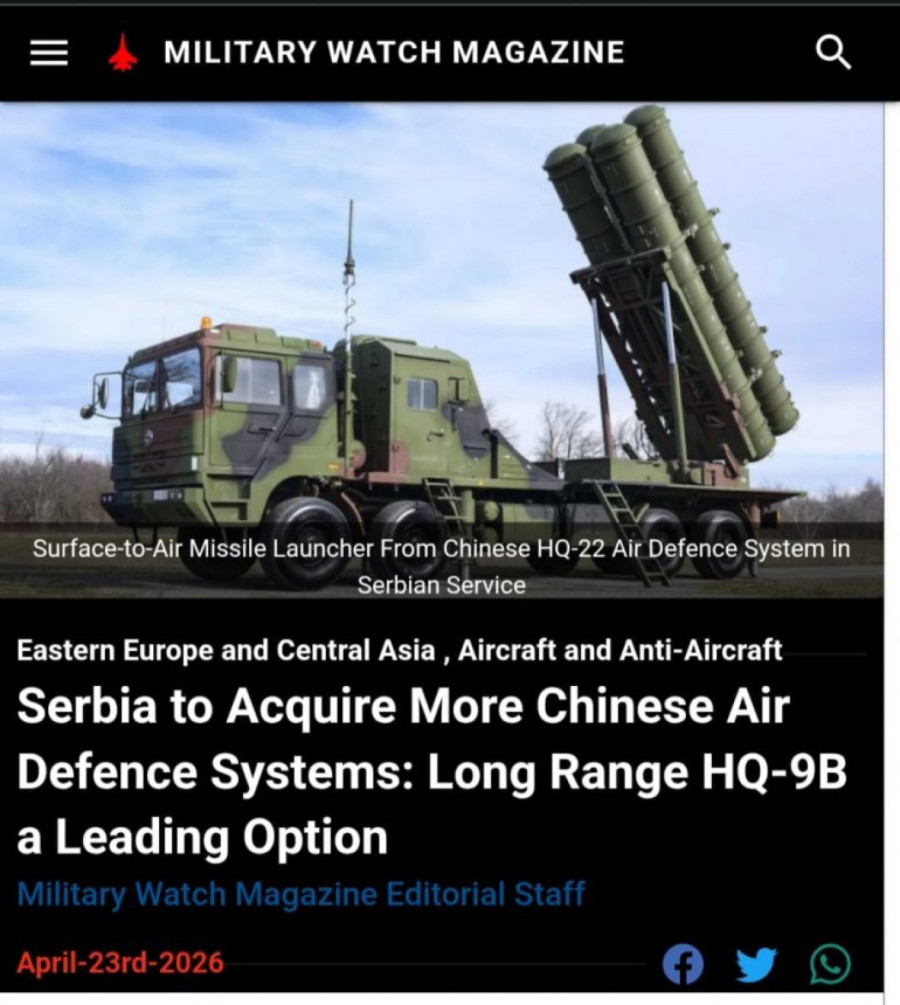
U.S. media: Is Serbia buying a 'Chinese S-400' system?
Serbia’s Ministry of Defense is planning to procure new air defense equipment from China, according to multiple local sources, while Serbian President Aleksandar Vučić announced the imminent signing of new contracts to strengthen the country’s defense network.



0 Komentari
Možda vas zanima

Rat – dan 1.867: Masakr u Kramatorsku – preko 30 mrtvih; Ukrajinci se osvetili Rusima FOTO/VIDEO
Rat u Ukrajini – 1.687. dan. U ruskom napadu na stajalište javnog prevoza i dva autobusa u Kramatorsku, u Donjeckoj oblasti, poginulo je 33 ljudi, dok je 18 povređeno, saopštilo je regionalno tužilaštvo Ukrajine. Ukrajinci su napali rafineriju nafte u Omsku.
23:55
8.10.2026.
1 d

Krah Đokovića na startu Šangaja
Novak Đoković poražen je od Huberta Hurkača sa 2-0 u setovima u 2. kolu Mastersa u Šangaju.
13:54
9.10.2026.
1 d

Fenomenalna Zvezda – Dubai nemoćan!; Navaro: "Dobra odbrana"; Paskval ljut
Košarkaši Crvene zvezde savladali su Dubai sa 77:58 u četvrtom kolu Evrolige.
21:07
8.10.2026.
1 d

Real prekinuo Partizanov niz – Madrid i dalje neosvojiva tvrđava; Penjaroja srećan zbog jedne stvari
Košarkaši Partizana izgubili su od Reala u Madridu 86:76 u 4. kolu Evrolige.
23:25
8.10.2026.
1 d

Rat – dan 1.688: Kijev u mraku; Ukrajinski dronovi pogodili Omsk i Uhtu FOTO/VIDEO
Rat u Ukrajini – 1.688. dan. Ruski napadi teško su oštetili energetsku infrastrukturu Ukrajine, dok je gradonačelnik Kijeva Vitalij Kličko pozvao građane da privremeno napuste prestonicu. Ukrajinske snage su potvrdile napade na ruske rafinerije.
23:54
9.10.2026.
14 h












Komentari 0
Pogledaj komentare Pošalji komentar