






13.05.2026.
11:15
Expert warns: "There is a more severe form of the Andes hantavirus, and it has been spreading for a long time"
A U.S. expert who worked on the Andes strain hantavirus outbreak in Argentina has warned that a mutated variant of that virus already exists in Kansas and that it is even more severe.



The Kansas Department of Health and Environment announced on Tuesday that three individuals, whose identities have not been disclosed to protect privacy, are being monitored by the department, the Centers for Disease Control and Prevention, and the local health department.
According to the statement, the three individuals were not on the cruise ship ‘MV Hondius,’ where the Andes strain of hantavirus was confirmed in at least 11 people and where three deaths have been recorded, nor are they currently showing any symptoms of the disease.
“Exposure to the virus occurred abroad after contact with a person from the cruise ship ‘MV Hondius,’ who later tested positive for the Andes strain of hantavirus,” the statement said.
How is the Andes strain transmitted?
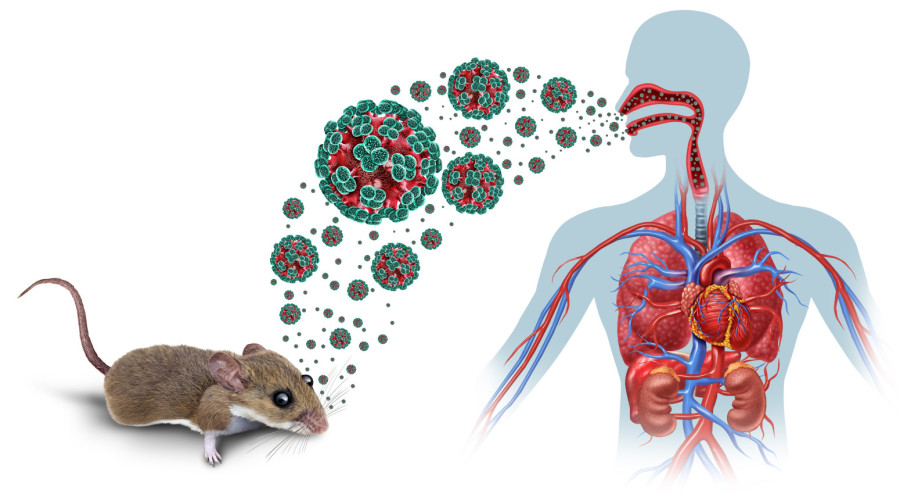
Back then, he said, they monitored the spread of the disease and, since hospital conditions were not ideal—some healthcare workers, for example, did not even have gloves—they concluded that there was no human-to-human transmission. However, further research in later years showed the opposite.
Today, scientists know that the Andes strain of hantavirus can, in rare cases, be transmitted between humans, and only through close contact with an infected person, Simpson said.
However, he agrees with Kansas health authorities that the threat to public health is extremely low.
Simpson hopes that attention on hantavirus will raise awareness of cases that typically occur in the United States—890 cases nationwide in 2023, including 20 in Kansas—which are linked to activities such as cleaning barns and disturbing dust contaminated with rodent urine or feces.
“We have hantavirus, and especially in western Kansas, you can get infected with it,” he said, but also warned: “Because there was an El Niño phenomenon last fall and winter, there is a possibility that we now have more mice, especially deer mice.”
Simpson warned that people should be careful when disturbing dust while cleaning areas where mouse droppings may be present.
He said that the hantavirus found in Kansas through this route poses a greater danger than the Andes strain.
Symptoms of Andes hantavirus

0 Komentari
Možda vas zanima

uživo Objavljeni rezultati izbora: Evo kako je Srbija glasala FOTO/VIDEO
Vanredni parlamentarni izbori održani su danas u Srbiji. Lista "Aleksandar Vučić – Ujedinjena Srbija" izgubila je na izborima, dok je pobedu odnela "Studentska lista".
22:55
25.10.2026.
21 min

Vučić: "Pobedila je politika Nataše Kandić"; "Imaćemo oko 105 mandata, 'Studentska lista' 135 do 140" VIDEO
Nosilac liste "Aleksandar Vučić - Ujedinjena Srbija" Aleksandar Vučić izjavio je večeras da je ta lista izgubila na današnjim vanrednim parlamentarnim izborima i da je pobedila "Studentska lista", a da će u parlament ući još i Savez vojvođanskih Mađara.
21:40
25.10.2026.
1 h

Partizan srušio Zvezdu; Pajola heroj! Karlik: "Nemam reči"; Italijan objasnio pobedu crno-belih
Košarkaši Partizana pobedili su Crvenu zvezdu rezultatom 85:82 u 7. kolu Evrolige.
23:57
22.10.2026.
2 d

Stigao predlog za kraj rata
Časopis "The Economist" izložio je "konture" američkih mirovnih planova za kraj rata u Ukrajini. Predlozi SAD uključuju stvaranje demilitarizovane zone u Donbasu, ublažavanje sankcija protiv Rusije i investicioni paket za Kijev.
10:29
23.10.2026.
2 d

Novo hapšenje zbog planiranja haosa za izbore: Pronađeno opasno oruđe, panciri, pirotehnika; Oglasilo se VJT
U nastavku akcije protiv kriminalne grupe iz Novog Sada na čijem čelu je, kako se sumnja, M.V. koji je uhapšen pre tri dana, uhapšen je još jedan Novosađanin.
12:42
24.10.2026.
1 d












Komentari 0
Pogledaj komentare Pošalji komentar