






27.02.2026.
12:05
Nuclear-armed nation: 660,000 troops and 4,600+ artillery units ready for deployment PHOTO/VIDEO
The fragile ceasefire between Pakistan and Afghanistan, agreed last year, was broken yesterday after Pakistani armed forces launched an operation in response to what they described as 'unprovoked' Taliban attacks.



“Pakistani Defense Minister, Khawaja Asif, stated that an 'open war' is underway and that Islamabad has 'run out of patience'.
‘Our cup of patience has overflowed. Now there is an open war between us and you (Afghanistan),’ he said.”
Last week, Pakistan carried out a series of night airstrikes on Afghanistan, in which at least 18 people were killed, including women and children, according to the Taliban.
A few hours earlier, Taliban government spokesperson Zabihullah Mujahid said that Afghanistan is conducting 'large-scale offensive operations' against the Pakistani military along the Durand Line separating the two countries.
Islamabad said the strikes targeted seven militant camps and hideouts near the Pakistan–Afghanistan border and were launched following recent suicide attacks in Pakistan. Kabul said that civilian homes and a religious school were hit.
The Afghan Taliban said they had launched a “large-scale” operation in response and stated last night that they had killed “numerous” Pakistani soldiers in the offensive, a claim denied by a spokesperson for Pakistani Prime Minister Shehbaz Sharif, who also disputed the Taliban spokesperson’s assertion that 15 military positions had been captured.
As reported by Al Jazeera, the situation remains highly tense. Pakistan has carried out airstrikes, including inside Afghanistan, and there are reports from both sides that they have inflicted heavy casualties on each other. The situation is alarming, as Pakistan says it will continue what it calls a “retaliatory response.”
A spokesperson for the Pakistani army said that 228 Taliban fighters were killed in the attacks and 314 were wounded. He added that 74 Taliban positions were destroyed and 18 were captured. Meanwhile, 27 people were injured in Pakistan.
Earlier, the Taliban government said that eight of its fighters had been killed and 11 wounded.
What is known so far?
Pakistani forces have attacked Kabul and the provinces of Kandahar and Paktika. It has not yet been independently confirmed whether there are casualties.
Pakistani Prime Minister Shehbaz Sharif said his country’s forces are capable of “crushing” their enemies, while the defense minister declared “open war” on the Afghan Taliban.
The Afghan Taliban “will retaliate if attacked, but will not initiate conflict at this time,” a Taliban military spokesperson told the BBC.
UN officials have called for an immediate de-escalation of the fighting, while Iranian Foreign Minister Abbas Araghchi has offered his country’s mediation.
The foreign minister of Pakistan’s ally Saudi Arabia, Faisal bin Farhan Al Saud, met with his Pakistani counterpart Mohammad Ishaq Dar to discuss ways to reduce tensions.
The airstrikes followed months of hostilities between the two countries, according to the BBC’s South Asia and Afghanistan correspondent.
Kabul lacks the capacity for conventional warfare
As tensions rise, questions are being raised about Afghanistan’s actual ability to wage war against Pakistan, given the vast disparity in military strength. As analysts told BBC Urdu, it is unlikely that the Taliban will be able to conduct a conventional war.
Pakistan’s armed forces, which possess nuclear weapons, are regularly ranked among the 15 most powerful militaries in the world. The Afghan Taliban, on the other hand, do not have comparable military resources and are facing economic challenges.
The weapons available to the Taliban forces come mainly from three sources: the arsenal of the former Afghan army, equipment left behind by withdrawing foreign forces, and new weapons acquired from various sources, including the black market.
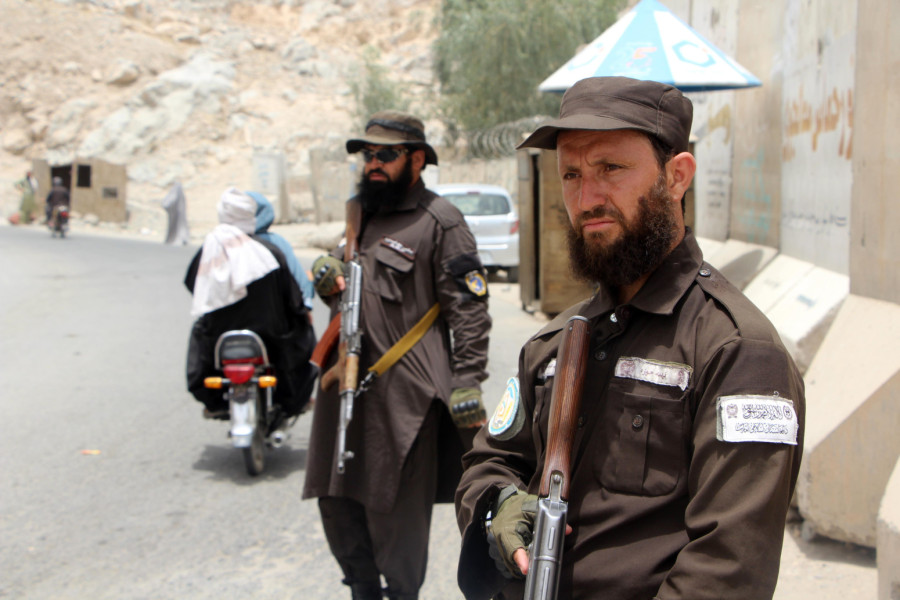
Experts say footage from past border clashes suggests that Taliban forces have largely used light weapons against Pakistani forces.
However, analysts point out that the Taliban have extensive experience in guerrilla warfare. An Afghan security expert told BBC Urdu that many clashes between the Taliban and Pakistani forces have involved guerrilla tactics such as surprise attacks and roadside bombs.
Comparison of the military capabilities of Pakistan and Afghanistan
Troops:
Pakistan: 660,000
Afghanistan: 172,000
Tanks and armored vehicles:
Pakistan: More than 6,000 armored combat vehicles and over 4,600 artillery units.
Afghanistan: Some armored vehicles and artillery, much of it dating back to the Soviet era, but the exact number remains unclear.
Air force:
Pakistan: Operates 465 combat aircraft and more than 260 helicopters.
Afghanistan: No combat aircraft and only a small number of older planes and helicopters, with uncertain operational status.
Nuclear capability:
Pakistan is a nuclear-armed state with an estimated 170 warheads.
Afghanistan has no nuclear capability, according to Al Jazeera.
What is the Durand Line and why is it important?
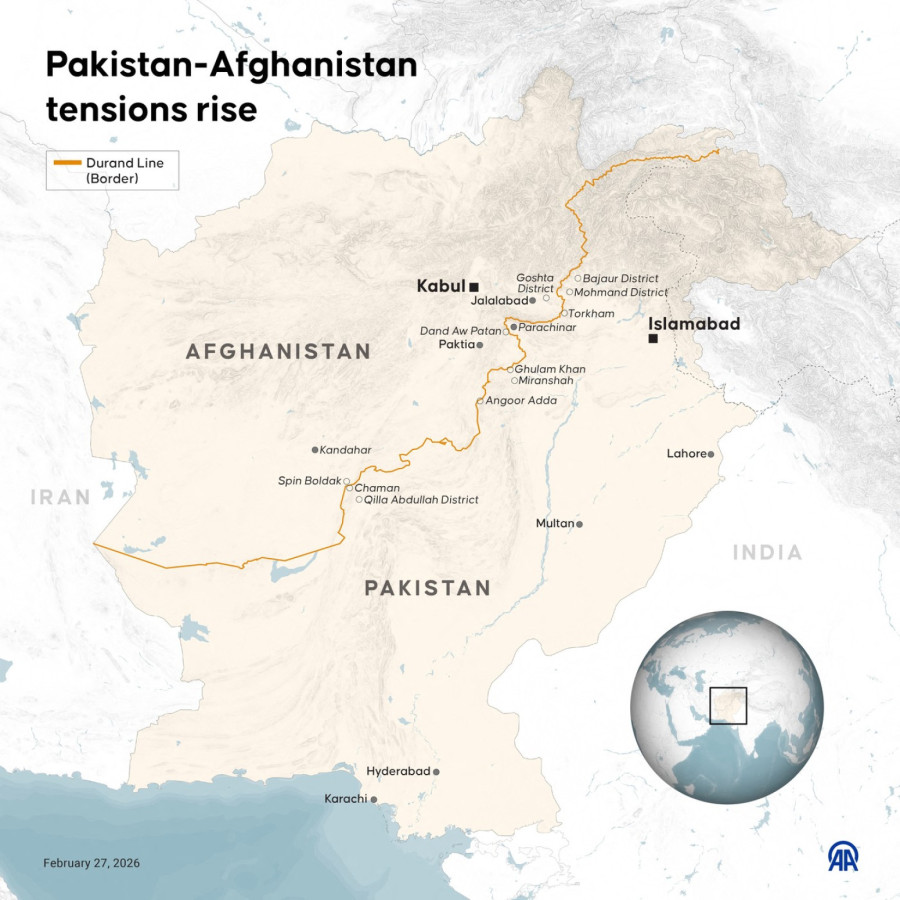
The Durand Line is the name given to the 2,640-kilometer border between Pakistan and Afghanistan.
0 Komentari
Možda vas zanima

Rat – dan 1.867: Masakr u Kramatorsku – preko 30 mrtvih; Ukrajinci se osvetili Rusima FOTO/VIDEO
Rat u Ukrajini – 1.687. dan. U ruskom napadu na stajalište javnog prevoza i dva autobusa u Kramatorsku, u Donjeckoj oblasti, poginulo je 33 ljudi, dok je 18 povređeno, saopštilo je regionalno tužilaštvo Ukrajine. Ukrajinci su napali rafineriju nafte u Omsku.
23:55
8.10.2026.
1 d

Krah Đokovića na startu Šangaja
Novak Đoković poražen je od Huberta Hurkača sa 2-0 u setovima u 2. kolu Mastersa u Šangaju.
13:54
9.10.2026.
10 h

Kraj jedne ere: Jugoslovenski gigant se prodaje deo po deo
Proces prodaje pojedinačnih delova nekadašnjeg industrijskog giganta Koksare Lukavac počeo je da daje prve konkretne rezultate.
8:16
7.10.2026.
2 d

Talas povećanja primanja stiže u Srbiju: 65.000 dinara za jedne, veće penzije i minimalac od 600 evra za druge
Građane Srbije u narednim mesecima očekuje niz važnih finansijskih novina i državnih mera koje će značajno uticati na kućne budžete.
8:26
7.10.2026.
2 d

Nemačka odbila Kineze: "Ne damo"
Nemačka savezna vlada zabranila je prodaju 80 odsto udela u hamburškoj logističkoj kompaniji "Cipel" kineskoj državnoj brodarskoj kompaniji "Kosko", navodeći kao razlog rizike po nacionalnu bezbednost.
19:31
7.10.2026.
2 d












Komentari 0
Pogledaj komentare Pošalji komentar