






12.03.2026.
9:35
23rd anniversary of Zoran Djindjić's assassination
Today marks 23 years since Zoran Djindjić, Prime Minister, leader of the Democratic Party, and the leading figure of the DOS, was assassinated near the entrance to the Government of Serbia building on Nemanjina Street.



He rose to the top of Serbia’s political life following the October 5th democratic changes in 2000, when Slobodan Milošević lost the elections, and became Prime Minister on January 25, 2001.
Prior to that, the executive power in Serbia was held by the transitional cabinet of Milomir Minić from October 25, 2000, to January 25, 2001.
Djindjić led the Democratic Party from January 1994, succeeding Dragoljub Mićunović in that position. His highest official post prior to the premiership was a brief term as Mayor of Belgrade, from February to September 1997.
Djindjić was born into a military family in Bosanski Šamac on August 1, 1952. On his father’s side, his family originated from the Toplica region. He spent his childhood in Bosnia, where he began secondary school in Travnik, and completed the final two years in Belgrade at the Ninth Gymnasium.
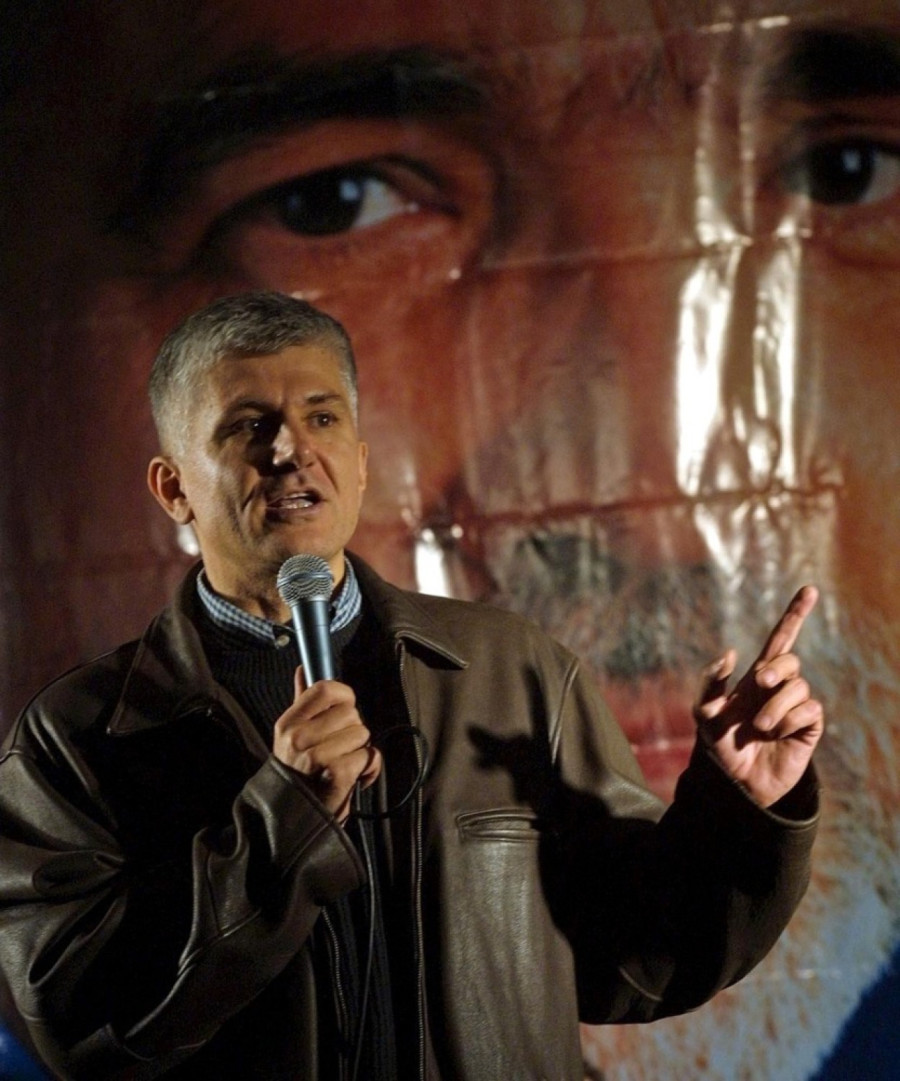
Zoran Djindjić entered higher education during the turbulent period of 1968, when universities were abuzz with intellectual debates and student activism. He chose to study at the Faculty of Philosophy, placing himself at the epicenter of these discussions.
He quickly distinguished himself both academically and through student activities, becoming prominent within the Student Union of the Faculty of Philosophy. In November 1974, he was put on trial in Ljubljana. Six students prosecuted at the time were ultimately freed due to international pressure, reportedly initiated by West German Chancellor Willy Brandt.
During his student years and the years that followed, Djindjić was drawn to radical left-wing ideas and was seen as a representative of the ’68 generation. He felt affinity with the ideas of anarchist theorist Peter Kropotkin and later drew inspiration from the thinkers of the Frankfurt School. He completed his studies at the Faculty of Philosophy, University of Belgrade, in 1974.
With the support of Professor Dragoljub Mićunović, he continued his education in Germany, first in Frankfurt and then in Konstanz, where he earned a PhD in 1979 with a thesis titled “Problems in the Foundation of Critical Theory of Society.” His mentor was Jürgen Habermas, one of the leading philosophers of the late 20th century.
Likely influenced by his time in Germany, Djindjić gradually moved away from radical leftist concepts, embracing classical liberal ideas. This shift reflected the prevailing climate of the period, marked by the collapse of the Eastern Bloc and the Western triumph in the so-called Cold War. During this period, he also engaged in business and trade, achieving notable success.
Upon returning to Yugoslavia in 1989, amid an atmosphere of renewed hope, he was among the founding members of the re-established Democratic Party, together with a group of 12 intellectuals and public figures.
In January 1994, when he succeeded Dragoljub Mićunović as party leader, Djindjić became one of the foremost opposition figures of the 1990s. He was the architect of the Democratic Opposition of Serbia (DOS), a broad coalition of diverse political organizations that came to power in the October 5th, 2000, uprising, after the coalition won the most votes in the federal elections on September 24, 2000. Formally, he served as the head of the central election headquarters and coordinator of DOS’s promotional campaign.
Riding this wave, Djindjić became Prime Minister of Serbia on January 25, 2001, a position he held until his assassination.
He was shot in the chest at 12:25 p.m. on March 12, 2003, in the courtyard of the Government of Serbia building. He was 50 years old.
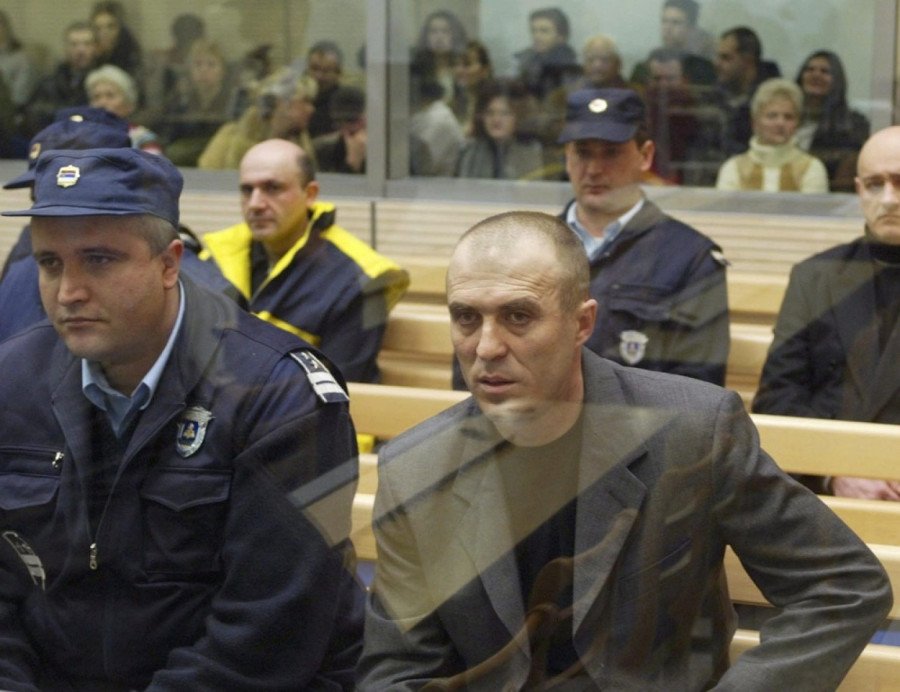
Following his assassination, a state of emergency was declared, and Operation “Sabre” was launched, targeting organized crime. Members of the “Zemun Clan,” who were among the organizers and perpetrators of the assassination, were arrested, tried over three and a half years, and convicted. According to the investigation and court rulings, Milorad Ulemek, known as “Legija,” sentenced to 40 years in prison, ordered Zvezdan Jovanović, a member of the Special Operations Unit (JSO) under Legija’s command, to kill Djindjić.
Djindjić’s energy and commitment to Serbia’s European integration were widely admired and became even more apparent in the wake of his death. He believed in rapid societal reform and insisted that the effort of the entire nation was necessary for citizens to collectively witness swift improvements in their country.
His messages remain memorable: “The motto that drives me forward is—never give up. If you start overtaking, step on the gas. Do what you believe is right, not what the majority will support,” or “If we fail today, the only reason is ourselves,” and “Reforms are always swimming against the current. Reforms always clash with mentality, heritage, interests, entropy, and inertia.”
In his final years, Djindjić was particularly focused on the issue of Kosovo, arguing that a mutually acceptable solution had to be found in which Serbia would not be the sole loser, a stance that drew criticism from Western powers.
His tragic fate was also shaped by his firm commitment to confronting organized crime. He was assassinated just as the entire legal and operational framework to tackle criminal networks had been put in place.
Djindjić received numerous international awards, including Germany’s Bambi Award in 2000 for his political work, and the Polak Foundation Prize for his contribution to the development of democracy in Serbia, awarded in Prague in 2002. In September 1999, the American weekly Time magazine named him among the 14 leading European politicians of the third millennium.
On the intellectual front, he engaged in translation and writing. In addition to numerous political and philosophical essays, he authored books including “Subjectivity and Violence,” “The Autumn of Dialectics,” “Yugoslavia as an Unfinished State,” and “Serbia Neither in the East Nor in the West.”
0 Komentari
Možda vas zanima

Medvedev diskvalifikovan, Đoković u finalu; Novak: "Šokiran sam, slično mi se desilo" VIDEO
Srpski teniser Novak Đoković pobedio je Danila Medvedeva posle maratonska dva seta u polufinalu Pekinga, ali nakon što je Rus diskvalifikovan.
16:55
5.10.2026.
2 d

Šta ovo bi? De Minor predao Đokoviću za titulu! "Bio sam van domašaja ovakvih rekorda..."
Srpski teniser Novak Đoković osvojio je sedmu titulu u Pekingu, nakon što je Aleks de Minor predao meč na startu drugog seta.
16:28
6.10.2026.
1 d

Rat – dan 1.685: Napadnuta Moskva; Novi udari na Kijev; Rusija: "Pratimo planove NATO-a" FOTO/VIDEO
Rat u Ukrajini – 1.685. dan. Ukrajinske snage izvele udare na Moskvu i oblast oko nje. Moskva je, s druge strane, nastavila da bombarduje Ukrajinu.
23:55
6.10.2026.
1 d

Hrvatska u neverici – Merino utišao "Poljud" sa dva gola! VIDEO
Hrvatska je imala veliki "skalp" u rukama i, da je iskoristila sve prilike, mogla da pobedi svetskog i evropskog šampiona, a na kraju je ostala potpuno praznih šaka
22:36
6.10.2026.
1 d

Beogradske ulice menjaju imena: Među njima i najprometniji gradski bulevar, evo koje će ime od sada nositi
Na dnevnom redu su i predlozi da ulice dobiju imena Bratislava Brace Petkovića, Milovana Vitezovića i naziv Taškentska.
17:39
5.10.2026.
2 d












Komentari 0
Pogledaj komentare Pošalji komentar