






08.12.2025.
9:35
European country prepares for war: Shelters built, citizens trained; "Most dangerous times" PHOTO
From digging trenches and building walls to learning survival skills, Poland is becoming increasingly aware of the risks posed by its eastern neighbors, and the sense that the threat of war is real and ever-present is spreading widely.



In a country whose geographic location in the heart of Europe has historically made it vulnerable, the 2022 invasion of neighboring Ukraine, drone incursions into its airspace, and a wave of sabotage linked to Russian intelligence services have set off all alarms, reports The Guardian.
Cezary Prusko still remembers civil defense training from his school days under the communist regime—reading maps, survival skills, and the sense that the threat of war was real.
"My generation grew up with these threats. There was no need to explain why this was important," said Prusko, 60, as he refreshed those skills one Saturday morning at a military base outside Warsaw.
Dangerous times
Alongside dozens of other Polish civilians, he toured a shelter, put on a gas mask, and practiced starting a fire with flint. The training, designed to increase civilian resilience, is part of a new state program aiming to train 400,000 citizens by 2027.
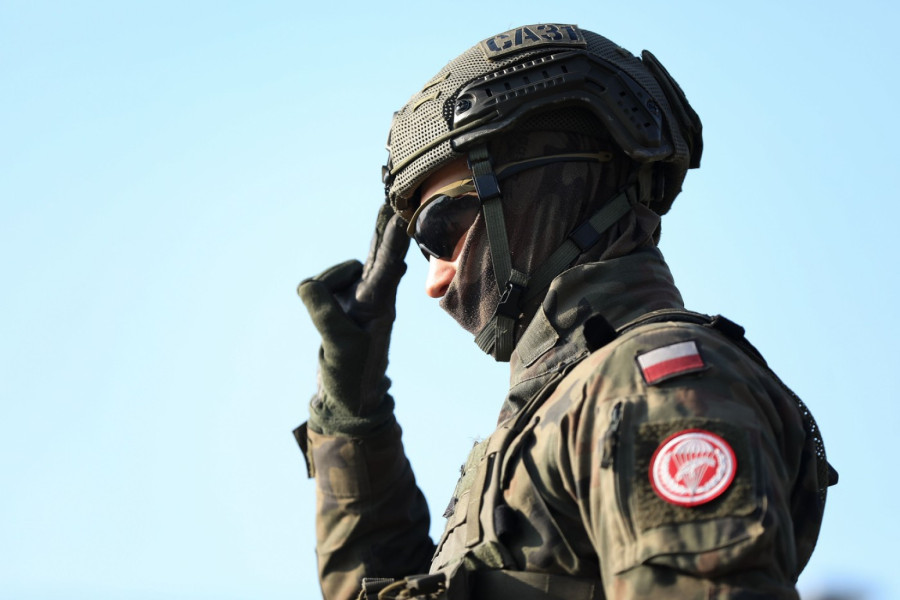
The program is voluntary and open to everyone, from schoolchildren to retirees.
"We are living in the most dangerous times since the end of World War II," said Polish Defense Minister Władysław Kosiniak-Kamysz.
"Each of us must have the skills, knowledge, and practical abilities to deal with a crisis."
All of this has led to a complete reorganization of national security. The government approved a draft budget increasing defense spending to 4.8% of GDP, far higher than almost all other NATO countries. New buildings must include shelters, and older ones are being renovated. In addition, construction has begun on an "eastern shield" along the borders with Belarus and the Russian exclave of Kaliningrad.
Reviewing war plans
At an operational base several kilometers from the Belarusian border, Brigadier General Roman Brudło, commander of Poland’s 9th Armored Cavalry Brigade, says the Russian invasion of Ukraine has completely changed the security landscape.
"Peaceful times are, unfortunately, gone, and we live in difficult, highly dynamic times," he said.
"I read newspapers, listen to the news, see analyses from various intelligence communities, which say that in one, two, or five years we could face the possibility of a full-scale Russian invasion. I don’t know. I hope not."
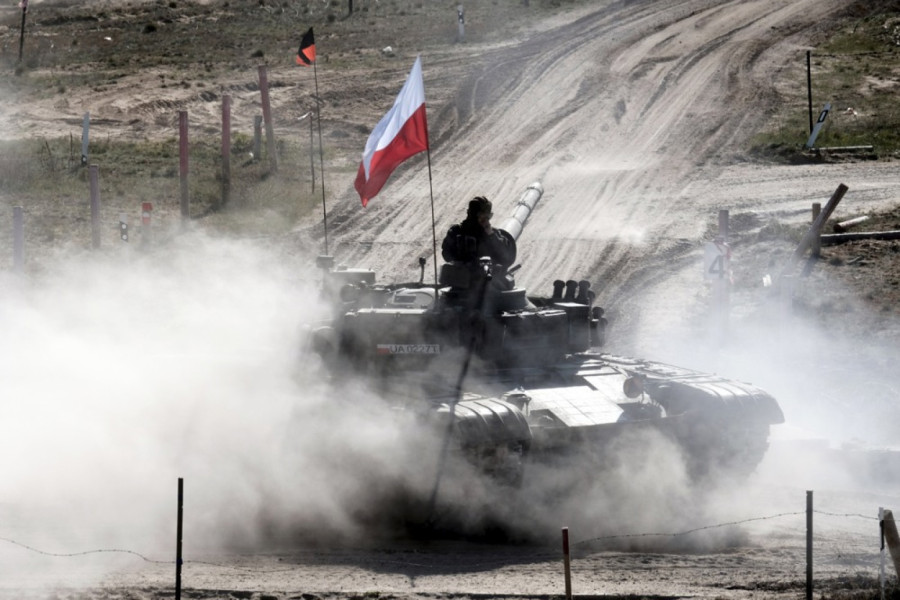
Brudło joined the army in 1996 because he was a trained mechanic and “loved tanks.” After nearly three decades of service, he admits that in a war against drones or sabotage, his traditional warfare training would need to be revised.
NATO exercises
"I’m not tied to a tank or dependent on it, and we are all trained here to prepare us for new types of missions," he said.
"I think Russia will pressure us with hybrid methods, below the threshold of open war, to exhaust us, but without crossing the line that would unite us."
Captain Karol Frankowski, responsible for communications in the brigade, described participating in a hybrid attack simulation during NATO summer exercises in Germany.
"My job was to establish contact with the local population during the crisis – they had actors playing the police chief, local journalists, other citizens, and we had to act as if it were a state of emergency," he said.
Brudło and Frankowski claim that one of Russia’s hybrid tactics is the promotion of “illegal migration.” The brigade now assists border guards in detecting people attempting to cross from Belarus. The day before a journalist’s visit, an Afghan man was arrested.
Instrumentalization of migration
"For the protection of our country, this is a necessity. We don’t know who this Afghan is. Maybe a spy, or perhaps someone who wants to destroy our country from within. Maybe even a Russian spy," said Frankowski. The idea that Moscow and Minsk would instrumentalize migration was also used by the previous nationalist government.
Interestingly, little has changed since Donald Tusk’s progressive coalition took power two years ago. The focus on the Russian threat has even led many liberals to support the government’s strict policies, says Aleksandra Hšanowska of the activist alliance Group Border.
"People are no longer interested in the drama and tragedy of those coming here seeking protection," she said, calling the focus on migrants a threat an “extremely right-wing, racist narrative” that is not based on facts.
Prepared for defense
In addition to the border wall, the new “eastern shield” will include trenches and fortifications, as well as GPS towers and other technological installations to guard against drones. But if war occurs, it likely won’t be of the traditional type with tanks crossing the border.
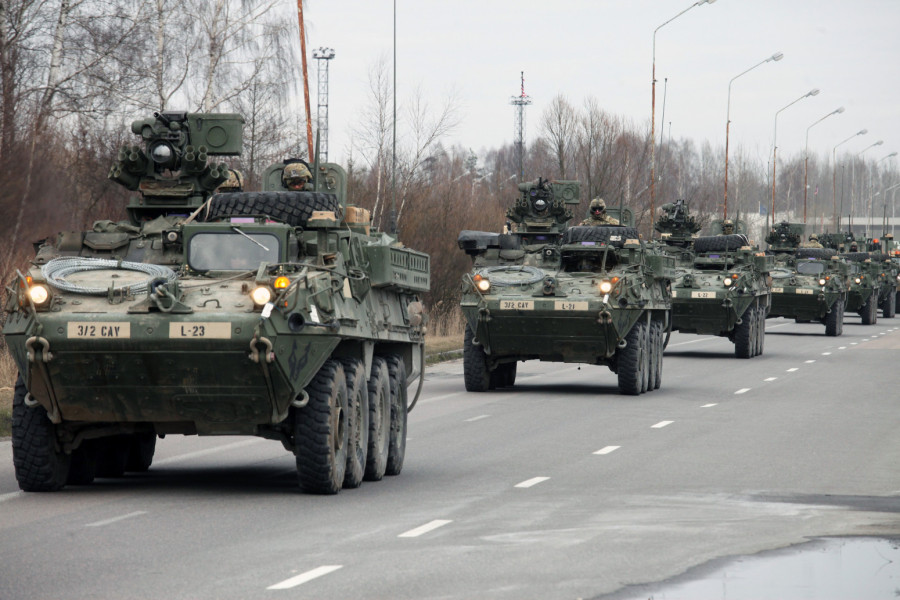
In Gołdap, a town of around 15,000 just a few kilometers from Kaliningrad, residents remain calm.
"The threat affects the way we think, but honestly, I’d be more worried living in Warsaw. Strategically, they won’t target us here," said Piotr Bartośuk, 45, director of a vocational school.
In the past, he notes, Poles would regularly cross the border to buy cheaper Russian fuel, and Russians would come to buy as well. Today, the border is closed.
"Russia is certainly a threat, but not a big one, because we are in NATO, we are protected, and I don’t think they would suddenly attack us like they did in Ukraine," said fifteen-year-old Kornelia Brzezińska, a student at a military school who hopes to join the army.
Survival mindset
Still, if the country were attacked, she says she wouldn’t hesitate.
"I would go to the front. I really love Poland. This isn’t something I say lightly. I wouldn’t abandon our nation – I would defend it," she said firmly. The outer walls of her school still bear shrapnel scars from World War II, intentionally left as a reminder.
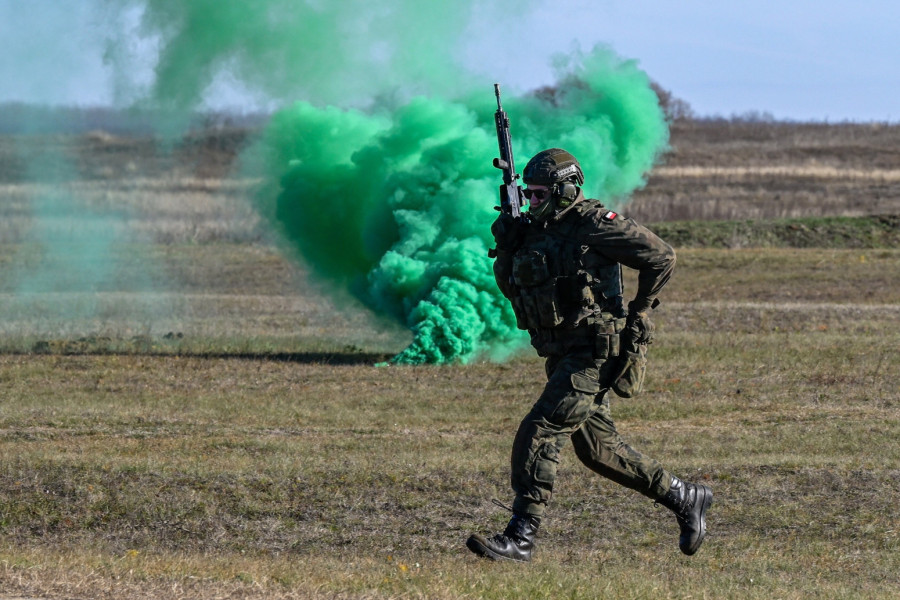
Few survivors remain from that era, but generational memories fuel fears of a new war, especially among older Poles. As the training day at the base came to an end, Cezary Prusko said he had organized the same survival course for employees at his company.
"Many of the younger employees grew up in the European Union, in peacetime. I hope we never need these skills, but I want them to know what to do if that moment ever comes," Prusko concluded.
0 Komentari
Možda vas zanima

Poznati lanac zatvara 150 prodavnica: U toku su rasprodaje na više lokacija
Diskontni lanac KiK nastavlja da smanjuje broj svojih prodavnica u Nemačkoj. Tokom 2026. godine planirano je zatvaranje oko 150 objekata, dok bi istovremeno trebalo da bude otvoreno svega petnaestak novih.
16:19
11.10.2026.
2 d

Džoooons! Zvezda slavila u trileru; "Košarkaški bogovi su nekad pošteni"
Košarkaši Crvene zvezde savladali su večeras Asvel u Vilerbanu rezultatom 84:82 u utakmici petog kola Evrolige.
23:00
13.10.2026.
15 h

Potop Partizana u Areni – Panata se "prošetala"; Penjaroja: "Teško je takmičiti se sa lošim šutem"
Košarkaši Panatinaikosa savladali su Partizan sa 55:72 u okviru petog kola Evrolige.
23:43
13.10.2026.
14 h

Uzbuna u Crnom moru; Bugarska odmah traži pomoć NATO-a
Bugarska je zatražila tehničku pomoć Evropske unije i NATO-a u nastavku istrage o napadima dronovima na dva trgovačka broda u bugarskoj isključivoj ekonomskoj zoni Crnog mora.
22:05
12.10.2026.
1 d

Rat – dan 1.691: Rusija udarila na energetiku Ukrajine; Putin nudi rešenje?; "Evropi preti haos" FOTO/VIDEO
Rat u Ukrajini – 1.691. dan. Kremlj poručio da je ruski predsednik Vladimir Putin spreman na obustavu napada tokom izbora u Ukrajini. Za to vreme, evropske bezbednosne službe upozoravaju na moguće nove ruske operacije protiv članica NATO-a.
23:44
12.10.2026.
1 d












Komentari 0
Pogledaj komentare Pošalji komentar