






26.03.2026.
9:45
Elite U.S. Unit drops from helicopters to seize island — Then bloodshed follows? VIDEO
One scenario for a ground invasion of Iran would involve U.S. paratroopers jumping from Osprey helicopters and storming the shores of Kharg Island. It would be carried out by an elite unit that has already been sent to the region.



The Pentagon announced last night that it has deployed its prestigious 82nd Airborne Division to the Middle East, heightening tensions and speculation about a possible ground invasion of Iran amid the escalating conflict that began in late February.
The deployment of elite units is the latest in a series of moves indicating that the United States is preparing for a potentially significant escalation of the war.
Up to 3,000 paratroopers, trained for operations on enemy territory, are set to join an estimated 5,000 Marines already en route to the region.
This will further increase the roughly 50,000 U.S. troops currently deployed in the Middle East.
These forces include the 31st Marine Expeditionary Unit (MEU) with 2,200 Marines aboard the USS Tripoli, which sailed from Japan last week, and the 11th Marine Expeditionary Unit aboard the USS Boxer, currently en route from California.
Experts note that the simultaneous deployment of two large Marine expeditionary units to the Middle East is “unusual.”
Kharg Island as a strategic objective
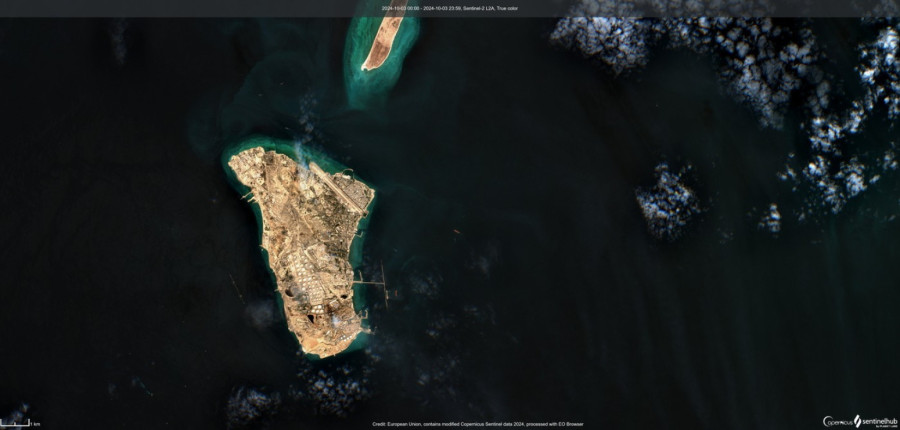
U.S. President Donald Trump proposed a deal to the Iranians this week, while simultaneously threatening military strikes.
He specifically highlighted Kharg Island, a small landmass just 24 kilometers off the Iranian coast, which is critical to Iran’s already weakened economy, as roughly 90 percent of Tehran’s oil exports pass through it.
As part of a military campaign dubbed “Operation Epic Fury,” U.S. forces already struck targets on the island last week, but the arrival of thousands of troops and Marines gives the White House new options for launching a ground assault.
Seizing Kharg Island, located north of the Strait of Hormuz, would give the United States control over Iran’s oil exports and a powerful lever to pressure Tehran into lifting the blockade of the strait.
Iran’s closure of the Strait of Hormuz, a key maritime route through which one-fifth of the world’s oil and gas passes, has triggered a global energy crisis.
Oil prices have surged above $100 per barrel, causing turmoil on global stock markets and fueling inflation.
Iran has signaled that it is ready for a potential U.S. invasion.
One of its top military commanders stated on Wednesday that Tehran is “closely monitoring all American movements in the region, especially troop deployments.”
Parliament Speaker Mohammad Bagher Ghalibaf issued a stern warning: “Do not test our resolve to defend our country.”
Iranian military officials, including spokesperson Ebrahim Zolfaghari, publicly rejected U.S. diplomatic offers as “negotiating with themselves” and “fake news.”
Risks of ground operation

Unlike other troops, members of the 82nd Airborne Division are trained to deploy anywhere within 18 hours without heavy support from tanks or armored vehicles.
Their focus is on speed and surprise, but experts note that this also makes them vulnerable to enemy attacks.
They would be supported by thousands of Marines who, according to Newsweek, are experts in rapid island seizure missions.
Retired U.S. Navy Vice Admiral Robert Maret stated that gaining control of the island is a “central mission” suited to these Marines.
An amphibious assault, in which U.S. troops would storm the shore from small boats and helicopters with air support, would be extremely risky.
Even if the U.S. were to try to destroy the main defensive positions on Kharg Island in advance, Iran could still retaliate with ballistic missiles or drones launched from the mainland.
Casualties would be nearly unavoidable.
Although the Marines would have air cover, their amphibious groups do not possess the same firepower as aircraft carriers.
A key role in protection would fall to a Navy destroyer equipped with long-range missiles. However, bringing larger ships close to the island carries risks, including anti-ship missiles and naval mines.
Once troops land on the shore, it becomes a race against time.
While the Marines and the 82nd Airborne Division could hold the island for a period, it is unlikely they would be able to maintain control over positions on the Iranian mainland without rapid reinforcement.

0 Komentari
Možda vas zanima

Evo kada počinje zimsko računanje vremena: Tokom ove noći očekuje nas pomeranje sata
Prelazak na zimsko računanje vremena u 2026. godini očekuje nas u noći između 24. i 25. oktobra, kada se kazaljke vraćaju sa tri na dva sata ujutru. Saznajte zašto je uvedeno pomeranje sata, kao i kako utiče na zdravlje.
18:28
19.9.2026.
1 d

Dvostruka državna pomoć za penzionere: Evo šta ih očekuje pored novog povećanja penzija
PIO fond je obezbedio sredstva za jednokratnu pomoć, čiji će iznos zavisiti od visine penzije, dok penzionere očekuje i novo povećanje primanja.
9:01
20.9.2026.
1 d

Selektor Irske pred duel u Bačkoj Topoli: "Igramo protiv genocida"
Predstojeće utakmice Republike Irske i Izraela u Ligi nacija odavno su prevazišle sportske okvire, a tenzije su dodatno porasle posle izjava irskog selektora Hejmira Halgrimsona.
23:58
20.9.2026.
14 h

Stiže još novca za penzionere: Pre povećanja penzija stiže još jedna isplata
Država je započela sprovođenje novog paketa ekonomskih mera usmerenih na podizanje životnog standarda građana, čija ukupna vrednost iznosi 980,6 miliona evra, dok je za jednokratne oblike pomoći od 2020. do 2026. godine opredeljeno ukupno 374 milijarde dinara.
17:33
20.9.2026.
20 h

Najluđi meč sezone! Partizan išao ka debaklu, pa se dva puta vratio iz mrtvih VIDEO
Nešto u Humskoj, definitivno je, mora da se menja. Ali šta?
20:52
19.9.2026.
1 d












Komentari 0
Pogledaj komentare Pošalji komentar