






19.07.2025.
22:50
Terrible escalation: Chaotic footage spread VIDEO
Bedouin fighters and their allies continued to clash with Druze fighters in Syria's Sweida province, despite government orders to lay down their arms in a conflict that has killed more than 900 people since Sunday.



The Syrian presidency earlier declared an "immediate and comprehensive" ceasefire and deployed its internal security forces in the southern province after nearly a week of fighting in the predominantly Druze area.
Armed tribes clashed with Druze fighters on Friday, a day after the army withdrew under Israeli bombardment and diplomatic pressure.
On Saturday, in his second televised address since the fighting began, Syrian leader Ahmed al-Sharaa blamed "armed groups from Sweida" for reigniting the conflict "by launching retaliatory attacks against Bedouins and their families." He also said that the Israeli intervention "has pushed the country into a dangerous phase".
The presidency added in a statement that any violation of the ceasefire would be a "clear violation of sovereignty" and called on all parties to "fully commit" to it and immediately end hostilities in all areas.
Syrian internal security forces have begun deploying to Sweida "with the aim of protecting civilians and ending the chaos," Interior Ministry spokesman Noureddine al-Baba said in a statement on Telegram.
In a statement by one of the three religious leaders of the Syrian Druze community, Sheikh Hikmat al-Hijri, on Saturday, it is stated that the truce will guarantee the safe exit of the community members and the opening of humanitarian corridors for the besieged civilians to leave.
Truce violated
Correspondents of Agency France-Presse, however, reported clashes to the west of the provincial capital, where Druze fighters battled armed Bedouins backed by tribal gunmen from other parts of Syria. Druze fighters said that those who arrived to support the Bedouins were mostly Islamists.
One armed tribesman, who identified himself only as Abu Jassem, told AFP that "we will slaughter them [Druze] in their homes".
US Special Envoy Thomas Barak announced early Saturday morning that Israel and Syria had agreed to a ceasefire, after Israel sided with friendly factions and joined the conflict, including bombing a government building in Damascus.
Barak, who is the US ambassador to Ankara, said the deal had the support of Turkey, a key supporter of Sharia, as well as neighboring Jordan.
"We call on the Druze, Bedouins and Sunnis to lay down their arms and together with other minorities build a new and unified Syrian identity in peace and prosperity with their neighbors," he wrote on X.
Al-Sharaa promised to protect minorities
After the US announcement, Al-Sharaa reiterated his pledge to protect Syria's ethnic and religious minorities.
"The Syrian state is committed to protecting all minorities and communities in the country... We condemn all the crimes committed in Sweida," he said in his televised speech.
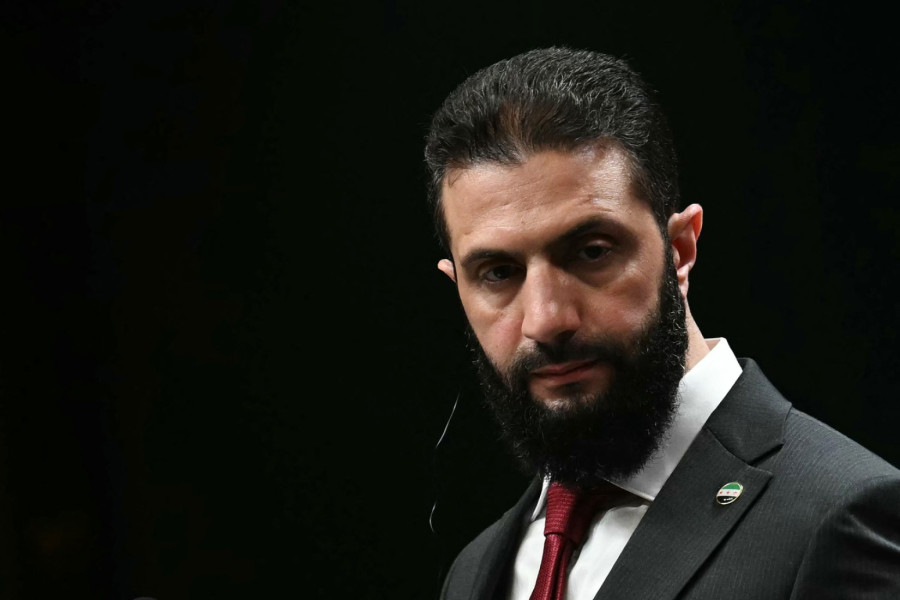
He also paid tribute to "the important role played by the United States, which has again demonstrated its support for Syria in these difficult circumstances and its concern for the country's stability."
Israel criticised Syrian government
But Israel has expressed deep skepticism about Sharia's renewed pledge to protect minorities, pointing to deadly violence against Alawites as well as Druze since he led the ouster of the country's longtime leader Bashar al-Assad in December.
In Sharia's Syria, "it is very dangerous to be a member of a minority - Kurd, Druze, Alawite or Christian," Israeli Foreign Minister Gideon Sa'ar announced on X.
The UN earlier called for an end to the fighting and demanded an independent investigation into the violence, which has killed at least 940 people on both sides since Sunday, according to the Syrian Observatory for Human Rights (SOHR).
Bad humanitarian situation
SOHR reported on Friday that the humanitarian situation in Sweida has "dramatically deteriorated" due to acute shortages of food and medical supplies. All hospitals were out of order due to the conflict and looting was widespread in the city.
"The situation in the hospital is catastrophic. The corpses have started to rot, there is a huge amount of bodies, including women and children," said a surgeon at Sweida National Hospital over the phone.
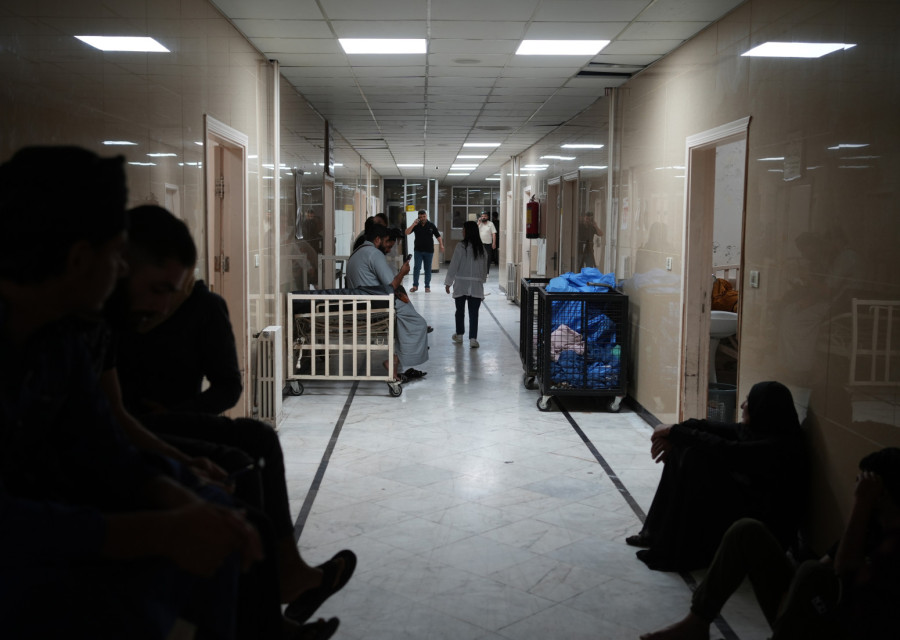
The renewed fighting has raised questions about the authority of al-Sharia, whose interim government faces suspicions from the country's minorities after the killing of 1,500 mostly Alawite civilians on the Syrian coast in March.
Sharaa ordered government forces to withdraw from Sweida, saying mediation by the US and others had helped prevent a "large-scale escalation" with Israel.
Multiple sources told Reuters that Sharaa initially misjudged how Israel would respond to his deployment of troops to the south of the country earlier this week, after being encouraged by the barracks who said Syria should be centrally governed as one country.
When Israel targeted Syrian troops and Damascus on Wednesday, bombing the headquarters of the Syrian defense ministry in the center of the capital and striking near the presidential palace, it caught the Syrian government by surprise, sources said.
How did the conflict start?
The Druze are considered a loyal minority in Israel and often serve in its military. An Israeli military spokesman said the attacks were a message to the Syrian president regarding the events in Sweida.
But the Syrian government mistakenly believed it had received the green light from the US and Israel to send its forces south despite months of Israeli warnings not to, according to Reuters sources, including Syrian political and military officials, two diplomats and regional security sources.
The violence erupted last week after the kidnapping of a Druze vegetable trader by local Bedouins sparked "an eye for an eye" kidnapping, SOHR said.
The government sent in the army, promising to stop the fighting, but witnesses and SOHR said the troops sided with the Bedouins and committed many abuses against Druze civilians as well as fighters. The organization reported that 19 civilians were killed in a "terrible massacre" when forces of the Syrian Ministry of Defense and General Security Forces entered the town of Sahwat al-Balatah.
A truce was agreed on Wednesday after Israeli bombardment, allowing Druze factions and clerics to maintain security in Sweida while government forces withdraw.
Al-Sharaa said in a speech on Thursday that Druze groups would be left to manage security affairs in the southern province, which he described as a choice to avoid war.
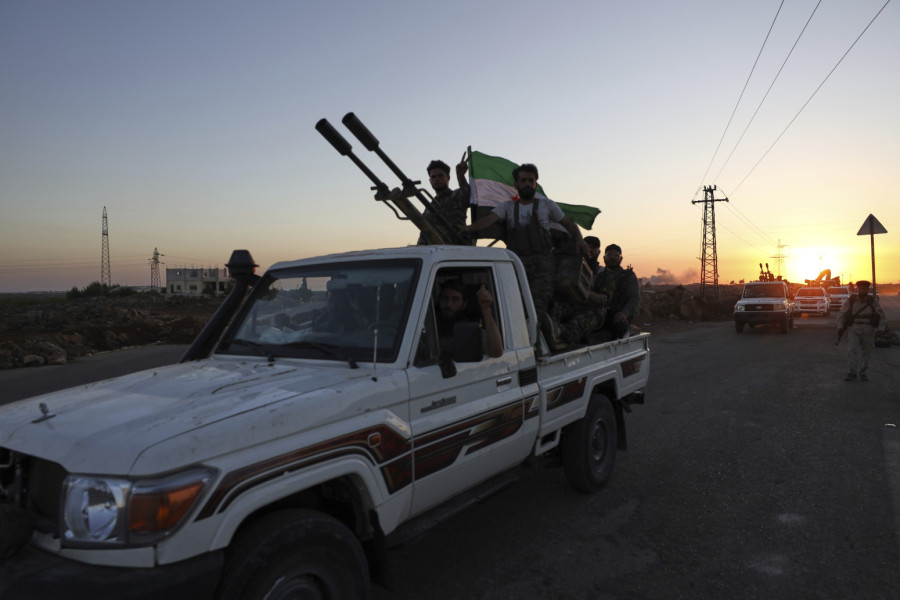
"We sought to avoid dragging the country into a new, wider war that could derail it from the path of recovery from the devastating war," he said. "We chose the interests of the Syrians over chaos and destruction."
But clashes continued on Thursday, with Syrian state media reporting that Druze groups had launched revenge attacks on Bedouin villages. Bedouin tribes fought alongside government forces against Druze fighters earlier this week.
On Friday, around 200 tribal fighters clashed with armed Druze from Sweida using machine guns and grenades, an Agence France-Presse correspondent reported, while SOHR reported fighting and "shelling of settlements in the town of Sweida."
Sweida was badly damaged in the fighting, and its mostly friendly inhabitants were deprived of water and electricity. Communication lines were also cut.
Symbolic representation in the government
Syria's minority groups have gained what many see as only token representation in the transitional government since former President Bashar al-Assad fled the country, according to Bassam Allahmad, executive director of the civil society organization Syrians for Truth and Justice.
"It is a transitional period. We should have a dialogue, and they [minorities] should feel that they are a real part of the state," said Alahmad. Instead, the raid in Sweida sent a message that the new authorities would use military force to "control every part of Syria".
"Bashar al-Assad tried this way and failed," he said.
But government supporters fear its decision to withdraw could signal to other minorities that it is acceptable to demand their own autonomous regions, which they say would fragment and weaken the country. If Damascus cedes security control to the Sweid Druze, "of course everyone else will demand the same," said Abdel Hakim al-Masri, a former official in the Turkish-backed regional government in northwestern Syria before Assad's fall.
0 Komentari
Možda vas zanima

Poznati lanac zatvara 150 prodavnica: U toku su rasprodaje na više lokacija
Diskontni lanac KiK nastavlja da smanjuje broj svojih prodavnica u Nemačkoj. Tokom 2026. godine planirano je zatvaranje oko 150 objekata, dok bi istovremeno trebalo da bude otvoreno svega petnaestak novih.
16:19
11.10.2026.
1 d

Rat – dan 1.690: Primirje prekršeno; Rusija udarila na Harkov; Evropi stiglo mračno upozorenje FOTO/VIDEO
Rat u Ukrajini – 1.690. dan. Američki predsednik Donald Tramp objavio energetsko primirje između Rusije i Ukrajine, za koje ukrajinski predsednik kaže da je prekršeno. Na frontu se nastavljaju napadi, a Kijev i Moskva razmenjuju optužbe i upozorenja.
23:50
11.10.2026.
19 h

"Pukla stotka" u Pioniru za prvu pobedu Zvezde u ABA ligi, ali brine nova povreda
Košarkaši Crvene zvezde su savladali ekipu Budućnosti u trećem kolu ABA lige rezultatom 101:91 i time upisali porvi trijumf u regionalnom takmičenju u novoj sezoni.
23:25
10.10.2026.
1 d

Niko kao Vlahović u 21. veku – Srbin ispisao istoriju Bešiktaša!
Srpski fudbaler Dušan Vlahović nastavio je golgetersku seriju u dresu Bešiktaša i postao prvi igrač ovog kluba u 21. veku koji je na debiju vezao četiri utakmice sa najmanje jednim golom.
19:30
11.10.2026.
23 h

Rat – dan 1.689: Tramp traži novog lidera Ukrajine; Krvavi napad na Zaporožje; "Kijev ruši pregovore" FOTO
Rat u Ukrajini – 1.689. dan. Ruske oružane snage su napale brod za suvi teret koji je isporučivao vojnu opremu u luku Odesa, saopštilo je rusko Ministarstvo odbrane. Donald Tramp objavio je da je imao uspešan razgovor sa ruskim liderom Vladimirom Putinom.
23:54
10.10.2026.
1 d












Komentari 0
Pogledaj komentare Pošalji komentar