






02.04.2026.
8:38
Europe forced to rely on Russian gas: Supplies increased
Amid the escalation of the conflict in the Middle East, which has disrupted global liquefied natural gas (LNG) supply chains, Europe turned in March to the only remaining source of Russian gas.



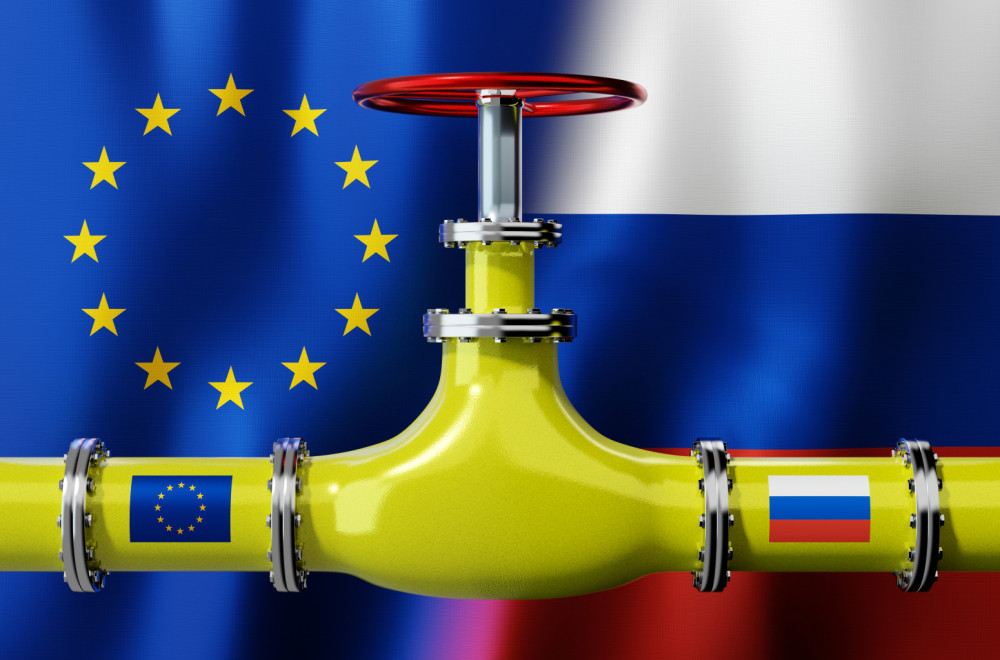
This situation has deepened divisions within the European Union. While Brussels insists on completely eliminating dependence on Russian gas by 2027, as mandated by Regulation (EU) 2026/261, some member states, such as Hungary and Slovakia, argue that such a ban threatens their national energy security.
The two countries have announced a lawsuit against the European Union, emphasizing that without Russian gas, they cannot avoid industrial collapse.
Meanwhile, European Commissioner for Energy Dan Jørgensen warned that energy prices will not return to “normal” in the near future, even if tensions in the Middle East ease, and the European Commission is preparing an emergency package of measures to assist households and companies.
Due to the emerging crisis and the disruption of supplies from the Middle East, European buyers are forced to compete with Asian countries on the global market for limited LNG volumes, with Asian buyers willing to pay up to six dollars more.
In these circumstances, Russian pipeline gas, despite its political sensitivity, has become a cheaper alternative.
Gazprom, which has not published its monthly statistics since early 2023, did not respond to a request for comment. According to Reuters calculations, the company’s gas exports to Europe last year fell to just 18 billion cubic meters, the lowest level since the mid-1970s.
Putin is further escalating rhetoric as Europe teeters on the edge of shortages. In March, he stated that Russia could consider a complete halt of gas supplies to Europe even before the EU’s 2027 deadline, suggesting redirecting the remaining volumes to growing markets in China.
This threat comes at a time when the European Union is approaching key deadlines for ending cooperation with Russia: the ban on Russian LNG imports takes effect on April 25, and the ban on pipeline gas imports under short-term contracts comes into force on June 17. For comparison, Russian gas exports to Europe peaked in 2018 and 2019 at around 180 billion cubic meters per year.
0 Komentari
Možda vas zanima

Rat – dan 1.685: Napadnuta Moskva; Novi udari na Kijev; Rusija: "Pratimo planove NATO-a" FOTO/VIDEO
Rat u Ukrajini – 1.685. dan. Ukrajinske snage izvele udare na Moskvu i oblast oko nje. Moskva je, s druge strane, nastavila da bombarduje Ukrajinu.
23:55
6.10.2026.
1 d

Hrvatska u neverici – Merino utišao "Poljud" sa dva gola! VIDEO
Hrvatska je imala veliki "skalp" u rukama i, da je iskoristila sve prilike, mogla da pobedi svetskog i evropskog šampiona, a na kraju je ostala potpuno praznih šaka
22:36
6.10.2026.
1 d

uživo Horor u Kijevu; Rusima stigla odmazda; "General Armagedon" dobio naređenje FOTO/VIDEO
Rat u Ukrajini – 1.687. dan. Ruske snage nastavljaju masovne udare. Dok Ukrajina broji mrtve nakon jučerašnjih napada, stižu brojevi o stradalima u novim napadima. Ukrajinske snage uspele su da pogode ruski region Baškortostan gde se nalazi rafinerija Gasprom.
17:26
8.10.2026.
8 min

Rat – dan 1.686: Žestok ruski napad; Veliki broj mrtvih – među njima i deca; Vanredne mere u Kijevu FOTO/VIDEO
Rat u Ukrajini – 1.686. dan. U kombinovanim ruskim napadima na Ukrajinu danas je ubijeno 25 ljudi, a njih stotinu je ranjeno, izjavio je ukrajinski predsednik Volodimir Zelenski. 19 ljudi, od čega petoro dece, ubijeno je u raketnom napadu u Prilucima.
23:54
7.10.2026.
17 h

Kraj jedne ere: Jugoslovenski gigant se prodaje deo po deo
Proces prodaje pojedinačnih delova nekadašnjeg industrijskog giganta Koksare Lukavac počeo je da daje prve konkretne rezultate.
8:16
7.10.2026.
1 d












Komentari 0
Pogledaj komentare Pošalji komentar