






11.05.2026.
12:23
Donald, checkmate
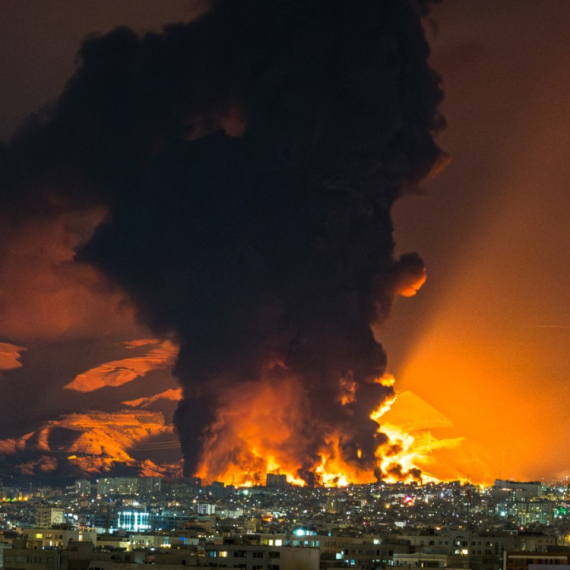
Robert Kagan writes in his analysis for the prominent American magazine The Atlantic that it is difficult to recall a moment when the United States suffered such a complete defeat as it is now experiencing in Iran.



According to him, by controlling the strait, Iran is emerging as a key regional power and one of the decisive actors in the world. He also adds that the positions of China and Russia, as Iran’s allies, have been further strengthened, while the role of the United States has been significantly reduced.
Not only has the war in Iran failed to demonstrate American superiority, as proponents of the war repeatedly claimed, but it has also exposed the United States as unreliable and incapable of finishing what it starts. This, he argues, will trigger a chain reaction across the world as both friends and adversaries adjust to American failure, Kagan explained.
A regime that has survived bombs will also survive a blockade
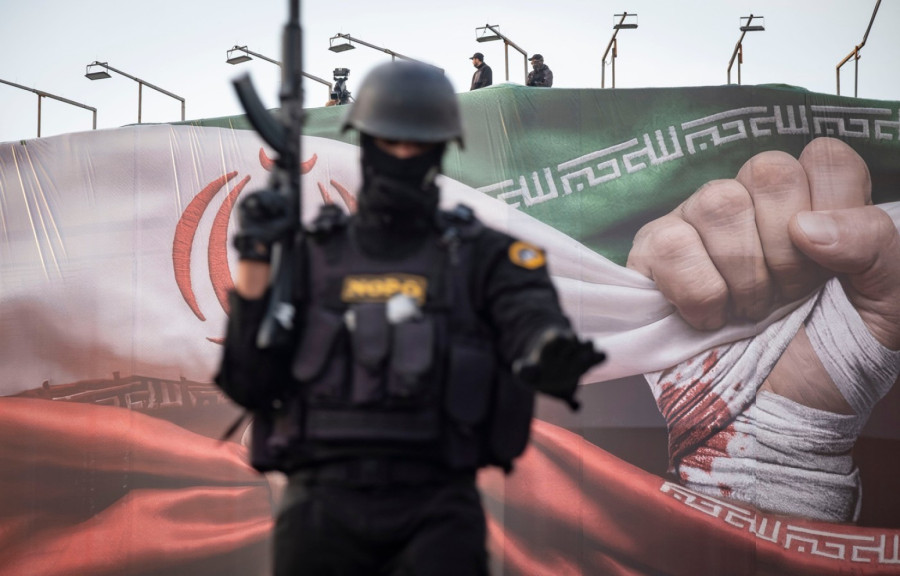
The United States and Israel relentlessly struck Iran for 37 days with devastating force, killing a large part of the state leadership and destroying most of its military capacity, yet they still failed to bring down the regime or extract even minimal concessions.
Now, the Trump administration is hoping that a blockade of Iranian ports will achieve what military force could not. This is, of course, possible, but a regime that did not bend after five weeks of continuous airstrikes is unlikely to yield under economic pressure.
In addition, the Iranian authorities reportedly do not fear the anger of their own population. The text also recalls remarks by Iran expert Suzanne Maloney, who said: “A regime that massacred its citizens in January to silence protests is now fully prepared to impose the harshest economic hardships on them.”
Some proponents of the war are therefore calling for continued military strikes, but they cannot explain how another round of bombing would achieve what 37 days of airstrikes failed to accomplish.
Further military action will inevitably force Iran to retaliate against neighboring Gulf states, and even war hawks have no answer to that.
“Donald Trump did not halt strikes on Iran because he grew tired of the war, but because Iran began hitting vital oil and gas facilities in the region,” an analyst from The Atlantic notes.
“If this is not checkmate, then we are close to it,” the analysis states
“The risk calculation that forced Trump to step back a month ago still holds. Even if Trump follows through on his threat to ‘destroy civilization’ with renewed bombing in Iran, Iran could still launch a large number of missiles and drones before the regime falls—if it falls at all,” Kagan writes.
Just a few successful strikes, he argues, could so severely damage the region’s oil and gas infrastructure that recovery would take years, possibly even decades.
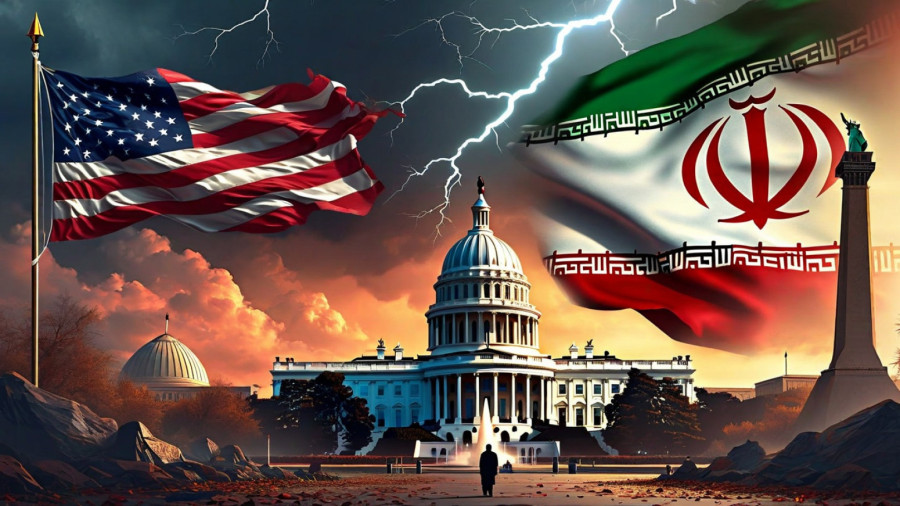
That would push the world—and the United States—into a prolonged economic crisis. Even if Trump wanted to use renewed bombing as part of an exit strategy, this risk would not be avoided.
“If this is not checkmate, then we are very close to it,” Kagan argues.
Iran holding global energy markets hostage
However, any solution short of what would effectively amount to American capitulation carries enormous risks that Donald Trump has so far been unwilling to accept.
If the United States is not prepared to engage in a full-scale land and naval war to remove the current Iranian regime—and then occupy Iran until a new government is stabilized; if it is not willing to risk losing warships escorting tankers through the Strait of Hormuz; if it is not ready to accept long-term and devastating damage to the region’s production capacity—then disengagement may now appear to be the least bad option.
The conclusion, according to Kagan, is stark: American defeat is not only possible, but likely.
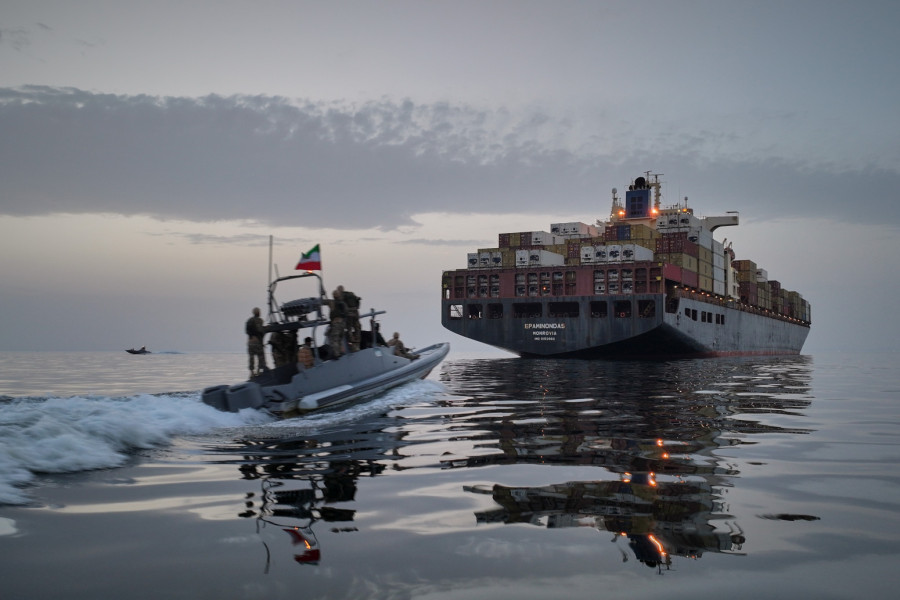
According to Robert Kagan, the defeat of the United States is not only possible but likely. He also describes what that defeat would look like:
- Iran would remain the master of the Strait of Hormuz. The assumption that the strait will, in one way or another, be reopened once the crisis ends is, in his view, completely unfounded.
- Iran has no intention of returning to the previous status quo. While there is often talk of divisions between hardliners and moderates in Tehran, even moderates must understand that Iran cannot afford to give up control of the strait.
- There is also the question of how reliable any agreement with Donald Trump would be. Iranians, he argues, cannot be certain that Trump would not decide to launch another attack just months after a deal is reached. They also know that Israelis could strike again.
- Israeli interests, he suggests, would be significantly undermined. As many Iran experts have noted, the regime in Tehran now has the opportunity to emerge from the crisis much stronger than before the war. Not only have they retained their nuclear potential, but they have also gained an even more powerful tool: the ability to hold global energy markets hostage.
- The power to close or control the flow of shipping through the strait is greater and more immediate than the theoretical power of Iran’s nuclear program. This leverage would allow Tehran’s leaders to force other states into lifting sanctions and normalizing relations, or face punishment.
- Israel would find itself more isolated than ever, while Iran becomes wealthier, re-arms, and preserves its nuclear options.
- This new status quo in the strait would also bring a major shift in relative power and influence, both regionally and globally. In the region, the United States would appear as a “paper tiger,” forcing Gulf and other Arab states to adapt to Iran.
- Gulf countries that will be forced to make deals with Tehran would not be alone in this new order. All nations dependent on Gulf energy would need to establish their own arrangements with Iran.
- One consequence of this transformation could be an expansion of a naval arms race among major powers. In the past, most countries, including China, relied on the United States to prevent or resolve such crises. Now, he suggests, a new arms race is beginning.

1 Komentari
Možda vas zanima

Džoooons! Zvezda slavila u trileru; "Košarkaški bogovi su nekad pošteni"
Košarkaši Crvene zvezde savladali su večeras Asvel u Vilerbanu rezultatom 84:82 u utakmici petog kola Evrolige.
23:00
13.10.2026.
17 h

Potop Partizana u Areni – Panata se "prošetala"; Penjaroja: "Teško je takmičiti se sa lošim šutem"
Košarkaši Panatinaikosa savladali su Partizan sa 55:72 u okviru petog kola Evrolige.
23:43
13.10.2026.
17 h

Uzbuna u Crnom moru; Bugarska odmah traži pomoć NATO-a
Bugarska je zatražila tehničku pomoć Evropske unije i NATO-a u nastavku istrage o napadima dronovima na dva trgovačka broda u bugarskoj isključivoj ekonomskoj zoni Crnog mora.
22:05
12.10.2026.
1 d

Rat – dan 1.691: Rusija udarila na energetiku Ukrajine; Putin nudi rešenje?; "Evropi preti haos" FOTO/VIDEO
Rat u Ukrajini – 1.691. dan. Kremlj poručio da je ruski predsednik Vladimir Putin spreman na obustavu napada tokom izbora u Ukrajini. Za to vreme, evropske bezbednosne službe upozoravaju na moguće nove ruske operacije protiv članica NATO-a.
23:44
12.10.2026.
1 d

Profesor Vladimir Vuletić pronađen mrtav
Profesor Vladimir Vuletić, bivši potpredsednik Fudbalskog kluba Partizan i profesor Pravnog fakulteta u Beogradu, pronađen je mrtav, pišu mediji.
16:50
13.10.2026.
23 h














Komentari 1
Pogledaj komentare Pošalji komentar