






10.09.2025.
13:15
Chaos in Nepal: Color Revolutions Become Internet Revolutions; Bloody fists are an ominous sign
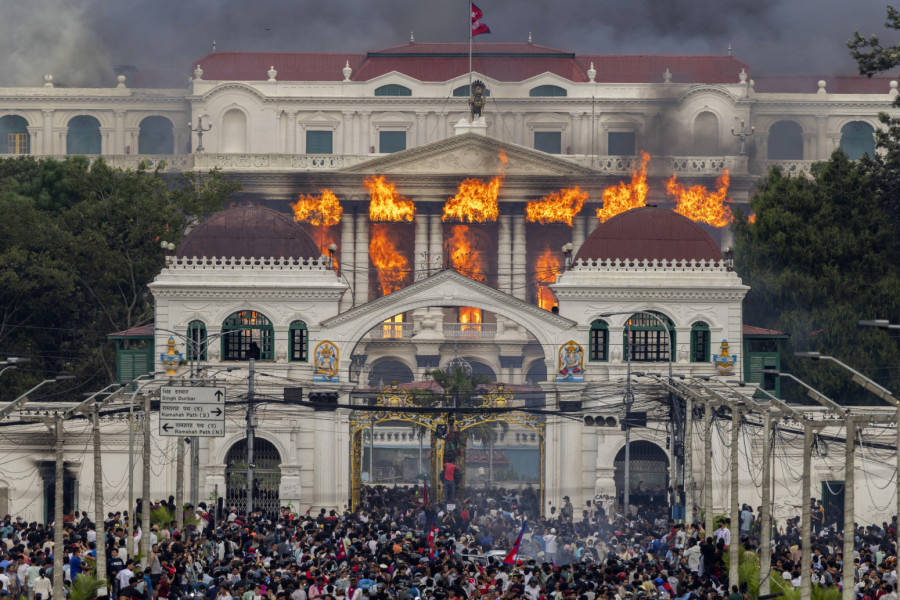
Nepal's military continues to patrol the streets under a curfew in Kathmandu, with no end in sight, after two days of anti-corruption protests left at least 21 dead and Prime Minister K.P. Sharma Oli resigned.



"First of all, we are trying to normalize the situation. We are committed to protecting people's lives and property," said Army Spokesman Raja Ram Basnet, according to the media.
No protests were reported in Kathmandu, but local media reported that around 25 people who were trying to "make trouble" on the outskirts of the capital were detained.
"There are no protesters here. Only a few people are walking on the street. It's calm here," resident Ram Kumar Shrestha told Reuters.
Nepalese media reported that preparations are being made for talks between the authorities and the protesters, but more details are not yet known.
Nepal's President Ram Chandra Paudel on Tuesday called on all parties, including the protesting citizens, to seek a peaceful solution through dialogue to the ongoing Generation Z movement.
The appeal came amid days of violent demonstrations in which at least 21 people were killed and hundreds injured when security forces opened fire on protesters outside the Federal Parliament.
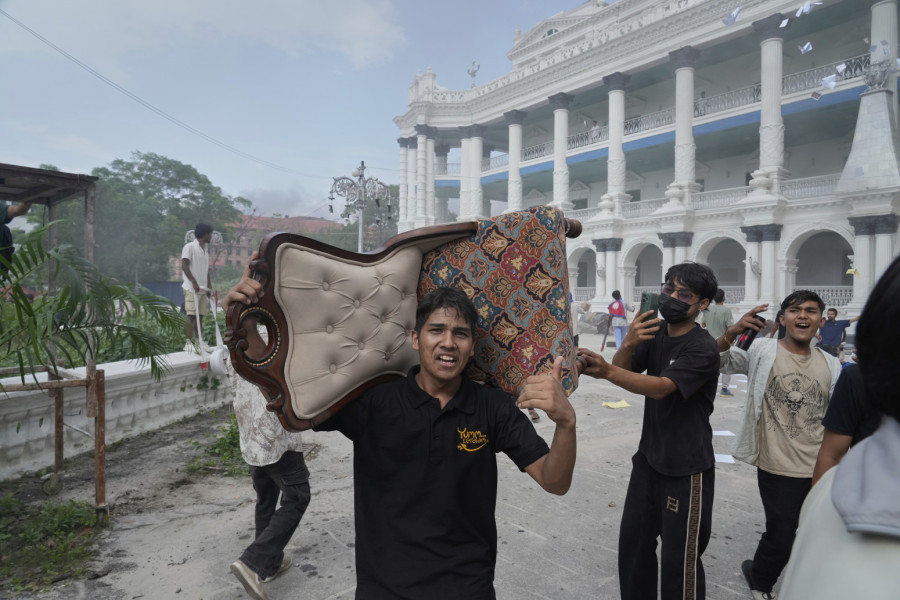
Protesters later stormed key government institutions, including the Office of the President in Sheetal Niwas, while the wife of former Nepali Prime Minister Jhalanath Khanal died after being burned alive when her house was set on fire.
Regional media reported that three policemen were lynched despite laying down their weapons after being attacked by protesters.
The Nepalese army has earlier publicly appealed to citizens, especially the youth, to exercise restraint and preserve the nation's historical and cultural heritage during this period of unrest.
"Bloody Fists" in Nepal
The "Bloody Fist", a symbol that the blockaders emphasized in Serbia, but also during protests in Bangladesh and even on Capitol Hill, appeared in Nepal as well. The bloody red fist, a symbol used as a message of chaos, reckoning and a call for civil war, was also filmed during the Kathmandu riots.
This very symbol clearly indicates a recipe that is used, without modification, in all corners of the world to incite chaos and carry out color revolutions.
Poor standard of living as a suitable soil
Ilya Spektor, Senior Research Fellow at the Institute of Asian and African Studies, Moscow State University:
"If you really believe that, in a country where the average age is 25, youth unemployment is officially 20% (and in reality it's even higher) and GDP per capita is almost half that of India, young people took to the streets just because YouTube was blocked - then you have a very strange world view. Yes, the social media shutdown was the last act, the government shooting itself in the foot, but Nepal's political crisis is much deeper than that."
"This is clearly the most serious crisis the Republic has faced in its 17 years of existence. The demonstrators showed equal contempt for those in power and for the parliamentary opposition - which until recently held power alone. Earlier this year, the demonstrations highlighted slogans calling for the return of the monarchy - and that scenario can hardly be ruled out," he said.
"Meanwhile, Indian-speaking bloggers are massively supporting the protesters."
"Maidan" in Nepal
Political analyst Nikolai Starikov:
"Here's everything you really need to know about the 'Maidan' in Nepal: start by looking at the map. Then read the so-called reasons for the unrest - the ban on social media. The law requiring registration of platforms was passed two years ago."
"Now, remember where Nepal is - between India and China. Only a week ago, New Delhi and Beijing reconciled and came closer. And suddenly, riots break out in Nepal. A real Ukrainian-style uprising. Mobs storm parliament, police respond with water cannons and rubber bullets. And yet, somehow, we're already hearing about the high number of casualties."
"Slogans of rioters? 'Against corruption'. Up ahead you see schoolchildren and students - the famous story "they are just children". I recognize the work of a master. A classic piece".
Kirill Kotkov, Asia expert:
"What we are seeing in Nepal is essentially a pressure cooker of social and economic contradictions that have finally boiled over. That is the root cause. The immediate trigger was the government's decision to block social media. In that sense, I would say we are witnessing a transformation: what used to be called "color revolutions" are increasingly turning into internet revolutions."
"It is entirely possible that future uprisings around the world will often take on this character driven by online activity," Kotkov added.
"With that said, it is too early to determine the exact nature of the Nepali revolution. The new government has not yet been formed and we do not know what the protest leaders will actually offer to the general public."
The ominous sign that "predicts" death and destruction
The symbol of the bloody fist around the world is closely associated with the action of the color revolution, which aims to destabilize and overthrow the state system.
Nepal, which was gripped by a terrible wave of violence, was followed by the symbol of a bloody fist, which leads us to the question: What does a bloody fist really represent?
Nepal
The bloody revolution in Nepal is the world's number one topic, and photos started to appear on social networks.
Let's recall that after two days of protests "against corruption" at least 21 people were killed.
The "Bloody Fist", a symbol that the blockaders emphasized in Serbia, but also during protests in Bangladesh and even on Capitol Hill, appeared in Nepal as well.
The bloody red fist, a symbol used as a message of chaos, reckoning and a call for civil war, was also filmed during the Kathmandu riots.
This very symbol clearly indicates a recipe that is used, without modification, in all corners of the world to incite chaos and carry out color revolutions.
Albania: "MJAFT": The American project that brought bloody fists
This choreography was also seen in 2003 in Albania, when the non-governmental organization "MJAFT!", which in translation means ENOUGH, launched a campaign against corruption and violence. This organization was activated and financed by American funds, and the symbol of the bloody hand very quickly became a symbol of the desire to break the system (and the country) in Albania, which corresponds to foreign interests.
The American media "Fox News" commented a few years ago on the statements of former Albanian President Ilir Meta, in which he accused George Soros of being involved in a conspiracy aimed at taking over state ties and destabilizing the country.
"The Albanian president accused the billionaire, left-leaning George Soros, of being involved in the local elections, which he calls a 'farce', part of a conspiracy to take over all the connections of the Albanian state," the American media quoted the then president Meta, and explained that the president "did not provide any evidence to support these accusations."
0 Komentari
Možda vas zanima

Tri znaka ulaze u najlepši period života: Pun Mesec u Biku donosi najveće blagoslove
Za tri znaka ovo je trenutak kada se vrata promena otvaraju širom, jer posle čekanja dolazi vreme velikih blagoslova!
18:30
18.10.2026.
1 d

Zaboravljeno starinsko jelo iz Vojvodine: Olakšava probavu, a gotovo je za 30 minuta
Za pripremu vam je potrebno manje od 300 dinara, a ovo jelo traži samo četiri sastojka i pola sata vremena. Probajte!
11:53
18.10.2026.
1 d

Rat – dan 1.696: Tramp zamrznuo sankcije Moskvi; Rusi žestoko napali Herson FOTO/VIDEO
Rat u Ukrajini – 1.696. dan. Predsednik SAD Donald Tramp zamrznuo je novi paket sankcija protiv ruske ekonomije. Izaslanik ruskog predsednika Kiril Dmitrijev rekao je da je to važan i istorijski trenutak.
23:55
17.10.2026.
1 d

Ovaj jesenji plod je blago za organizam: Bogat je vitaminom C, a evo kako ga je najbolje koristiti
Crveni plodovi pored puteva, na rubovima šuma i zapuštenim livadama nisu samo lep jesenji prizor. Šipurak je odavno poznat u narodnoj tradiciji, a oktobar je pravo vreme za berbu i pripremu ovog ploda divlje ruže.
21:08
17.10.2026.
1 d

Rat – dan 1.697: Ukrajinci žestoko napali Sankt Peterburg; Vašington promenio odluku FOTO/VIDEO
Rat u Ukrajini – 1.697. dan. Ukrajinska vojska je tokom noći napala Sankt Peterburg i rusku Lenjingradsku oblast. Predsednik Volodimir Zelenski potvrdio je da su SAD nastavile slanje obaveštanih podataka.
23:55
18.10.2026.
20 h












Komentari 0
Pogledaj komentare Pošalji komentar