






05.02.2025.
10:02
This is the worst scenario: A stronger earthquake awaits us, a tsunami in the Adriatic...
In the past few months, the Mediterranean-Balkan region has recorded a series of earthquakes, which have attracted the attention of experts and the public.



Seismologist Ana Mladenović told Blic TV that this area is the most active in terms of earthquakes.
"It is not surprising at all because in this Mediterranean area, the Balkan Mediterranean area, it is actually the most active. So it is not a surprise for us that earthquakes happen there," she pointed out.
What is a bit strange, she adds, is that so many earthquakes of practically the same magnitude have been happening lately.
"The frequency of earthquakes of the same magnitude is strange, because usually what we are used to is that when a stronger earthquake occurs, it is followed by weaker aftershocks. And this is as if the faults that are already active are being activated all the time, the same fault surfaces are being activated, the same amount of rock is moving along them and then it shakes. It is a bit unusual," says Mladenović.
The connection between volcanoes and earthquakes
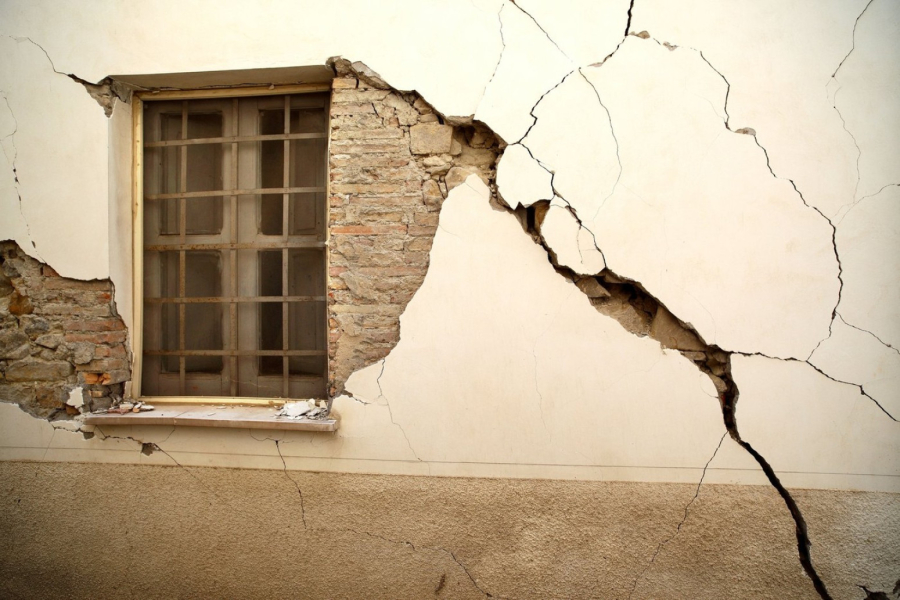
When asked if there is a cause-and-effect relationship between volcanoes and earthquakes, Mladenović answers:
"There is a cause-and-effect relationship, but it is not as direct as, say, in some other areas. If we take Hawaii as an example, then we can say there that if earthquakes happen often, it means that maybe magma will start. However, magma is constantly being created there and then it is practically waiting somewhere to start. The problem here is that we believe that there is most likely no magma that is waiting to come to the surface, but the conditions must first be created for that magma to form, and then let it come out. So I wouldn't say that it is so directly related that what is happening now with the earthquakes means that the volcano could also be activated," Mladenović pointed out.
He also adds that it is not impossible to expect that in Greece, which was hit by 550 earthquakes in three days, there will be a stronger earthquake.
Tsunami is also possible
Mladenović also pointed out that there is a possibility of a tsunami in the Adriatic Sea.
"Tsunami can happen. There are even studies that showed that tsunamis occurred on the Adriatic Sea when some earthquakes occurred. But for a tsunami to occur, several factors need to be met," she points out.
As she further explains, one is that when an earthquake occurs, the movement of the block that is under the seabed should be downward. Then when that block practically moves, and that amount of water begins to retreat and fills the space created by the lowering of the block, and then returns as a big wave.
"This is what we have seen in Japan, Indonesia and the like. However, for something like that, there must be a large amount of water. That is why it is much more expected in the oceans, in the Pacific Ocean, than in this area. It is not impossible that there will be a tsunami, but I doubt that it can be that big," Ana Mladenović believes.
The expert public in Greece cites the scenario from 2011-2012 as another option, when earthquakes occurred for almost a year.
Will the earthquakes spread to the surrounding countries?
Judging by the current maps of earthquakes, a scenario is also possible for them to expand.
"The energy that is released by the occurrence of an earthquake then spreads radially around the area where it occurs. Those earthquakes can also reach our regions, but by the time it reaches us, the energy is already distributed in other places, so I don't expect that it will cause an earthquake here now," said Ana Mladenović.
It is much more likely, she adds, that Turkey will feel stronger earthquakes. She also states that a crack has appeared on the tectonic plate on the border with Turkey. The ground rises and moves again, which is a normal thing.
Serbia is also expected to experience an earthquake measuring 5 on the Richter scale
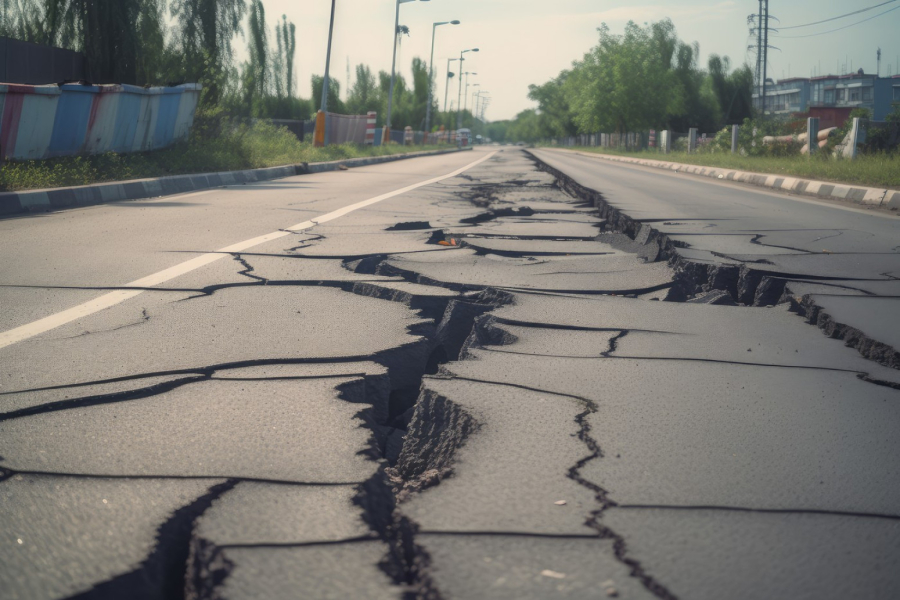
Seismologist Ana Mladenović recently stated that an earthquake with a magnitude of around 5 degrees is expected in Serbia, in the area of Šumadija, which is considered the most dangerous in our country. That could happen in the next ten years.
Mladenović added that this claim is based on geological research, but also on statistics and the number of decades that have passed since the previous attack in that part of Serbia.
These are the areas in Serbia that can be affected by an earthquake
- Kopaonik,
- Western Morava Valley,
- Velika Morava Valley,
- Kraljevo,
- Trstenik,
- Kruševac,
- mountain Rudnik,
- Valjevo,
- Lazarevo,
- Mionica and possibly Svilajnac and Paraćin.
According to Mladenović, there cannot be earthquakes stronger than 6 degrees on the Richter scale in Serbia because we are far from the place where tectonic stress is generated.
Belgrade is not an earthquake area
The seismologist also points out that, when it comes to Belgrade, the territory of the capital itself is not fragile.
The nearest seismic areas are Mionica, Lazarevac, Valjevo, it is some hundreds of kilometers from Belgrade and an earthquake of the same magnitude as in Romania can happen there, says Mladenović.
0 Komentari
Možda vas zanima

Rat – dan 1.867: Masakr u Kramatorsku – preko 30 mrtvih; Ukrajinci se osvetili Rusima FOTO/VIDEO
Rat u Ukrajini – 1.687. dan. U ruskom napadu na stajalište javnog prevoza i dva autobusa u Kramatorsku, u Donjeckoj oblasti, poginulo je 33 ljudi, dok je 18 povređeno, saopštilo je regionalno tužilaštvo Ukrajine. Ukrajinci su napali rafineriju nafte u Omsku.
23:55
8.10.2026.
1 d

Krah Đokovića na startu Šangaja
Novak Đoković poražen je od Huberta Hurkača sa 2-0 u setovima u 2. kolu Mastersa u Šangaju.
13:54
9.10.2026.
15 h

Fenomenalna Zvezda – Dubai nemoćan!; Navaro: "Dobra odbrana"; Paskval ljut
Košarkaši Crvene zvezde savladali su Dubai sa 77:58 u četvrtom kolu Evrolige.
21:07
8.10.2026.
1 d

Real prekinuo Partizanov niz – Madrid i dalje neosvojiva tvrđava; Penjaroja srećan zbog jedne stvari
Košarkaši Partizana izgubili su od Reala u Madridu 86:76 u 4. kolu Evrolige.
23:25
8.10.2026.
1 d

Rat – dan 1.688: Kijev u mraku; Ukrajinski dronovi pogodili Omsk i Uhtu FOTO/VIDEO
Rat u Ukrajini – 1.688. dan. Ruski napadi teško su oštetili energetsku infrastrukturu Ukrajine, dok je gradonačelnik Kijeva Vitalij Kličko pozvao građane da privremeno napuste prestonicu. Ukrajinske snage su potvrdile napade na ruske rafinerije.
23:54
9.10.2026.
5 h












Komentari 0
Pogledaj komentare Pošalji komentar