






29.01.2026.
9:57
Trump, you have been warned: 'Ballistic missiles could reach the U.S. in 18 minutes.'
Norwegian Defense Minister Tore Sandvik showed a world map from an Arctic perspective, highlighting Russia’s Kola Peninsula, home to one of the largest nuclear arsenals in the world. The shortest missile route from there to U.S. cities passes over the Arctic.



“An intercontinental ballistic missile travels at a speed of seven kilometers per second. From launch to impact in a major U.S. city, it takes only 18 minutes,” Sandvik explained to the Financial Times, adding that this is a matter of “homeland defense” for the entire NATO.
The renewed interest of U.S. President Donald Trump in Greenland, culminating in last week’s agreement with NATO Secretary General Mark Rutte, has shifted the Alliance’s focus to Arctic security, a topic Nordic countries have been warning about for decades.
Russian military build-up
After the end of the Cold War, nearly all Arctic states, including Russia and the United States, reduced their military presence in the region and closed bases. However, under Vladimir Putin, Russia began a military and economic revitalization of the Arctic in the 2000s, long before the Western powers.
Today, Moscow, which controls roughly half of the land and water area of the region, has more than 40 military facilities along the Arctic coast, including bases, airfields, and radar stations. The Arctic is crucial to Russia’s nuclear doctrine. The Northern Fleet, which operates six of Russia’s twelve nuclear submarines, is based on the Kola Peninsula.
“The Northern Fleet, and especially its submarines, form the backbone of Russia’s strategic deterrent. Because of their importance, the fleet is continuously modernized,” says Ondrej Dietrich from the European Union Institute for Security Studies.
Russia also maintains a high state of readiness at its nuclear test site on Novaya Zemlya, where last October it tested the nuclear-powered Burevestnik cruise missile, and promotes the Northern Sea Route as a significantly shorter trade route between China and Europe.
Nordic Concerns and NATO Response
Russia’s neighbors are watching these developments with growing concern and calling on NATO to become more involved, with limited success so far.
“We know that the Russians have increased their activities in the North. The security situation is such that, with melting polar ice, China is emerging as a regional hegemon with global interests. They call themselves a ‘near-Arctic nation,’” Sandvik said.
Danish Prime Minister Mette Frederiksen stated: “NATO must strengthen its engagement in the Arctic. Defense and security in the Arctic concern the entire Alliance.”
NATO’s top military officer, Admiral Giuseppe Cavo Dragone, confirmed that the Arctic is “an area of significant interest” for the Alliance. Several member states, including the U.S., the U.K., and France, have increased training in Arctic conditions.

In March, the “Cold Response” exercise will take place in northern Norway, where around 25,000 soldiers from across the Alliance, including 4,000 Americans, will train for warfare in harsh winter conditions.
Strategic monitoring and importance for the U.S.
The Nordic countries hope that the renewed focus on the Arctic will allow them to demonstrate their usefulness to Washington, particularly in intelligence gathering. There are two key maritime passages where NATO and Russia could clash for control: the Greenland-Iceland-United Kingdom (GIUK) gap and the so-called Bear Gap between Norway’s Svalbard archipelago and the mainland.
Sandvik said that Norway monitors these areas using P-8 reconnaissance aircraft, satellites, long-range drones, submarines, and frigates.
“This is how NATO thinks about defending this area in the event of a conflict. But, above all, we do this to avoid escalation and to deter Russia,” he added.
A senior Nordic official emphasized that the U.S. relies on this intelligence: “The cooperation is certainly mutual. We have a good overview of the situation and know what Russia is doing on its side of the border. The U.S. can also use our airspace to monitor Russia.”
Most of the focus is on air and undersea surveillance, rather than ground operations. “Greenland is impossible to ‘invade.’ You can take Nuuk, but 95 percent of the island is snow and ice, and you cannot occupy that,” a Danish official said.
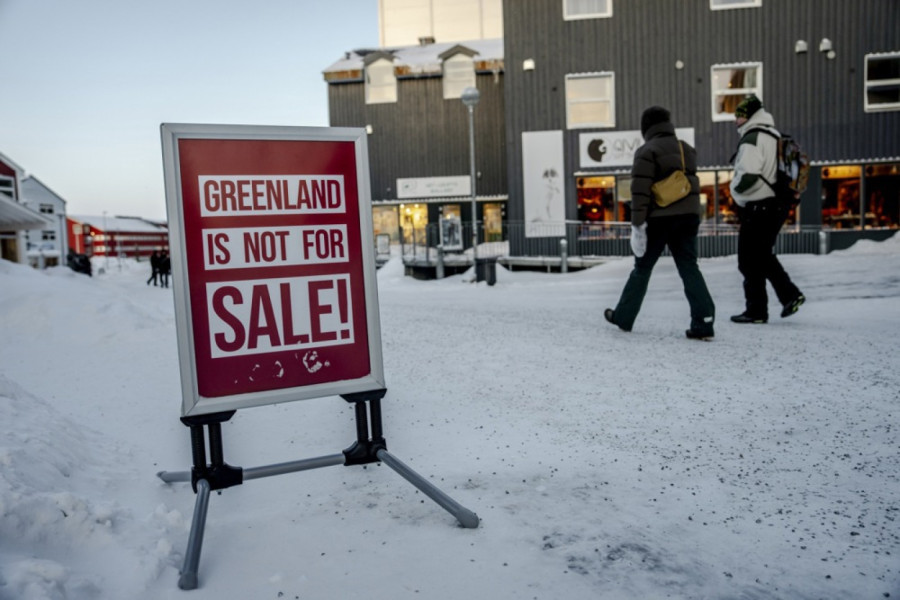
U.S. plans and fears of militarization
It appears that Trump is considering Greenland as a location for his proposed “Golden Dome” missile defense system. The U.S. already operates a key military facility on the island, the Pituffik Space Base, which is used for early warning radar systems. However, many in the Nordic countries fear the inevitable militarization of the Arctic, which is currently one of the few regions with “low tensions.”
“I am concerned that security issues dominate the Arctic debate, while we forget about other equally important topics such as climate change, infrastructure, and the rights of indigenous peoples,” said another senior Nordic official.
The war in Ukraine has temporarily slowed Russia’s military buildup in the Arctic. “The actual presence of forces at Arctic military sites has decreased because some Arctic brigades were redeployed to Ukraine, where they suffered heavy losses,” said Ditrih.
Still, there is a sense that both Russia and China are playing the long game in a region where melting ice could change the military and economic equation for decades. “The race for strategic competition in the Arctic is ongoing,” Sandvik concluded.
0 Komentari
Možda vas zanima

uživo Objavljeni rezultati izbora: Evo kako je Srbija glasala FOTO/VIDEO
Vanredni parlamentarni izbori održani su danas u Srbiji. Lista "Aleksandar Vučić – Ujedinjena Srbija" izgubila je na izborima, dok je pobedu odnela "Studentska lista".
22:55
25.10.2026.
1 h

Vučić: "Pobedila je politika Nataše Kandić"; "Imaćemo oko 105 mandata, 'Studentska lista' 135 do 140" VIDEO
Nosilac liste "Aleksandar Vučić - Ujedinjena Srbija" Aleksandar Vučić izjavio je večeras da je ta lista izgubila na današnjim vanrednim parlamentarnim izborima i da je pobedila "Studentska lista", a da će u parlament ući još i Savez vojvođanskih Mađara.
21:40
25.10.2026.
2 h

Stigao predlog za kraj rata
Časopis "The Economist" izložio je "konture" američkih mirovnih planova za kraj rata u Ukrajini. Predlozi SAD uključuju stvaranje demilitarizovane zone u Donbasu, ublažavanje sankcija protiv Rusije i investicioni paket za Kijev.
10:29
23.10.2026.
2 d

Najnoviji podaci o rezultatima izbora u Srbiji
Prema projekcijama IPSOS-a i Centra za slobodne izbore i demokratiju (Cesid), na osnovu 75 odsto obrađenog uzorka, na parlamentarnim izborima "Studentska lista" osvojila je 52,4 odsto glasova, a lista "Aleksandar Vučić - Ujedinjena Srbija" 39,2 odsto glasova.
23:34
25.10.2026.
45 min

Novo hapšenje zbog planiranja haosa za izbore: Pronađeno opasno oruđe, panciri, pirotehnika; Oglasilo se VJT
U nastavku akcije protiv kriminalne grupe iz Novog Sada na čijem čelu je, kako se sumnja, M.V. koji je uhapšen pre tri dana, uhapšen je još jedan Novosađanin.
12:42
24.10.2026.
1 d












Komentari 0
Pogledaj komentare Pošalji komentar