






25.08.2025.
9:39
They are preparing for war: It is on the border of Europe
France plans to more than double the number of reservists as part of a broader strengthening of its military capabilities. Many fear Russian aggression.



At the Faculty of Law, Constance did not learn to march, recognize radio signals, or lie prone and aim a rifle at an imaginary enemy; it's something she mastered in her first military training – in a Parisian regiment during summer vacation.
"I think it's very important to protect our country - especially in this very complicated context we're going through," said this second-year law student about her first two-week course for reservists (surnames are withheld in the text at the request of the French army).
"I think the army is the best way to learn how to work together," she adds.
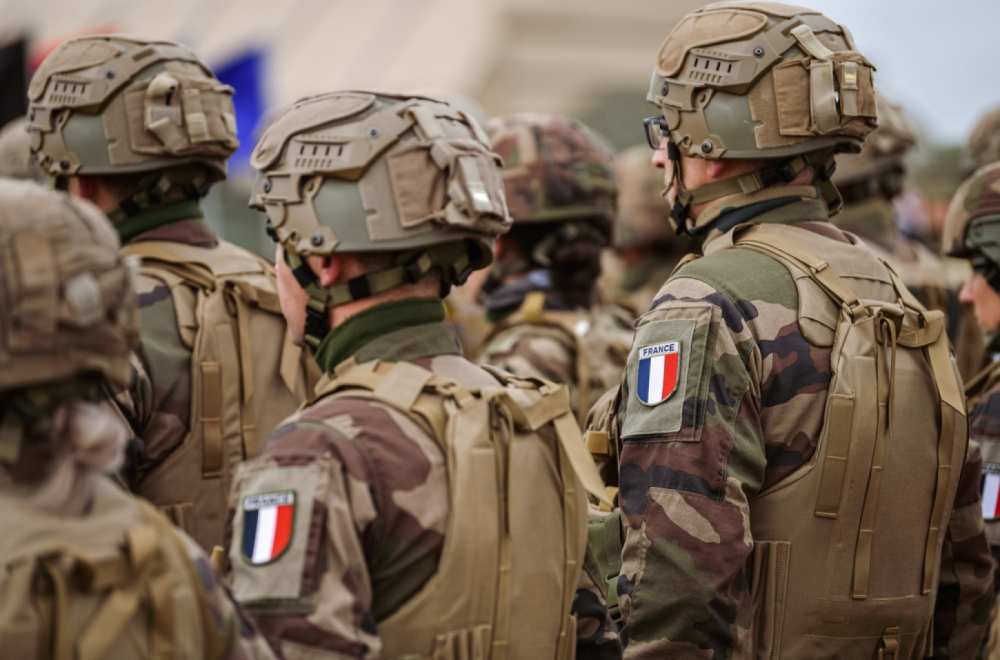
More than two decades after France abolished conscription, tens of thousands of French are now enlisting in the reserve units. The number of operational reservists has grown rapidly over the past ten years – from 28,000 in 2014 to more than 46,000 today. More than half of them were received by the army, while the rest was divided between the navy and the air force.
Macron increases investment in the military
The government wants to more than double that number by 2035: 105,000 reservists, that is, one for every two active soldiers - and to offer new opportunities for young people to volunteer. That goal is in line with President Emmanuel Macron's plans to significantly increase investment in the military to 64 billion euros in 2027, double what it was in 2017 when he took office.
In the background of these measures is concern about an increasingly aggressive Russia - as well as doubts that the United States of America, with President Donald Trump, will defend Europe.
"Never... has our freedom been so threatened," Macron said on television last month. "We need to speed up efforts to form a reserve. We need to provide young people with a new framework for service."
Retired French vice admiral Patrick Chevallereau thinks Macron's move is a "good step" - although he warns that the government's projected budget still needs to be approved by the French parliament.
"We don't just need more people," added Chevallereau, an analyst at London-based security and defense institute Royal United Services, adding: "We also need specialized people in key areas" such as drones and information technology.
Rigorous training in Versailles
New reservists are trained in units such as the 24th Infantry Regiment at Versailles, housed in a sprawling military quarter about four kilometers from the famous château.
"Some want to discover the military world and see if they want to join it full-time," said Lt. Amelie, who led the latest training. "Some come because of the challenges of adapting to a different world, or because it's too late to join the active military."
Like others in the 24th Infantry Regiment, Amelie is a reservist herself; in civilian life, she works as a customs officer. Now she spends the summer overseeing an intensive two-week training course - an introduction to military life.
The recruits are aged between 17 and 57, wake up at 6 a.m. and often go to bed at midnight. "They learn how to carry and use weapons safely, march together, use a compass and communication equipment," Amelie said of the trainees, listing some of the requirements for initial training. "We are working on all the combat techniques that the regiment uses."
Live ammunition is also used in the training. "The training is really rigorous," says Constance, adding that she knows other Sorbonne students who have gone through the same thing. "We don't have the same age, the same jobs, the same knowledge, but we learn how to work together."
Like Constance, 23-year-old engineer Gabriel enlisted in the reserve because he is worried about the future of his country. "As a soldier, I will not comment on the political or ideological component," he says, echoing the stance of other reservists who have refused to speak openly about the Russian threat. "But the war is on the border of Europe, and that's a signal that we have to engage."

Another moment of awakening for the young engineer was the terrorist attack on the Bataclan theatre in 2015 in Paris.
"Something broke inside me," Gabriel said. "I realized that the peaceful times in which I grew up had passed. And I thought: I will stand up and make my contribution."
Europe strengthens military capacities
Elsewhere in Europe, armies are being strengthened due to growing security challenges.
Efforts to build up military strength are also taking place elsewhere in Europe as the region tries to respond to growing security challenges. According to a report recently published by the Bruegel Brussels based economic think tank and Germany's Kiel Institute, Europe may need 300,000 additional troops in the short term to deter Russian aggression - without US support.
More European countries are getting involved
Lithuania, Sweden and Latvia have reintroduced compulsory military service. Poland has announced plans to annually train 100,000 civilians. Germany is also campaigning for a reserve squad. The initial response was weak, so Defense Minister Boris Pistorius warned that conscription could be reintroduced if too few people sign up.
Unlike Germany, polls in France show strong support for strengthening the military. An IPSOS-CESI survey conducted earlier this year found that 86% of French people support military service. Another poll found that half of young French people are ready to join the army if war breaks out.
"I think people understand that they may have to protect what they hold dear," said Chevallereau, the defense analyst. "Strengthening the reserve can be a way to strengthen the bond between the young generation and the military."
Founded in the 17th century, the 24th Regiment of Versailles receives a large number of applications for its training. Out of every 100 candidates, only 40 of them are selected. Those who complete the training can spend up to 60 or more days a year serving in the Reserves. The reservist's salary is modest - from 40 to 200 euros net per day, depending on the rank.
Not all of them even go through basic training. Of the initial 61 candidates for the final training in the 24th regiment, ten dropped out. "Some gave up at the beginning of the mission because they didn't have time," says instructor Amelie. "Others realized it wasn't for them when they picked up the weapon."
After completing the initial course, the group will spend several months in additional training. Once ready, many are likely to join patrols across the country as part of Operation Sentinel, the security operation launched after the 2015 terror attacks in France — and which secured last year's Olympics. Those with special qualifications could be deployed abroad.
Another trainee, Bertrand, a father of two, signed up for five years of reserve service after completing training. In his thirties, he remembers how he felt when he learned of the 2001 attacks on the World Trade Center in New York.
"We also had terrible attacks in France," he says. "I thought it was my duty as a father to defend my country."
As a municipal employee in a town outside Paris, Bertrand believes he is already serving his country as a civilian. "Now," he adds, "I will serve my homeland as a fighter."
0 Komentari
Možda vas zanima

Džoooons! Zvezda slavila u trileru; "Košarkaški bogovi su nekad pošteni"
Košarkaši Crvene zvezde savladali su večeras Asvel u Vilerbanu rezultatom 84:82 u utakmici petog kola Evrolige.
23:00
13.10.2026.
19 h

Potop Partizana u Areni – Panata se "prošetala"; Penjaroja: "Teško je takmičiti se sa lošim šutem"
Košarkaši Panatinaikosa savladali su Partizan sa 55:72 u okviru petog kola Evrolige.
23:43
13.10.2026.
18 h

Uzbuna u Crnom moru; Bugarska odmah traži pomoć NATO-a
Bugarska je zatražila tehničku pomoć Evropske unije i NATO-a u nastavku istrage o napadima dronovima na dva trgovačka broda u bugarskoj isključivoj ekonomskoj zoni Crnog mora.
22:05
12.10.2026.
1 d

Rat – dan 1.691: Rusija udarila na energetiku Ukrajine; Putin nudi rešenje?; "Evropi preti haos" FOTO/VIDEO
Rat u Ukrajini – 1.691. dan. Kremlj poručio da je ruski predsednik Vladimir Putin spreman na obustavu napada tokom izbora u Ukrajini. Za to vreme, evropske bezbednosne službe upozoravaju na moguće nove ruske operacije protiv članica NATO-a.
23:44
12.10.2026.
1 d

Stariji su ga pili svakog dana, a mi smo ga zaboravili: Napitak koji leči
Sve što je nekada pripremano bilo je isključivo prirodno, iz bašte, a jedan napitak je i te kako uticao na zdravlje naših baka i deka, pa bi trebalo da ga vratimo na sto.
16:39
12.10.2026.
2 d












Komentari 0
Pogledaj komentare Pošalji komentar