






01.07.2025.
14:23
The beginning of the end of Viktor Orbán?
Despite the ban, or precisely because of the ban, hundreds of thousands of people gathered in Hungary for Pride. But it's not just a fight for LGBTQ rights. Observers see in this strong protest the beginning of the end of Orbán's rule.



Viktor Orbán wanted to ban it, but it turned out to be the biggest protest against his regime since he came to power in 2010: the 30th Budapest Pride. Despite the ban and threats of severe penalties, around 200,000 people gathered in the Hungarian capital on Saturday (June 28, 2025) for this year's Pride, more than ever before.
Footage from drones recorded a kilometer-long march and streets full of people, and the atmosphere was cheerful and filled with the expectation of a change that had not been felt for years. Along with rainbow flags, numerous banners with Orbán's face crossed out or messages against his regime could be seen in the procession. The police, to everyone's surprise, were very withdrawn and even prevented the right-wing provocateurs from disrupting the procession.
A small group of the far-right party Naša Domovina still blocked the Freedom Bridge in the center of Budapest, but the procession simply moved across the second, much larger and wider Elizabeth Bridge, which resulted in even more impressive photos and aerial shots.
Fearless Mayor
At the end of February, Prime Minister Orbán announced at the gathering of his Fidesz party, and to thunderous applause, that Pride would no longer be held in Budapest. In March, his majority in parliament passed a law banning all public gatherings where LGBTQ issues are thematic. After that, the Hungarian authorities officially banned this year's Budapest Pride. But the Green-Left Mayor of Budapest, Gergely Karácsony, registered Pride as a city event called "Budapest Pride".
Karácsony was also the first speaker at the ceremony at the end of this year's parade. For days, Fidesz politicians threatened him that he could end up in prison because of his patronage of that gathering, but Karácsony did not let himself be intimidated, and in the end he commented ironically: "Thanks to facial recognition cameras for giving us such good portraits!"
In a battle-toned speech, he celebrated Budapest as a city of freedom and diversity. Alluding to the anti-Soviet Hungarian revolution of 1956, Orban's current closeness to Putin, as well as the speech that Orban himself, still a radical liberal, gave in June 1989 in Budapest, demanding the withdrawal of the Soviet army, Karácsony said that Hungary does not want Russian opportunities. With great applause, he declared Budapest's solidarity with Ukraine's struggle for freedom. He told the crowd: "Today you have made Budapest the capital of Europe!"
Orban's own goal
The most important Hungarian opposition politician, Péter Magyar, president of the conservative Tisza (Respect and Freedom) party, said in a post on Facebook that the ban on Pride was a "giant own goal" that Orbán scored for himself. Out of consideration for many of his voters from rural areas of Hungary, the Hungarian did not directly call for participation in the Pride, but emphasized that his party "respects different opinions and ways of life", and advocates freedom of assembly and expression.
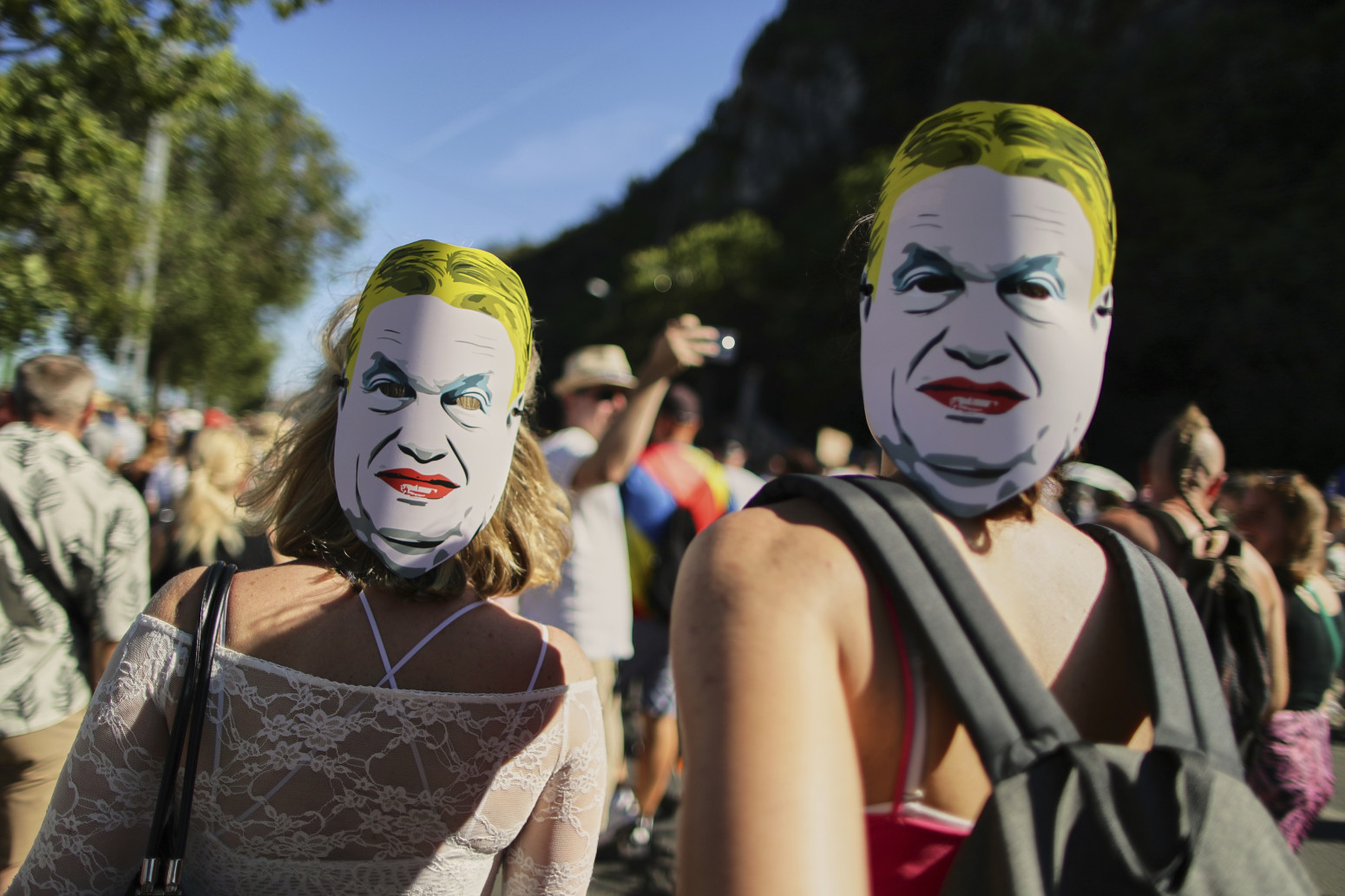
So far, Orbán has not made any public announcements about Pride, but some prominent members of his party have reacted defiantly. Former government spokeswoman and now propagandist on social networks, Alexandra Szentkirályi, wrote that Pride is more important to the mayor of Budapest than the city and its problems. She is the person who prematurely gave up her candidacy for mayor of Budapest last year, because she had no chance of winning.
Orban's chief of staff, Gergely Gulyás, wrote on Facebook that "the entire opposition has united with Pride." According to Gulyás, the European Commission made it clear that Pride in Budapest must take place, and that is why it was the most important thing for the city government.
Change of atmosphere
The comments show that Orbán, his government and party are definitely on the defensive with this year's Pride. In the short term, the prime minister is faced with a dilemma of how to react after he claimed for months, most recently last Friday, that Pride participants would be punished. If he remains silent and does nothing, Orbán risks embarrassing himself and being accused of being a weakling by his followers. On the other hand, it's nearly impossible to fine tens of thousands of people, even if the facial recognition software actually worked.
A change of mood has been observed in Hungary for a long time. In the polls, the Tisza party is now consistently and clearly ahead of Orbán's Fidesz. Although it is not certain that this trend will be maintained until the parliamentary elections in the spring of 2026, the change is currently both felt and seen - especially at public gatherings of Fidesz politicians in smaller towns and villages.
Criticism is getting louder there, which was unthinkable until just a few months ago, because many outside the big cities feared the consequences and repression. That fear is now subsiding. People are speaking publicly - first of all about the country's poor infrastructure, poor health system and low pensions, as well as numerous corruption scandals and the flaunting of luxury by Orbán's friends and oligarchs.
0 Komentari
Možda vas zanima

Rat – dan 1.867: Masakr u Kramatorsku – preko 30 mrtvih; Ukrajinci se osvetili Rusima FOTO/VIDEO
Rat u Ukrajini – 1.687. dan. U ruskom napadu na stajalište javnog prevoza i dva autobusa u Kramatorsku, u Donjeckoj oblasti, poginulo je 33 ljudi, dok je 18 povređeno, saopštilo je regionalno tužilaštvo Ukrajine. Ukrajinci su napali rafineriju nafte u Omsku.
23:55
8.10.2026.
1 d

Krah Đokovića na startu Šangaja
Novak Đoković poražen je od Huberta Hurkača sa 2-0 u setovima u 2. kolu Mastersa u Šangaju.
13:54
9.10.2026.
12 h

Kraj jedne ere: Jugoslovenski gigant se prodaje deo po deo
Proces prodaje pojedinačnih delova nekadašnjeg industrijskog giganta Koksare Lukavac počeo je da daje prve konkretne rezultate.
8:16
7.10.2026.
2 d

Talas povećanja primanja stiže u Srbiju: 65.000 dinara za jedne, veće penzije i minimalac od 600 evra za druge
Građane Srbije u narednim mesecima očekuje niz važnih finansijskih novina i državnih mera koje će značajno uticati na kućne budžete.
8:26
7.10.2026.
2 d

Nemačka odbila Kineze: "Ne damo"
Nemačka savezna vlada zabranila je prodaju 80 odsto udela u hamburškoj logističkoj kompaniji "Cipel" kineskoj državnoj brodarskoj kompaniji "Kosko", navodeći kao razlog rizike po nacionalnu bezbednost.
19:31
7.10.2026.
2 d












Komentari 0
Pogledaj komentare Pošalji komentar