






11.04.2026.
16:08
They've just landed, and they're already going again? "This is just the beginning"
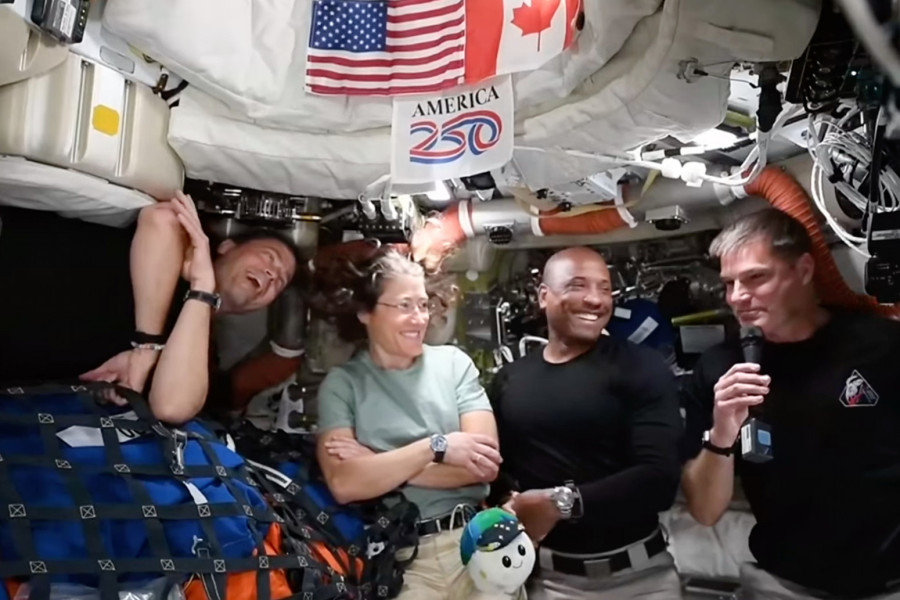
Since their spaceflight concluded early this morning, the four astronauts have laid the groundwork for NASA to send a new crew to land on the Moon within the next two years, as well as for building a real lunar base during this decade.



The triumphant travelers to the Moon — Commander Reid Wiseman, pilot Victor Glover, Christina Koch and Canadian Jeremy Hansen — emerged from their capsule, bobbing on the waves, into the sunlight not far from the coast of San Diego. Military helicopters lifted the astronauts one by one from a rubber boat attached to the capsule and transported them to the Navy recovery ship, USS John P. Murtha, in a scene reminiscent of the legendary Apollo program missions of the past.
“These are ambassadors of humanity to the stars that we have just sent out there, and I can’t imagine a better crew,” said NASA Administrator Jared Isaacman from the recovery ship.
NASA’s mission control center erupted in celebration as hundreds of people streamed in from support rooms.
“We did it,” said Lori Glaze excitedly at a press conference. “Welcome to our venture to the Moon.”
Their Orion capsule, named Integrity, completed the entire atmospheric reentry on autopilot, as the spacecraft entered the atmosphere at Mach 33 — 33 times the speed of sound — an extraordinary velocity not seen since the Apollo program missions of the 1960s and 1970s, writes euronews.com.
0 Komentari
Možda vas zanima

Objavljeni rezultati izbora: Evo kako je Srbija glasala FOTO/VIDEO
Vanredni parlamentarni izbori održani su 25 oktobra u Srbiji. Lista "Aleksandar Vučić – Ujedinjena Srbija" izgubila je na izborima, dok je pobedu odnela "Studentska lista".
22:55
25.10.2026.
1 d

Vučić: "Pobedila je politika Nataše Kandić"; "Imaćemo oko 105 mandata, 'Studentska lista' 135 do 140" VIDEO
Nosilac liste "Aleksandar Vučić - Ujedinjena Srbija" Aleksandar Vučić izjavio je večeras da je ta lista izgubila na današnjim vanrednim parlamentarnim izborima i da je pobedila "Studentska lista", a da će u parlament ući još i Savez vojvođanskih Mađara.
21:40
25.10.2026.
1 d

Najnoviji podaci o rezultatima izbora u Srbiji
Prema projekcijama IPSOS-a i Centra za slobodne izbore i demokratiju (Cesid), na osnovu 75 odsto obrađenog uzorka, na parlamentarnim izborima "Studentska lista" osvojila je 52,4 odsto glasova, a lista "Aleksandar Vučić - Ujedinjena Srbija" 39,2 odsto glasova.
23:34
25.10.2026.
1 d

Opet se oglasio RIK – najnoviji podaci o tome kako je Srbija glasala
Republička izborna komisija (RIK) objavila je rezultate parlamentarnih izbora na osnovu 8.077 obrađenih biračkih mesta po kojima je Studentska lista dobila 2.211.400 glasova, odnosno 52,54 odsto.
8:16
26.10.2026.
21 h

Novembar je najbolji mesec u 2026. za tri znaka: Sudbina im napokon ide naruku
Za određene horoskopske znakove novembar koji je pred nama je mesec rasta, jasnih rezultata i unutrašnjeg ispunjenja.
14:11
26.10.2026.
15 h












Komentari 0
Pogledaj komentare Pošalji komentar