






16.01.2026.
11:24
Time to 'dump' Trump?
As Donald Trump threatens to use the U.S. military to seize Greenland, European officials and diplomats have begun quietly voicing a previously unspoken thought: what would it look like to strike back at Trump?



Although a military conflict between the U.S. and any European power would likely result in one of the shortest wars in history, there are other ways Greenland’s allies could resist the American president if he refuses to compromise, the Brussels-based portal Politico reports.
The issue is so sensitive that diplomats try to keep it out of major debates, but five officials and diplomats confirmed to Politico that this highly sensitive topic is being discussed privately across the continent.
The major risk, some officials say, is that such a direct challenge could quickly escalate into a complete breakdown of transatlantic relations. Others argue that the alliance has become increasingly toxic under Trump and that Europe must move on.
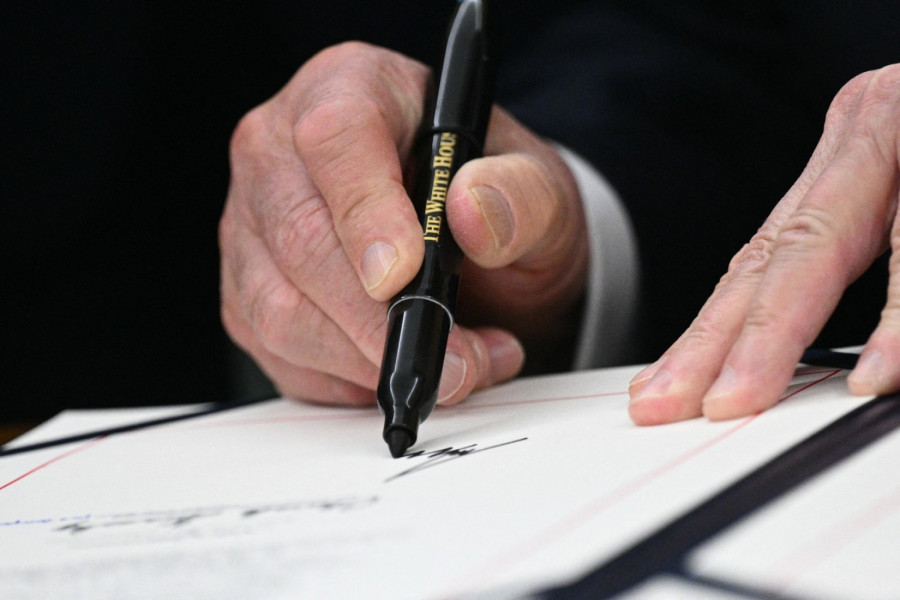
The closest thing to a warning to Trump that there would be consequences if he took Greenland came from Emmanuel Macron, who vaguely said: “If the sovereignty of a European and allied country were violated, the consequences would be unprecedented. France is following the situation with the utmost attention and will act in full solidarity with Denmark.”
Easy or hard approach?
The veiled warning from the French president came as the foreign ministers of Denmark and Greenland began talks with the Trump administration in Washington, seeking a compromise over the fate of the island, home to 57,000 people.
After Wednesday’s talks with Vice President Mike Pence and Secretary of State Mark Rubio, Danish Foreign Minister Lars Løkke Rasmussen tried to sound positive but admitted that no agreement was in sight.
Diplomats from European countries, who asked not to be named, said that discussions are underway in capitals on how to counter Trump.
Easier options include delay tactics, lobbying among Republicans in Washington, sending allied troops to visit Greenland, and even a promotional campaign in the U.S.
But there has also been the possibility of withholding support for U.S. military deployments in Europe, including radical proposals to regain control over American military bases, one diplomat said.
“There are discussions about how we could exert pressure and say, ‘Hey, we are needed, and if you do this, we will retaliate in some way,’” the diplomat said. “But at the same time, no one wants to talk about it publicly.”
The main reason Europeans are reluctant to show aggression publicly is that they consider Trump’s support crucial for providing sustainable security guarantees to Ukraine in any peace agreement with Russia.
At the same time, many allies simply cannot imagine a world in which the U.S. forcibly takes Greenland. “Maybe that’s wishful thinking,” one diplomat said, but added, “Still, we should be prepared for it.”
A double-edged sword
Within NATO, where any discussion of punishing the Americans is generally off-limits, some emphasize that such a move would be a double-edged sword.
“Using the bases as a bargaining chip in negotiations would result in mutual harm,” one NATO diplomat said. “Europe would lose additional security guarantees… and the U.S. would lose its most valuable platform for advanced operations.”
So what then?
As of 2024, the U.S. had 31 permanent bases and 19 other military sites across Europe as part of U.S. European Command, including at least 67,500 active-duty troops.
The largest deployments are in Germany, Italy, and the United Kingdom.
Ben Hodges, former commander of U.S. forces in Europe, said these bases are “essential for readiness and enabling America’s global strategic reach.”
Forcing the Americans to leave these locations would have a “catastrophic” effect on U.S. operations, Hodges said, with Ramstein in particular serving as a key launch point for U.S. deployments to the Middle East and Africa.
This is not Europe’s only leverage. Washington would also lose about “half” of its intelligence-sharing capabilities as a result of such a withdrawal, Hodges argued, while the continent could threaten to stop buying American weapons.
“Europe can help save NATO and preserve this transatlantic relationship with the United States by standing up to the U.S., rather than just being a victim and rolling over,” Hodges said.
0 Komentari
Možda vas zanima

Vojska Srbije na nogama – oglasilo se Ministarstvo odbrane
U okviru drugog dela združene taktičke vežbe sa bojevim gađanjima "Pobednik 2026", jedinice Kopnene vojske na više lokacija realizuju uvežbavanja za izvođenje borbenih dejstava u napadnoj operaciji, saopšteno je danas iz Ministarstva odbrane.
11:27
18.9.2026.
1 d

Amerikanci zainteresovani za veliki balkanski posao: Projekat vredan milijarde evra povezuje četiri zemlje
Američke kompanije pokazale su interesovanje za jedan od najvećih planiranih infrastrukturnih projekata u ovom delu Evrope – Jadransko-jonski autoput, čija bi trasa trebalo da prolazi i kroz Bosnu i Hercegovinu i Crnu Goru.
21:06
17.9.2026.
1 d

I, beg iz Kremlja je počeo
Sve veći broj Rusa strahuje da bi predsednik Vladimir Putin mogao da naredi novi talas masovne mobilizacije za rat u Ukrajini nakon parlamentarnih izbora koji se održavaju ove nedelje.
10:33
18.9.2026.
1 d

Rat – 1.666. dan: Ukrajinci napali Moskvu; Amerikanci šalju vojsku?; Uzbuna zbog dronova FOTO/VIDEO
Predsednica Evropske komisije Ursula fon der Lajen izjavila je da će Evropska unija nastaviti da podržava Ukrajinu, kao i da je o tome razgovarala telefonom sa ukrajinskim predsednikom Volodimirom Zelenskim.
23:56
17.9.2026.
1 d

Rat – dan 1.667: Pogođena nuklearna elektrana u Rusiji; Eksplozije u Kijevu; Rusi napali Sumi FOTO/VIDEO
Rat u Ukrajini – 1.667. dan. Bespilotna letelica pala je na rashladni toranj prvog energobloka Kurske nuklearne elektrane 2 i eksplodirala, saopštio je "Rosatom". Rusi su napali grad Sumi – oštećene su stambene zgrade, a dve osobe su poginule.
23:52
18.9.2026.
18 h












Komentari 0
Pogledaj komentare Pošalji komentar