






29.09.2026.
8:59
That's it, this is Putin's new target: European island already preparing for the worst-case scenario
Concerns are growing that Moscow could use the vast Arctic archipelago — a part of Norway with an unusual legal status — to test NATO militarily, at a time when uncertainty is increasing over the United States’ commitment to defending Europe, POLITICO reports.



Allies suspect that Russia is examining key undersea cables in the waters around Svalbard and organizing military-style activities aimed at testing the limits of the rules governing its presence on the archipelago. As Russia intensifies hybrid attacks across Europe, Oslo is rapidly strengthening its maritime and surveillance capabilities to protect the country’s northern flank. Local authorities on Svalbard are simultaneously investing in critical infrastructure, and an evacuation plan has even been prepared.
“Tensions in the Arctic and the north are rising, and Svalbard is, of course, part of that,” Norwegian Defence Minister Tore Sandvik told POLITICO. “We know that Russia uses numerous methods to provoke or find ways to carry out hybrid threats.”
Although the archipelago is Norwegian territory, its main island, Spitsbergen, is also home to a Russian settlement.
Moscow and Oslo have largely managed for decades to prevent tensions from escalating into open conflict, but that delicate balance is now under increasing pressure. Western countries are becoming increasingly concerned about Russian hybrid attacks in Europe and warn that Moscow could attempt a limited incursion into the territory of a NATO member by the end of the decade.
“Russia’s leadership is highly unpredictable and increasingly willing to take risks,” says Kari Aga Myklebost, a professor of Russian history and Svalbard expert at the Norwegian Arctic University. “When it comes to the Kremlin’s readiness for confrontation with NATO, I would not rule out any scenario.”
High North, rising tensions
For decades, Svalbard has been a symbol of Norway’s “High North, low tension” policy, which sought to maintain cooperation among Arctic states, including Russia.
In addition to its isolation — the archipelago lies more than 900 kilometers from mainland Norway — and its freezing temperatures, its unique legal status has also contributed to this. Under the 1920 treaty, the signatory states recognized Norwegian sovereignty over the islands, while gaining the right to exploit their natural resources in return. The Soviets soon afterward purchased the settlement of Barentsburg in order to exploit its coal deposits.
The treaty also prohibited the use of Svalbard for “war-like purposes,” including the construction of naval bases and fortifications, although Norway patrols the archipelago with coast guard and naval vessels.
At the height of the Cold War, around 2,400 Soviet citizens lived on Spitsbergen, the only inhabited island in the archipelago. They made up approximately 70 percent of the population.
Moscow has little interest in dismantling the existing treaty, as such a move could backfire. Russia’s Kola Peninsula, home to two-thirds of Russian submarines equipped with nuclear weapons intended for retaliatory strikes, lies only about 1,000 kilometers away.
“Russia has therefore been careful to avoid any kind of escalation,” Myklebost says.
This is precisely why Svalbard is also of strategic importance to NATO.
“In a military conflict, this is exactly where Russian submarines could enter the North Atlantic, hide in deeper waters, and pose a threat to NATO and the United States,” she explains.
However, tensions increased significantly following the start of Russia’s invasion of Ukraine.
Since 2022, local Russian officials have faced criticism for organizing activities by a youth organization indirectly linked to the navy, announcing missile exercises near the archipelago, and holding annual parades featuring military insignia. One of them was once accompanied by a helicopter flyover.
In 2024, Moscow also launched direct shipping routes from Russia, and last year a branch of the Russian Geographical Society was established on Svalbard, an organization headed by former Defense Minister Sergei Shoigu.
“We call these gray-zone provocations,” Myklebost says. “It is a very cheap way of demonstrating Russian presence and challenging Norwegian jurisdiction.”
Norwegian intelligence services therefore warned this year that the Kremlin “seeks to expand the scope for Russian activity on Svalbard.”
According to media reports, British, American and Norwegian forces this spring encountered Russian vessels off the coast of Svalbard testing a covert weapon designed to sever undersea cables.
Although coal reserves in Barentsburg are dwindling, Moscow clearly has no intention of abandoning the town. According to financial reports, in 2025 the Russian government allocated around 1.89 billion rubles, or approximately €20 million, in state subsidies to the state-owned company Trust Arktikugol, which operates Barentsburg.
Russia’s ambassador to Norway, Nikolai Korchunov, told POLITICO that he wants to see a “transformation of economic activities” in Barentsburg, meaning a gradual shift from coal to service industries. He added that Arktikugol is investing in maintaining the town.
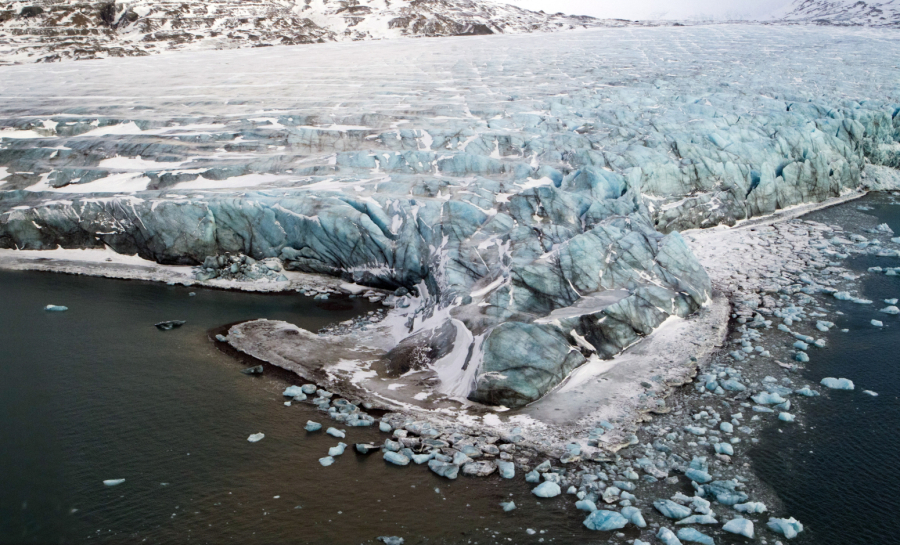
Cranes and scaffolding now surround many of the Soviet-era buildings scattered across the steep hillside opposite the imposing, snow-streaked Voringen Glacier — another sign that Russian interest in Barentsburg has not disappeared.
“We in no way question Norwegian sovereignty,” Korchunov insists. “We emphasize the necessity and importance of respecting all provisions of the Svalbard Treaty.”
At the same time, he accused Oslo of contributing to a “negative trend of militarization of the entire Baltic-Arctic region by NATO.”
On thin ice
Vice Admiral Rune Andersen, commander of the Norwegian Joint Headquarters, says his priority is to “find a balance between deterrence and maintaining stability” on Svalbard, and to respond to hybrid threats “calmly and deliberately.”
However, due to the risk of escalation, the military is investing in strengthening its surveillance capabilities. Andersen says three new satellites for maritime surveillance will be launched next year, alongside the renewal of the navy and coast guard so that Norway can maintain a permanent presence in the area.
As part of efforts to strengthen its northern flank, Norway is purchasing five Type 26 anti-submarine frigates from the United Kingdom and six Type 212CD submarines from Germany. Oslo is also deepening military integration with its allies, including London and Berlin, and joint exercises were held this month around the Norwegian Arctic island of Jan Mayen.
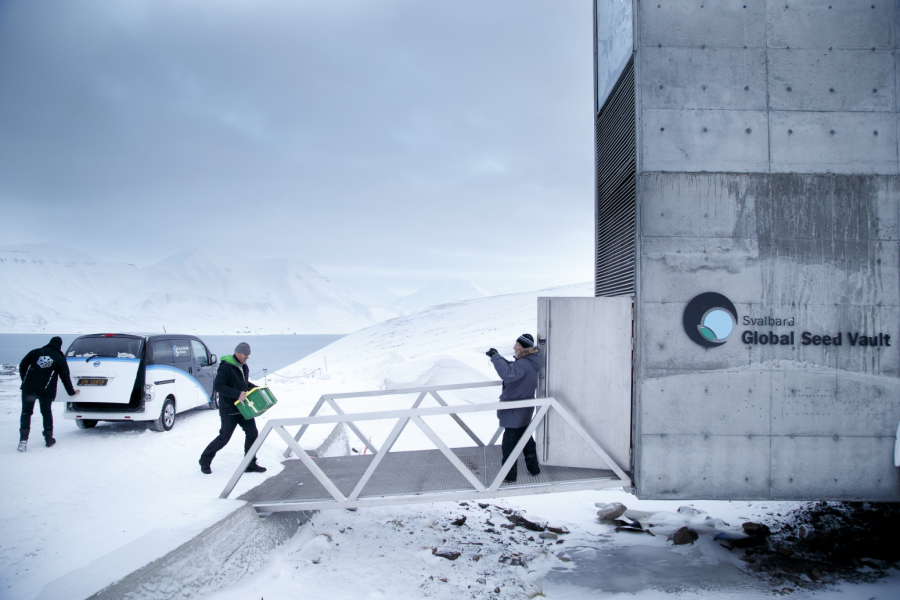
“NATO countries are increasingly present in our waters,” Minister Sandvik says. The defense of Svalbard, he adds, is also part of NATO’s defense planning.
On the archipelago itself, however, the strategy is different: tensions must be kept under control.
Svalbard Deputy Governor Katharina Rise says her office meets representatives of the local Russian consulate four times a year.
“We have a good and constructive dialogue,” she says. “It is our responsibility to preserve stability and keep tensions low.”
Terje Aunevik, mayor of Longyearbyen, the main Norwegian settlement on Spitsbergen, says authorities have plans in place for the rapid evacuation of the population should the situation escalate.
Longyearbyen has just two undersea internet cables, one airport, one water reservoir, and a diesel-fired power plant that depends on imports. Because of this vulnerability, Aunevik says, “major investments” are underway, including the construction of two new water reservoirs by around 2029.
“From that perspective, we are quite vulnerable,” he admits.
A Cold War relic at the end of the world
Up close, Barentsburg does not look particularly threatening. Few people emerge from the few dozen run-down buildings. A plume of smoke rises from the old coal-fired power plant, while a lone Soviet flag bearing the hammer and sickle flutters in the wind. Barentsburg gives the impression of an abandoned relic from another era.
Some of the recent hybrid activities may also stem from a desire among local Russian authorities to attract the attention of Moscow, says Arild Moe, a researcher and Russia expert at the Fridtjof Nansen Institute.
“They are playing the nationalism card in order to gain greater priority and more money,” he says.
However, Putin’s unpredictability and Trump’s renewed wavering over NATO remain two major unknowns.
As sabotage, cyberattacks and airspace violations pile up across Europe, fears are growing that Putin could go a step further, two NATO diplomats said, speaking on condition of anonymity because of the sensitivity of the issue.
The anxiety is also palpable on Spitsbergen.
“We don’t talk about political issues,” says a waitress from St. Petersburg who works in Barentsburg and did not want her name published. Nevertheless, she admits that residents are concerned about the possibility of a war between NATO and Russia.
“Of course it worries us.”
“There is constant talk that if the Russian government wanted to test a NATO member, Svalbard could be the place where they would do it,” says Jonathan Svensson, an expedition guide who has lived in Longyearbyen for five years.
To ease such concerns, NATO could consider air patrols over Svalbard, moving air-defense systems to northern mainland Norway, and conducting joint military exercises near the archipelago, according to two NATO diplomats — provided that Oslo agrees and that all measures comply with the Svalbard Treaty.
For now, NATO has no publicly announced plans to increase its naval or air presence around the archipelago. Some experts, however, fear that the Alliance’s current posture may not be sufficient to deter Moscow.
In theory, it would be “really easy” for Russia to seize Svalbard, says Ståle Ulriksen, a lecturer at the Royal Norwegian Naval Academy. It would be enough to deploy special forces from northern Russia and seize the airport. Nevertheless, Ulriksen considers such a scenario unlikely.
Moscow, however, might not need a full-scale occupation.
According to Myklebost, Russia could stage an emergency affecting its citizens on Svalbard and then deploy crisis-management forces. Such a move could create a legally and politically ambiguous situation in which it would not be entirely clear whether Article 5 of the North Atlantic Treaty on collective defense would be triggered.
“The worst-case scenario would be one in which Moscow concludes that it has an opportunity to test the cohesion of NATO,” Myklebost says. “Imagine Norway asking its allies for help, and Donald Trump responding: ‘No. We’re not going to risk our good business relations with Russia over this tiny island.’”

0 Komentari
Možda vas zanima

Partizan srušio Zvezdu; Pajola heroj! Karlik: "Nemam reči"; Italijan objasnio pobedu crno-belih
Košarkaši Partizana pobedili su Crvenu zvezdu rezultatom 85:82 u 7. kolu Evrolige.
23:57
22.10.2026.
1 d

Neverovatni prizori u 150 mesta u Srbiji: Okupljanja i podrška listi "Ujedinjena Srbija"; Orio se "Ruzmarin"
Građani Srbije u 150 gradova i sela organizovali su skupove poslednjeg dana izborne kampanje kako bi iskazali podršku listi "Aleksandar Vučić – Ujedinjena Srbija".
22:19
22.10.2026.
1 d

Zvezda umalo opet sve prosula; Rijera nije zabrinut; Elšnik neće da "baca saigrače pod autobus"
Fudbaleri Crvene zvezde remizirali su sa Kopenhagenom 2:2 na stadionu "Rajko Mitić" u drugom kolu Lige konferencije.
22:14
22.10.2026.
1 d

Stigao predlog za kraj rata
Časopis "The Economist" izložio je "konture" američkih mirovnih planova za kraj rata u Ukrajini. Predlozi SAD uključuju stvaranje demilitarizovane zone u Donbasu, ublažavanje sankcija protiv Rusije i investicioni paket za Kijev.
10:29
23.10.2026.
1 d

Rat – dan 1.671: Rusi ponovo napali Kijev; Putin: "Možemo da postignemo dogovor" FOTO/VIDEO
Rat u Ukrajini – 1.671. dan. Rusi su u toku noći pokrenuli novi udar na Kijev. Ruski predsednik Vladimir Putin izrazio je danas uverenje da Rusija i Ukrajina mogu da postignu dogovor.
23:58
22.10.2026.
1 d












Komentari 0
Pogledaj komentare Pošalji komentar