






08.05.2026.
1:00
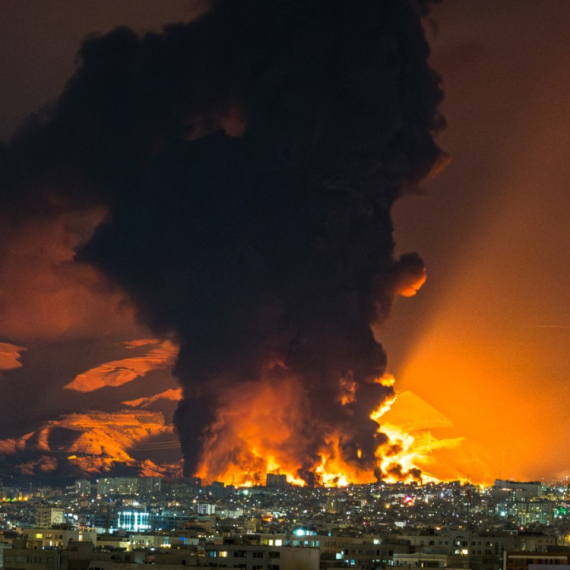
Escalation – U.S. attacks Iran; Tehran retaliates; American destroyers burning; Explosions echo across region
Conflict in the Middle East – Day 69. On Wednesday, Israel carried out its first airstrike on Beirut since the ceasefire in Lebanon came into effect on April 16. Explosions were also heard in the Iranian city of Bandar Abbas and on the nearby island of Qeshm.



Overview of the Day – May 7
U.S. President Donald Trump suspended a naval escort operation for ships passing through the Strait of Hormuz after Saudi Arabia stated that it would not allow American aircraft to take off from its territory or fly through its airspace. These restrictions were later lifted.
A senior U.S. official said that American forces struck the Iranian ports of Qeshm and Bandar Abbas, but insisted that the attacks did not represent a formal continuation of the war or the end of the April 7 ceasefire. An Iranian military organization also accused Washington of coordinating with “certain regional countries.”
Iranian state media, meanwhile, reported that air defenses were activated in western Tehran and were “engaging hostile targets.”
U.S. Navy vessels launched an attack on a tanker in the Strait of Hormuz, after which Iranian forces retaliated by firing missiles. It was later announced that the tanker belonged to China.
According to a Central Intelligence Agency analysis, Iran could survive an American naval blockade for at least four months, despite Donald Trump’s claims that it is crippling the country.
The United States approved arms sales worth 25.8 billion dollars to its allies in the Middle East.
A new round of talks between Lebanon and Israel is expected to begin next week in Washington, with American mediation aimed at reducing Israeli escalation and strengthening the ceasefire as a prelude to the second phase of negotiations.

0 Komentari
Možda vas zanima

Objavljeni rezultati izbora: Evo kako je Srbija glasala FOTO/VIDEO
Vanredni parlamentarni izbori održani su 25 oktobra u Srbiji. Lista "Aleksandar Vučić – Ujedinjena Srbija" izgubila je na izborima, dok je pobedu odnela "Studentska lista".
22:55
25.10.2026.
1 d

Vučić: "Pobedila je politika Nataše Kandić"; "Imaćemo oko 105 mandata, 'Studentska lista' 135 do 140" VIDEO
Nosilac liste "Aleksandar Vučić - Ujedinjena Srbija" Aleksandar Vučić izjavio je večeras da je ta lista izgubila na današnjim vanrednim parlamentarnim izborima i da je pobedila "Studentska lista", a da će u parlament ući još i Savez vojvođanskih Mađara.
21:40
25.10.2026.
1 d

Bez 35 evra nema ulaska u Crnu Goru: Od 1. novembra na snagu stupa nova uredba u komšiluku
Od 1. novembra ruskim građanima će biti potrebna viza za ulazak u Crnu Goru.
19:10
26.10.2026.
23 h

Najnoviji podaci o rezultatima izbora u Srbiji
Prema projekcijama IPSOS-a i Centra za slobodne izbore i demokratiju (Cesid), na osnovu 75 odsto obrađenog uzorka, na parlamentarnim izborima "Studentska lista" osvojila je 52,4 odsto glasova, a lista "Aleksandar Vučić - Ujedinjena Srbija" 39,2 odsto glasova.
23:34
25.10.2026.
1 d

Opet se oglasio RIK – najnoviji podaci o tome kako je Srbija glasala
Republička izborna komisija (RIK) objavila je rezultate parlamentarnih izbora na osnovu 8.077 obrađenih biračkih mesta po kojima je Studentska lista dobila 2.211.400 glasova, odnosno 52,54 odsto.
8:16
26.10.2026.
1 d














Komentari 0
Pogledaj komentare Pošalji komentar