






04.12.2025.
15:50
"The risk of Putin's retaliation is too great – the answer is no, not today, not tomorrow, never"
It became clear that something had gone wrong when lobsters were served for lunch, writes the Brussels-based portal Politico.



EU leaders arrived in rain-soaked Brussels on October 23 for a summit to welcome Ukrainian President Volodymyr Zelensky with a much-needed gift: a massive loan of around €140 billion, backed by Russian assets frozen in a Belgian bank. That would be enough to keep his country fighting Russian invasion forces for at least the next two years.
Various prime ministers and presidents were so convinced of their loan plan that they were already arguing among themselves about how the money should be spent. France wanted Ukraine to buy weapons manufactured in Europe, while Finland, among others, insisted that Zelensky should be free to acquire any equipment he needed wherever he could find it.
But when the discussion broke for lunch without an agreement on tapping the Russian funds, reality hit: modest Belgium, a country of 12 million, would not allow the so-called reparations loan to happen at all.
The fatal blow came from Bart De Wever. The 54-year-old Belgian Prime Minister, wearing glasses and exuding an eccentric air with his penchant for shirts with rounded collars, Roman history, and witty remarks, was deadly serious this time and took charge at the EU summit table.
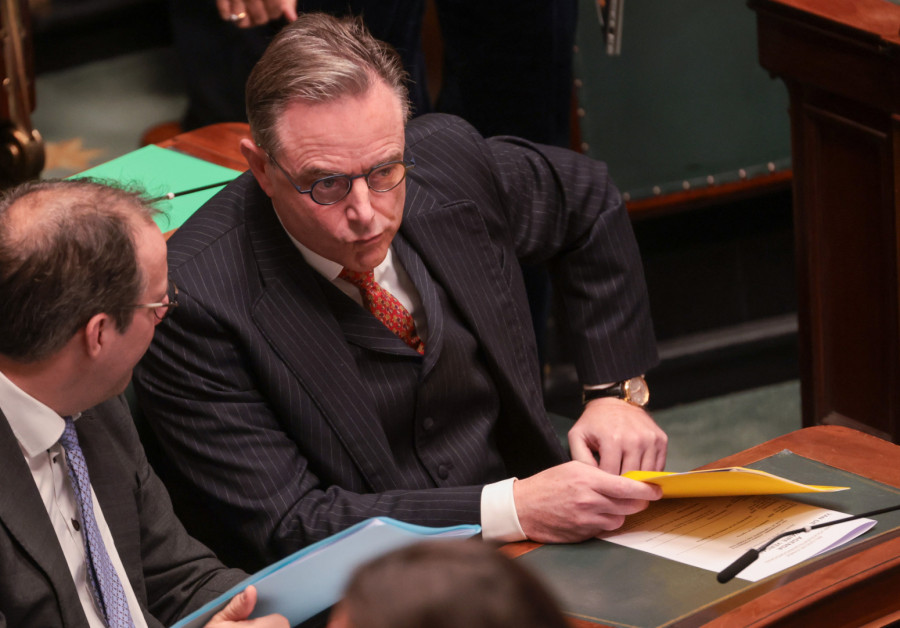
He told his colleagues that the risk of Russian retaliation over the expropriation of their sovereign assets was far too great to even consider. If Moscow were to win a legal case against Belgium or Euroclear, the Brussels-based custodian holding the assets, Belgium would have to pay the full amount itself.
"This is completely crazy," he said.
As the afternoon stretched into evening and dinner came and went, De Wever demanded that the final conclusions of the summit be rewritten multiple times to remove any mention of using Moscow’s assets to send cash to Kyiv.
Belgium’s blockade effectively shattered the European unity behind Ukraine at a critical moment. Had the leaders agreed to quickly proceed with the loan plan at the October summit, it would have sent a strong signal to Russian President Vladimir Putin about Ukraine’s long-term resilience and Europe’s firm commitment to defend it.
Instead, Zelensky and Europe were weakened by divisions as U.S. President Donald Trump, still hoping for a Nobel Peace Prize, renewed his pressure for peace negotiations with Putin’s allies.
The situation in Brussels remains deadlocked, even as the nearly four-year war approaches a crucial juncture. Ukraine is increasingly sliding toward a financial abyss, Trump wants Zelensky to sign a unilateral agreement with Putin—which has alarmed Europe—and yet De Wever continues to say no.
"The Russians are surely having a great time," said one EU official close to the negotiations.
EU leaders still aim to agree on a final plan to prevent Ukraine from running out of money when they meet at their next regular summit in Brussels on December 18.
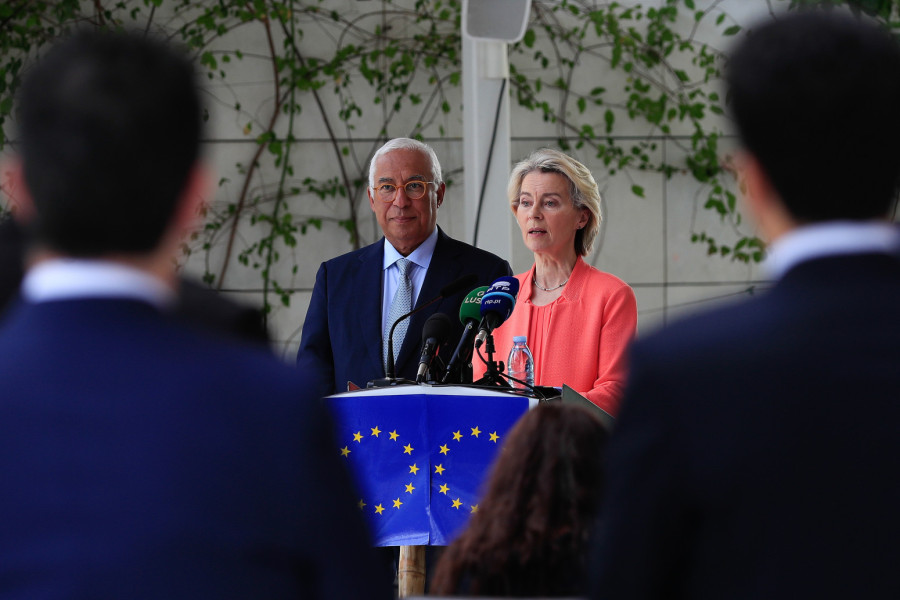
But as time runs out, one key question remains: can the top EU officials—European Commission President Ursula von der Leyen and European Council President António Costa—convince De Wever to change his mind?
So far, the signs are not promising.
"I'm not impressed yet, let me put it that way," De Wever said in a television address as the Commission released its draft legal texts on Wednesday.
"We will not put risks involving hundreds of billions on Belgian shoulders. Not today, not tomorrow, never."
In interviews, more than 20 officials, politicians, and diplomats—many speaking privately on sensitive matters—told Politico that European attempts to fund Ukraine’s defense have descended into chaos and paralysis, bogged down in political dysfunction and personality clashes at the highest levels. The potential consequences for Europe—as Trump pushes to impose a peace agreement on Ukraine—could hardly be more serious.
New tensions
According to several people close to the discussions, the proposal for a reparations loan began to encounter problems as tensions grew between De Wever and his neighbor, the new German Chancellor, Friedrich Merz.
A Flemish nationalist, De Wever came to power only this February after months of painful coalition negotiations—a classic scenario in Belgian politics. Three weeks later, Germany held national elections, handing leadership of Europe’s most powerful economy to Merz, a center-right conservative.
Like De Wever, Merz can be impulsive in ways that unsettle allies.
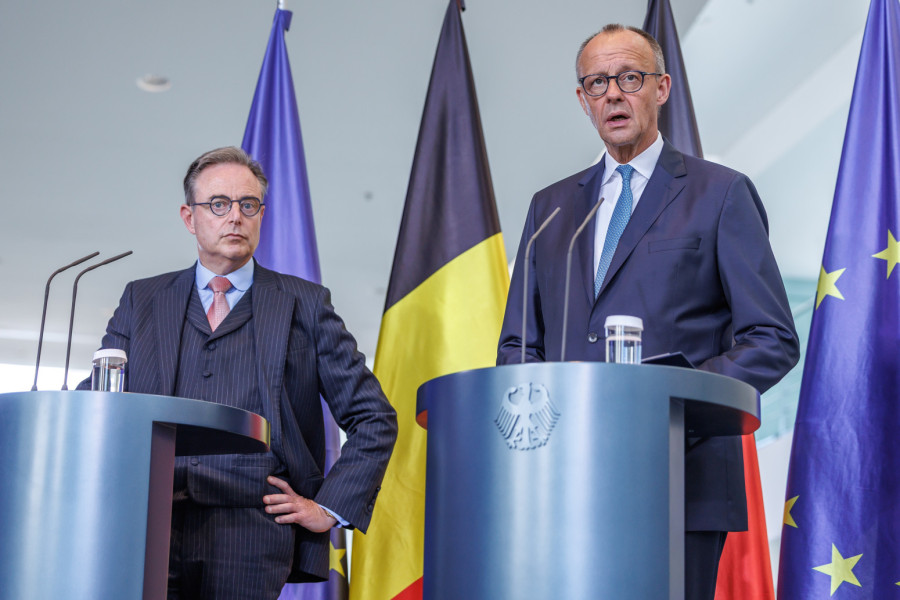
“He’s shooting from the hip,” said one Western diplomat. On the night he won, he called on Europe to pursue full “independence” from the United States and warned NATO that such a status might soon be history.
In September, the German Chancellor again took a risk. It was, he said, time for Europe to raid its own banking vaults to make use of frozen Russian assets to aid Ukraine. With this move, Merz apparently alarmed the Belgians, who at the time were engaged in sensitive private discussions with EU officials, trying to address their concerns.
Several officials said Merz acted irresponsibly by putting policy into the public sphere so forcefully and so early—before De Wever had signed off.
Five days later, von der Leyen herself addressed the matter, carefully attempting to reassure anyone who might have concerns.
“No confiscation of assets,” she said.
Instead, she argued, the assets would only be used to secure some form of advance from Moscow for war reparations that it would inevitably owe. The money would be returned to Russia only in the unlikely event that the Kremlin agreed to compensate Ukraine for the destruction it caused.
The idea quickly gained momentum.
“It’s important to move forward in the process because it’s about ensuring there are funds to meet Ukraine’s budgetary and military needs, and it is also a moral issue to make Russia pay for the damage it has caused. In that sense, using frozen Russian assets is a logical and moral choice,” Jessica Rosencrantz, Sweden’s Minister for European Affairs, told Politico.
Spiderweb
Much of the work for the European Council summit is completed long before the bloc’s leaders arrive at the futuristic “Space Egg” building for handshakes and photos.
Ambassadors from the 27 member states meet during the weeks leading up to each summit to discuss what the summit should achieve—and to work out precise wording for plans.
Ahead of the October summit, Belgium’s ambassador to the EU, Peter Moors, sent signals to his colleagues that progress on plans to use frozen Russian assets would be fine. The problem, according to four officials familiar with the situation, was that Moors did not speak directly with De Wever and that all decisions regarding Russian assets rested with the Prime Minister.
While others in the Belgian government knew that the Prime Minister was unyieldingly opposed to taking money from Euroclear, one diplomat negotiating the summit agreement just a few hundred meters down the road apparently did not.
This meant that no one within the EU mechanism truly understood how serious De Wever’s opposition would be until he arrived on the day of the summit, practically steaming with anger.
Moors is highly respected among his colleagues and within the Belgian government. He is considered efficient, experienced, and competent, with a long career in diplomacy and politics. Before taking on the role of ambassador to the EU, he was known as the "spider in the web" of Belgian foreign policy.
The problem, it seems, may have been political in nature. He was chief of staff to De Croo's rival and predecessor as Prime Minister, Alexander De Croo, and comes from a party that lost power in last year’s elections and is now in opposition. It is not uncommon in politics for such differences to influence who is excluded from the process.
Another complicating factor was Belgium’s political dysfunction. As De Wever himself said, he had been stuck for weeks negotiating with his fellow countrymen over the national budget, with no agreement in sight.
"For weeks I have been negotiating to find 10 billion euros," De Wever said on the way to the EU summit. Therefore, a scenario in which Belgium would have to return to Russia an amount more than ten times that was unimaginable, he added.
As the summit ended with only a vague agreement that leaders would reconsider funding for Ukraine, officials were left scratching their heads, wondering what went wrong.
America First
The question of what to do with the hundreds of billions of dollars in Russian assets frozen in Western accounts has hung over Ukraine’s allies since the funds were sanctioned at the start of the war in February 2022. Now, however, it’s not only Europeans eyeing the money.
The American side quietly but firmly made it clear to Brussels that they have their own plans for the funds. When the EU sanctions envoy David O’Sullivan traveled to Washington during the summer, U.S. officials openly told him that they want to return the assets to Russia once a peace agreement is reached, according to two senior diplomats.
Trump has grown increasingly impatient for Kyiv and Moscow to reach a peace agreement. True to their word, the original 28-point U.S. peace plan included proposals for unfreezing Russian assets and using them for a joint effort to rebuild Ukraine, with the U.S. taking 50 percent of the profits.
The concept caused outrage in European capitals, where one shocked official suggested that Trump’s envoy, Steve Witkoff, visit a "psychiatrist." If nothing else, Trump’s desire for a quick deal with Putin—and his apparent plans for frozen assets—set the EU negotiations with De Wever on fire.
Time Wasted
Many EU governments sympathize with the Belgian leader. Officials and politicians understand how difficult it is for any government to consider a move like this, which could theoretically expose them to extremely costly legal proceedings.
De Wever is concerned that the stability of the euro itself could be undermined if a raid on Euroclear forces investors to rethink placing their assets in European banks.
In recent weeks, the oldest aide to von der Leyen, Björn Seibert, among others, has spent time trying to understand Belgium’s objections and find creative ways to overcome them. Moors and other ambassadors have endlessly discussed these issues in their regular meetings with each other and with the Commission.
But as nights pass, the mood worsens.
Amid delays and ongoing failure to agree on the way forward, the briefings have increasingly targeted De Wever, and, in recent weeks, von der Leyen herself. She delayed the decisive step of publishing draft legal texts that would allow the funds to be used for a loan for reparations. These documents are what all parties need for the plan to be adopted, amended, or rejected.
"We have lost a lot of time," Jonatan Vseviov, Secretary General of the Estonian Ministry of Foreign Affairs, told Politico.
"Our focus was solely on the Commission President, asking her to present a proposal. No one else can submit a proposal." He said it would have been "better" if the Commission had drafted legal texts specifying the loan details earlier than Wednesday, when they were finally published.
"We all have a responsibility to speed things up now," said another diplomat, while a third noted that even Belgium in recent weeks had requested the Commission to release the legal plans. An EU official said everyone should calm down and noted that De Wever still needs to "come down from the edge." Another diplomat said Belgium "cannot expect all their wishes to be fully met."
Winter Has Arrived
Merkel is particularly concerned. He worries that his country’s taxpayers may have to intervene if the loan for the funds does not hold.
"I consider the need to do this increasingly urgent. Ukraine needs our support. Russian attacks are intensifying. Winter is approaching—or rather, it has already arrived," the German leader told reporters on Friday.
De Wever, according to one diplomat, continues to "plead" for other options to remain on the table. Two alternative ideas are under consideration. The first would require national EU governments to dip into their budgets to send money to Kyiv, which most involved consider unrealistic given the difficult state of many European countries’ budgets.
The second idea is to fund a loan to Kyiv through joint EU borrowing, which frugal countries dislike because it would accumulate debt that future generations of taxpayers would have to repay. "We are not thrilled about that. The principle that Russia must pay for the damage is correct," one diplomat said.
Some combination of these ideas may be inevitable, especially if the reparations loan is not finalized in time to meet Ukraine’s financial needs. In that case, a bridging loan would be needed as an urgent "plan B."
In a letter to von der Leyen on November 27, De Wever expressed his opposition, describing the reparations loan proposal as "fundamentally wrong."
"I am fully aware of the need to find ways to continue financial support for Ukraine," De Wever wrote in his letter to von der Leyen.
"My point has always been that there are alternative ways to invest our money and stand behind our words. When we talk about having skin in the game, we must accept that it will be our skin in the game."
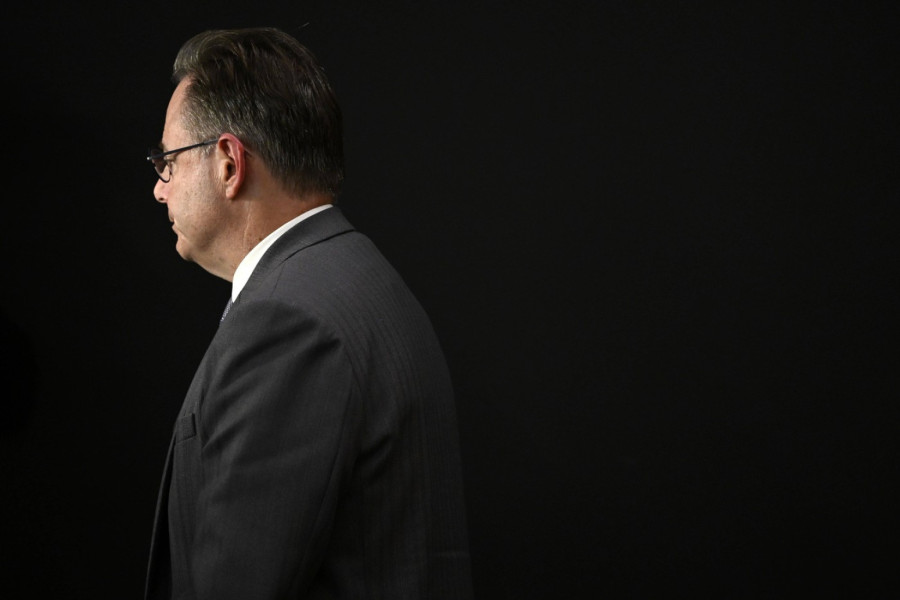
"Who would advise a prime minister to write such a letter?" said one exasperated diplomat, horrified by De Wever’s apparent insensitivity. "He talks about having 'skin in the game.' What about Ukraine?"
Russian drones
Despite the frustration of his allies, De Wever still enjoys support within his own government for the hardline stance he has taken. His position has been reinforced by Euroclear itself, which has issued its own warnings. As a sign of how critical this issue is for Belgium, Euroclear executives communicate directly with De Wever’s office, bypassing the finance ministry.
Some are also concerned about the threat to Belgium’s physical security. Mysterious drones disrupted air traffic at Brussels Airport last month and were spotted over Belgian military bases, suspected of spying on combat aircraft and ammunition depots. The concern is that they could be part of Putin’s hybrid attack on Europe and that Belgium would face increased risk if De Wever approved the use of Moscow’s assets.
Another major obstacle to progress on the loan is Hungary. Russian assets remain frozen only because all EU leaders—including Putin’s friend Viktor Orbán—agree every six months to extend the sanctions that immobilize the funds. If Orbán changes his mind, Russia could suddenly reclaim its assets, putting Belgium in trouble.
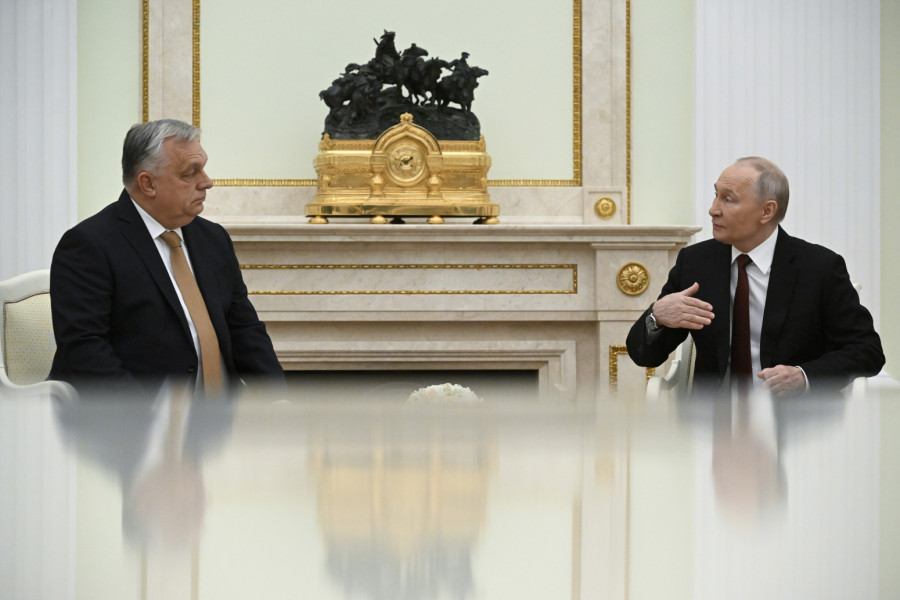
In the end, the task could prove too great even for the Commission’s highly qualified lawyers. It is far from certain that a legal solution exists that could avoid a Hungarian veto and Russian retaliation, satisfy Belgium, and avoid the need to invest European taxpayers’ money in advance.
As the next key European Council summit on December 18 approaches, European officials are feeling the pressure.
"This is not an accounting exercise," said Estonian official Vseviov. "We are preparing the most significant of all European Councils… We are trying to ensure that Europe has a seat at the table where history is being made."
For the EU, one fundamental question remains—and it is a question that is always present in every crisis faced by diplomats and officials working in Brussels: Can the union of 27 diverse, divided, and complex countries, each with its domestic struggles, political rivalries, and ambitious leaders, come together when it truly matters?
0 Komentari
Možda vas zanima

Menja se način na koji merimo vreme: Posle 50 godina doneta istorijska odluka
Odluka je doneta glasanjem na 28. Generalnoj konferenciji za tegove i mere, a do stupanja na snagu novih pravila neće biti dodavanja novih prestupnih sekundi, što u praksi znači da se njihova primena završava odmah.
17:46
15.10.2026.
2 d

Samouništenje Zvezde na startu Lige konferencije: "UEFA ovo mora da istraži" VIDEO
Fudbaleri Crvene zvezde porazom od Lugana u gostima (3:2) započeli su takmičenje u Ligi konferencije.
22:31
15.10.2026.
2 d

Pravo iz dubine zemlje u radijatore: Sve oči uprte u Batajnicu, počinje potraga za vrelom vodom
Ispod Batajnice očekuje se voda temperature i do 120 stepeni. Geološka istraživanja treba da pokažu da li bi ovaj prirodni izvor toplote mogao da zagreva beogradske domove.
11:10
15.10.2026.
2 d

Vatrogasci stigli rekordno brzo: Poznatu beogradsku kafanu zahvatio veliki požar
Po dolasku na teren, ustanovljeno je da vatrena stihija guta krov objekta. Požar je zahvatio površinu od oko 150 kvadratnih metara od ukupno 400 kvadrata krovne konstrukcije, kao i jednu prostoriju u tavanu.
10:05
16.10.2026.
2 d

Zvezda slavi Batlera, Monekea i 4. pobedu u nizu – Pariz pao posle drame!; "Bio sam uznemiren"
Košarkaši Crvene zvezde pobedili su Pariz 90:81 u 6. kolu Evrolige.
23:15
16.10.2026.
1 d












Komentari 0
Pogledaj komentare Pošalji komentar