






19.11.2025.
16:55
They used banned cluster munitions PHOTO
Israel used widely banned cluster munitions in its recent 13-month war in Lebanon, according to photographs of munition remnants in southern Lebanon seen by The Guardian.



The images, reviewed by six different weapons experts, appear to show remnants of two different types of Israeli cluster munitions found at three separate locations: south of the Litani River in the wooded valleys of Wadi Zibqin, Wadi Barguz, and Wadi Deir Sirjan.
This evidence is the first indication that Israel has used cluster munitions in nearly two decades, since their use in the 2006 Lebanon war. It would also be the first known instance of Israel employing the two newly identified types of cluster munitions — M999 Barak Eitan 155 mm guided rockets and Raam Eitan 227 mm munitions.
Cluster munitions are container bombs that release many smaller submunitions, or “bomblets,” over a large area the size of several football fields. Their use is widely banned because up to 40% of the submunitions fail to detonate on impact, posing a deadly threat to civilians who may later encounter them.
To date, 124 countries have joined the Convention on Cluster Munitions, which prohibits their use, production, and transfer. Israel is not a signatory to the convention and is not bound by it.
“We believe the use of cluster munitions is always contrary to a military’s obligation to respect international humanitarian law because of their inherently indiscriminate nature, both at the time of use and afterward,” said Tamar Gabelnick, director of the Cluster Munition Coalition. “Their wide-area impact means they cannot distinguish between military and civilian targets, and remnants kill and maim civilians for decades after their use.”
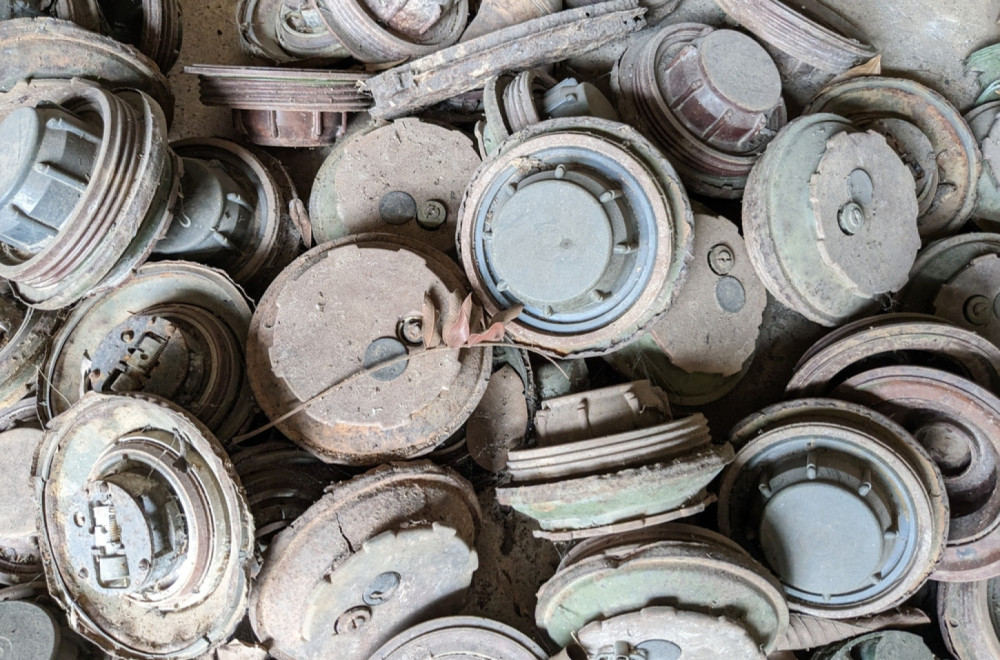
The Israeli military has neither confirmed nor denied the use of cluster munitions but stated that it “uses only lawful weapons, in accordance with international law and with mitigation of harm to civilians.”
Israel-Hezbollah War
Israel’s war with Hezbollah, which began in October 2023 and left nearly 4,000 people dead in Lebanon and around 120 in Israel, has devastated the Lebanese militant group. Large parts of southern Lebanon remain in ruins, and Israel continues to carry out almost daily airstrikes in the country, despite a ceasefire signed last year.
Lebanon has a particularly painful history with cluster munitions. Israel dropped 4 million cluster bombs over Lebanon in the final days of the 2006 war, with an estimated 1 million failing to explode. The presence of unexploded cluster munitions continues to make life in southern Lebanon dangerous, with more than 400 people killed by unexploded bombs since 2006.
The massive number of unexploded cluster bombs in Lebanon was a key factor leading to the adoption of the Convention on Cluster Munitions in 2008.
Despite not being signatories to the convention, Israeli officials condemned Iran’s use of cluster munitions in Israel during the twelve-day war this summer. “The terrorist regime seeks to harm civilians and even used wide-area weapons to maximize damage,” said Israeli military spokesperson Brig. Gen. Efi Defrin, after Iranian forces used cluster munitions in populated areas in southern Israel.
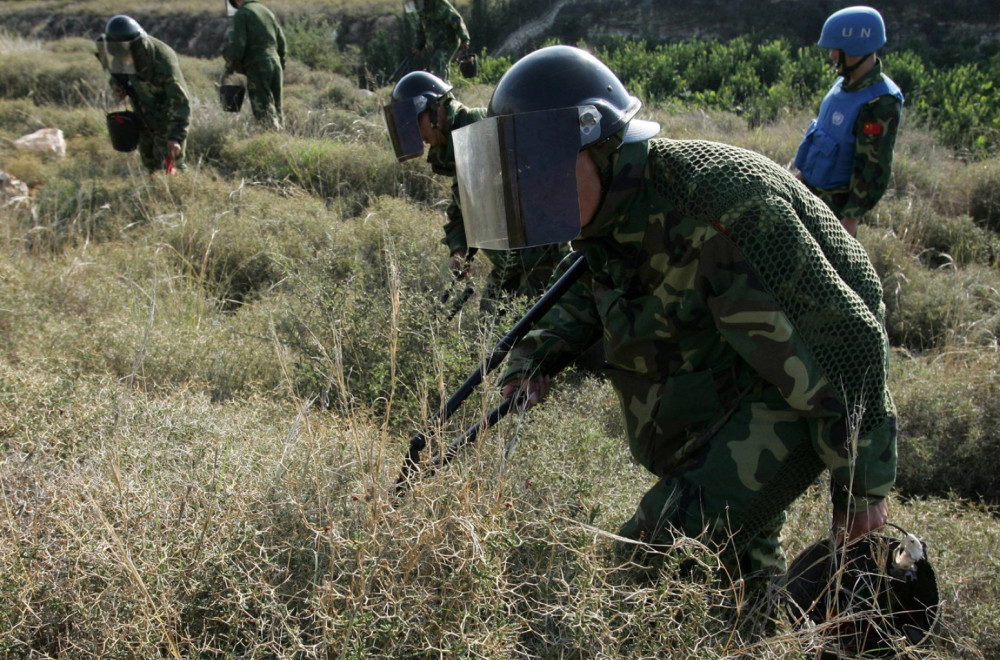
Photos of the remnants of the first type of cluster munition — the advanced M999 Barak Eitan 155 mm anti‑personnel round, manufactured in 2019 by the defense company Elbit Systems — were verified by six different weapons experts, including Brian Castner, head of crisis investigations at Amnesty International, and N. R. Jenzen‑Jones, director of Armament Research Services, a technical intelligence consultancy specializing in the analysis of weapons and ammunition. Elbit Systems did not respond to a request for comment.
Each M999 artillery shell releases nine submunitions that explode into 1,200 tungsten fragments, according to the U.S. Army’s manual for this weapon.
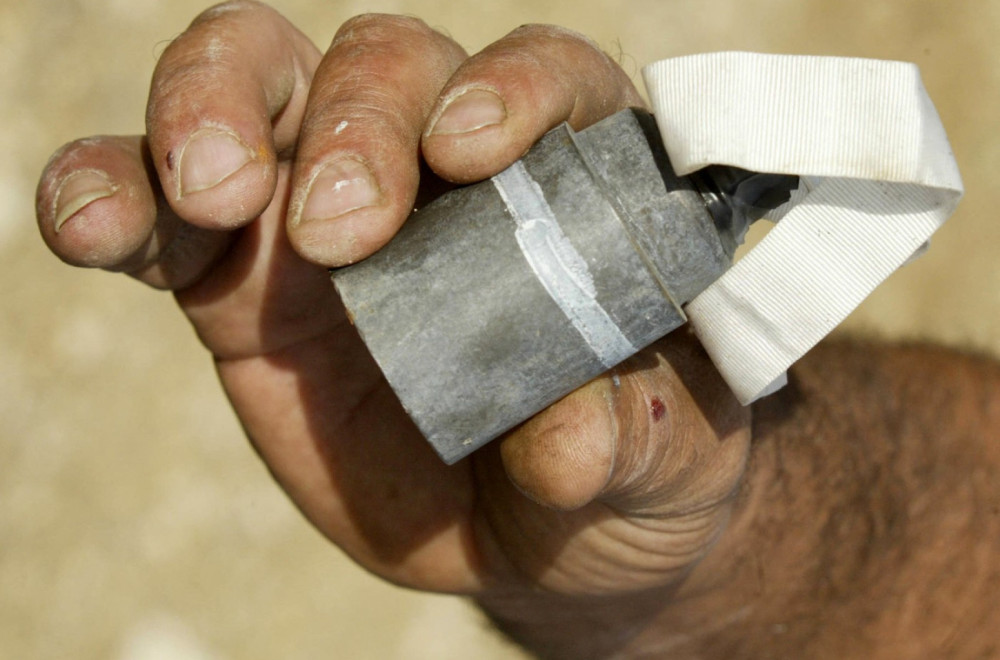
Photographs of the remnants of a second munition were identified as a cluster bomb by five different weapons experts, although most were unable to determine the exact model due to a lack of open‑source material on this particular rocket.
Jenzen‑Jones and another weapons analyst said the weapon was a 227 mm Ra’am Eitan guided rocket, a new type of cluster munition developed by Elbit Systems. This specific round was manufactured in 2017, as indicated by its lot code.
Israeli media have described the Ra’am Eitan as guided rockets that contain 64 bomblets which “scatter over a large radius and kill anyone present.” According to an IDF press release from February 2024, Israeli troops operating along the country’s northern border were equipped with the Ra’am Eitan in preparation for fighting Hezbollah.
For countries that are not signatories to the convention, the legality of using cluster munitions depends on the circumstances of the attacks in which they are employed, as well as on the intent of the military personnel involved. The Guardian has no information about the specific attacks in which the shells were used, as the remnants were found afterward.
The remnants were found in densely forested valleys in southern Lebanon, which Israel has accused Hezbollah of using during the war to shield themselves from bombing and aerial surveillance.
Because of their wide dispersal, cluster munitions could be effective against fighters spread across large, wooded areas. U.S. forces used cluster munitions in a similar way in Vietnam, blanketing dense jungles where Viet Cong forces were located.
According to Israeli media reports, both types of cluster munitions that were found were developed in recent years to leave behind fewer unexploded bomblets, with claims that the Ra’am Eitan had a “failure rate” of just 0.01%. Israel developed this ammunition after its use of cluster bombs in the 2006 Lebanon war drew criticism both abroad and at home — seeking a way to continue using cluster munitions while minimizing harm to civilians.
Gabelnick and other weapons experts warned that the failure rates advertised by weapons manufacturers are often much higher in real‑world conditions. The Israeli defense industry claimed that the failure rate for the M85 cluster munition used in the 2006 war was 0.06%; later analyses suggested the rate was around 10%.
Human rights groups have said that it is impossible to use cluster munitions in a way that minimizes civilian harm.
“Cluster munitions are internationally banned for a reason. They are inherently indiscriminate, and there is no way to use them lawfully or responsibly. Civilians bear the greatest burden of risk because this weapon remains deadly for decades to come,” Castner said.
0 Komentari
Možda vas zanima

Džoooons! Zvezda slavila u trileru; "Košarkaški bogovi su nekad pošteni"
Košarkaši Crvene zvezde savladali su večeras Asvel u Vilerbanu rezultatom 84:82 u utakmici petog kola Evrolige.
23:00
13.10.2026.
22 h

Potop Partizana u Areni – Panata se "prošetala"; Penjaroja: "Teško je takmičiti se sa lošim šutem"
Košarkaši Panatinaikosa savladali su Partizan sa 55:72 u okviru petog kola Evrolige.
23:43
13.10.2026.
21 h

Uzbuna u Crnom moru; Bugarska odmah traži pomoć NATO-a
Bugarska je zatražila tehničku pomoć Evropske unije i NATO-a u nastavku istrage o napadima dronovima na dva trgovačka broda u bugarskoj isključivoj ekonomskoj zoni Crnog mora.
22:05
12.10.2026.
1 d

Rat – dan 1.691: Rusija udarila na energetiku Ukrajine; Putin nudi rešenje?; "Evropi preti haos" FOTO/VIDEO
Rat u Ukrajini – 1.691. dan. Kremlj poručio da je ruski predsednik Vladimir Putin spreman na obustavu napada tokom izbora u Ukrajini. Za to vreme, evropske bezbednosne službe upozoravaju na moguće nove ruske operacije protiv članica NATO-a.
23:44
12.10.2026.
1 d

Profesor Vladimir Vuletić pronađen mrtav
Profesor Vladimir Vuletić, bivši potpredsednik Fudbalskog kluba Partizan i profesor Pravnog fakulteta u Beogradu, pronađen je mrtav, pišu mediji.
16:50
13.10.2026.
1 d














Komentari 0
Pogledaj komentare Pošalji komentar