






23.07.2025.
12:40
Trump gave Putin the green light
American President Donald Trump gave his Russian colleague Vladimir Putin an ultimatum to agree to a ceasefire in the war in Ukraine by the fall, which Moscow interpreted as permission or a free hand, writes "Politico".



Fourteen-year-old Sofia Glinyana was sitting on a playground bench in the northeastern Ukrainian city of Kharkiv on August 30 last year when she was shot and killed in a Russian airstrike on the city. Hit by five powerful precision-guided bombs - none of which appeared to be aimed at military targets - seven other civilians were killed in the same airstrike. As the bombs fell and hit houses, a sports field, a warehouse, an apartment building and Sofia's playground, nearly a hundred people were injured, including more than 20 children, Politico reports.
"These streets are exclusively parks where a large number of civilians gather. This is a residential building. This is once again a mass terror against our civilian population," Kharkiv Oblast Governor Oleg Sinegubov angrily announced on Telegram.
Almost a year later, US President Donald Trump has finally given his Russian counterpart Vladimir Putin an ultimatum to agree to a ceasefire in the war in Ukraine by autumn. But the question is how many more civilians will be killed by August 30 as Moscow ramps up its airstrikes in the meantime, and whether Trump's terms will make any difference.
The Kremlin believes it has freedom
The demands made by the US president to Russian leader Vladimir Putin last week were clear - he would agree to a ceasefire by early September or face further economic sanctions, including tariffs on countries that trade with Russia, which is already under Western sanctions, including, possibly, China and India, whose oil purchases power the Russian economy and therefore Putin's war machine. Meanwhile, the US will sell Patriot air defense systems to the Europeans for onward transfer to the Ukrainians, and will also supply additional weapons, although the quantities and types of weapons are still unknown.
Trump's long-awaited announcement was made in an unusual way - during a press conference in the Oval Office, the American leader left NATO Secretary General Mark Rutte to summarize and explain the new US policy, limiting himself to a few passing comments. Nevertheless, both in Kyiv and in Western European capitals, relief was felt that Trump is not leaving Ukraine, but also because of the change in the tone of his address to Putin, Politico writes in its analysis.
However, they also felt relief in the Kremlin. Moscow appears undaunted by Trump's threats of very harsh tariffs, and that calm at the top has rubbed off on society more broadly. And the Russian stock market calmly welcomed Trump's announcement - in the next few hours, the market rose by 2.7 percent, and the Russian ruble recovered some losses against the dollar.
But the question is why the Kremlin and the Russian markets would not react in this way. Namely, according to the words of Russian political scientist Tatiana Stanova, Moscow essentially interpreted Trump's ultimatum as permission or a free hand, "carte blanche for intensifying the offensive in Ukraine."
The same applies to Russian military analyst Yuri Fedorov, who says that the Kremlin was actually afraid of the "immediate imposition" of secondary sanctions on buyers of Russian oil, that is, the advancement of legislation in the US Senate that would impose stricter penalties on Russia and its trading partners, and the immediate delivery of long-range missiles. Therefore, Moscow now estimates that it has received the "green light" to continue the airstrikes, especially because "Trump is not ready and does not want to engage in a major conflict with Russia."
So the Kremlin can now continue to wreak havoc and spill a lot more innocent blood until the end of the summer. In the week before Sofia was killed, Russian forces launched more than 400 drones and missiles into Ukraine, and now they are launching more than that in a single night. The question, as Politico writes, is whether Trump will really get tougher in September, or whether Putin might be willing to agree to a cease-fire that leads to a peace settlement. However, that being said, there isn't much reason to believe any of it.
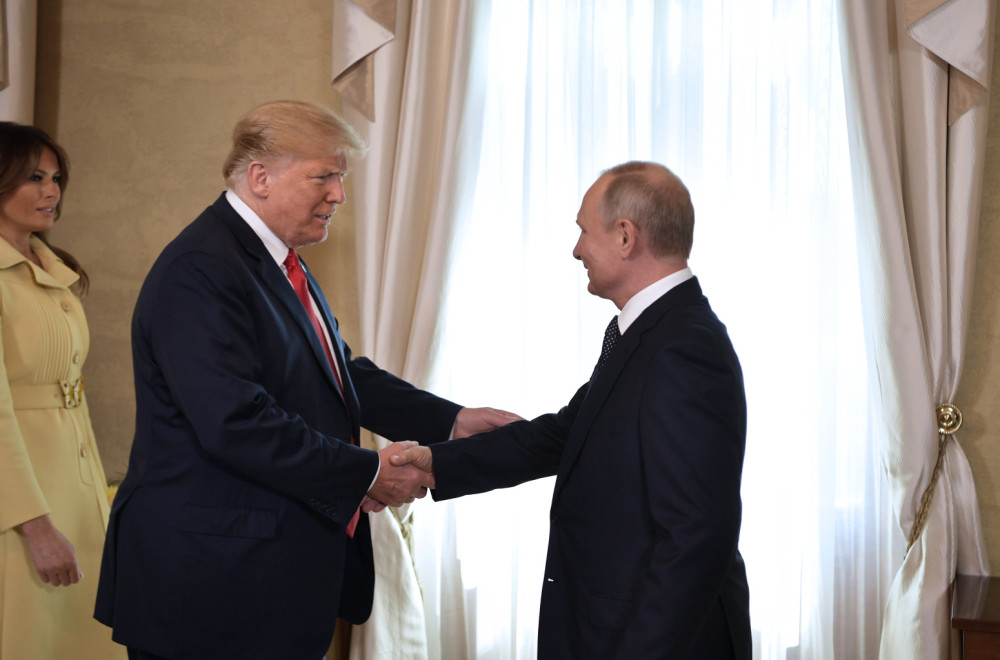
In a recent interview, longtime Kremlin analyst and former expert on Trump's Russia policy, Fiona Hill, warned that the US president is being "respectful to Putin because he is really concerned about the risk of nuclear escalation." But he also "thinks in terms of real estate, trade and who gets what, whether it's minerals, land or rare earths," she explained. What Trump doesn't understand, she said, is that Putin doesn't want a ceasefire. "He wants a neutralized Ukraine, not one that can withstand military pressure. Everyone sees that, except Trump."
The basis of this soft approach to Moscow, as Hill claimed, is the personal idolization of Putin by the American president.
The sudden end of the war is a danger for Putin
So far, the Russian president has not changed any of his preconditions for ending the conflict. In fact, he reiterated them at the recent International Economic Forum in St. Petersburg, saying that a peace deal can only be reached if there is international recognition of the territories it claims are Russian and Ukraine adopts a neutral, militarily non-aligned status.
Until then, Putin seems determined to continue the war of attrition, which it is said could be very dangerous for him if he ends it abruptly. According to Ella Paneyakh, a sociologist and researcher at the Center for New Eurasian Strategies - a think tank founded by Russian businessman and longtime Putin opponent Mikhail Khodorkovsky - the Russian autocrat must prolong the war because the sudden end of the conflict and the collapse of the war economy would cause "brutal and fierce competition at all levels of society for scarce resources."
"Returning veterans, especially soldiers with contracts guaranteeing a certain social and economic status, are likely to demand privileges and disrupt the local balance of power, posing a challenge to both elites and institutions. A new war elite of pseudo-veterans, bureaucrats and war-related interest groups will compete with real combatants and civilians, especially in Russia's periphery," says Paneyakh. As war veterans return, "there will inevitably be conflicts with those they perceive as 'cowards' who did not go to fight." It's a dangerous combination, and undoubtedly something the Kremlin also has very much in mind, Politico concludes.
0 Komentari
Možda vas zanima

Poznati lanac zatvara 150 prodavnica: U toku su rasprodaje na više lokacija
Diskontni lanac KiK nastavlja da smanjuje broj svojih prodavnica u Nemačkoj. Tokom 2026. godine planirano je zatvaranje oko 150 objekata, dok bi istovremeno trebalo da bude otvoreno svega petnaestak novih.
16:19
11.10.2026.
1 d

Na granicama više ništa nije isto: Svi su strahovali od EES-a, a čeka nas novi sistem
Prošlo je godinu dana od početka uvođenja sistema ulaska i izlaska (EES) na spoljnim granicama Evropske unije, koji je doneo velike promene u načinu kontrole putnika iz zemalja koje nisu članice EU.
17:13
10.10.2026.
2 d

Rat – dan 1.691: Rusija udarila na energetiku Ukrajine; Putin nudi rešenje?; "Evropi preti haos" FOTO/VIDEO
Rat u Ukrajini – 1.691. dan. Kremlj poručio da je ruski predsednik Vladimir Putin spreman na obustavu napada tokom izbora u Ukrajini. Za to vreme, evropske bezbednosne službe upozoravaju na moguće nove ruske operacije protiv članica NATO-a.
23:44
12.10.2026.
10 h

Rat – dan 1.690: Primirje prekršeno; Rusija udarila na Harkov; Evropi stiglo mračno upozorenje FOTO/VIDEO
Rat u Ukrajini – 1.690. dan. Američki predsednik Donald Tramp objavio energetsko primirje između Rusije i Ukrajine, za koje ukrajinski predsednik kaže da je prekršeno. Na frontu se nastavljaju napadi, a Kijev i Moskva razmenjuju optužbe i upozorenja.
23:50
11.10.2026.
1 d

"Pukla stotka" u Pioniru za prvu pobedu Zvezde u ABA ligi, ali brine nova povreda
Košarkaši Crvene zvezde su savladali ekipu Budućnosti u trećem kolu ABA lige rezultatom 101:91 i time upisali porvi trijumf u regionalnom takmičenju u novoj sezoni.
23:25
10.10.2026.
2 d












Komentari 0
Pogledaj komentare Pošalji komentar