






10.12.2025.
15:30
Countdown – exactly one month to the spectacle in Belgrade
Just one month left until the European Men's Water Polo Championship in Belgrade, one of the most significant sporting events on the continent.
Izvor: B92.Sports
Autor: B92.sport




Final preparations for the ultimate sports spectacle are already underway, adding even more excitement to the unforgettable atmosphere at Belgrade Arena, the largest indoor hall in the Balkans. This year’s European Men's Water Polo Championship also marks a major milestone: the centenary of the event. The first championship was held in 1926 in Budapest, then as part of the "Grand Championships," which included competitions in swimming and diving.
To date, 36 editions have taken place in the men’s category, and expectations for the 37th edition in Belgrade are high. In 2016, Belgrade set a world attendance record of 18,473 spectators at the then-Kombank Arena during the final between Serbia and Montenegro, when Serbia claimed its third consecutive European title.
Tickets for the long-awaited European Championship are available through the Tickets network and online at https://tickets.rs/tour/european_aquatics_water_polo_championship_men_belgrade_2026_2321.
Ticket prices for the group stage, covering days 1 to 6 of the competition, range from 700 to 3,000 RSD for two matches. For days 7, 8, and 9, tickets are available for 700, 900, 1,200, 1,500, 1,900, and 3,000 RSD, depending on seat location, and cover 2 or 3 matches per session.
For 3-match sessions on competition days 10, 11, and 12, prices range from 900 to 3,500 RSD, while day 13 sessions, which include 2 matches each, cost between 700 and 3,000 RSD. Semifinal matches on day 14 have ticket prices ranging from 1,700 to 6,000 RSD. On the final day, day 15, tickets for the third-place match and the final range from 3,000 to 8,000 RSD.
Matches are organized in sessions, so one ticket price covers multiple games depending on the chosen session.
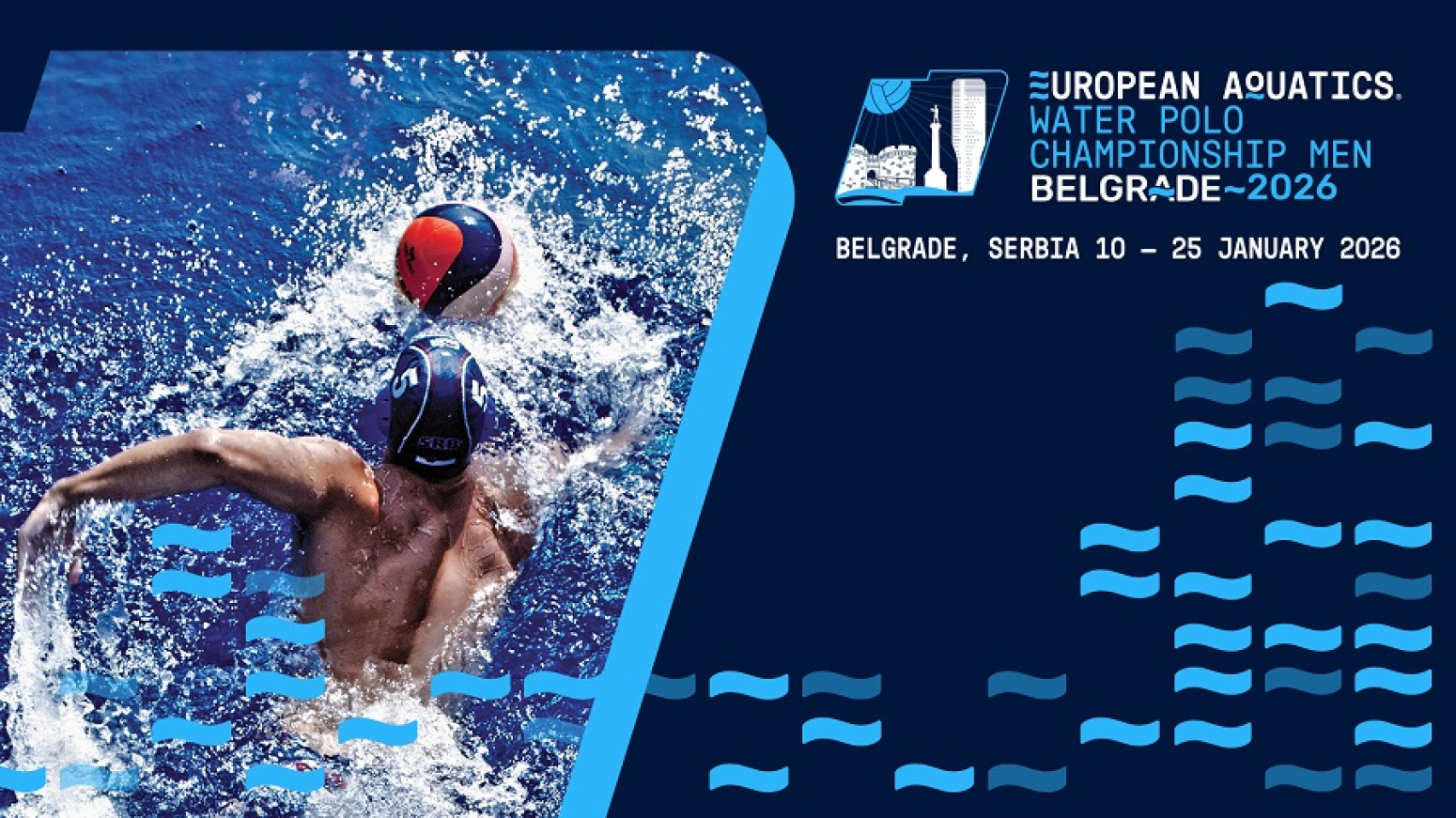
Sixteen national teams will compete for the European Championship title at the 37th edition of the tournament, including Serbia, Spain, Croatia, the Netherlands, Slovakia, Georgia, Italy, Hungary, Greece, Montenegro, Romania, France, Slovenia, Turkey, Malta, and Israel.
Fans will have the chance to witness the best national teams in action, and Serbia’s extended roster has already been announced.
Head coach Uroš Stevanović selected the wider squad, which began preparations for the European Championship in Kragujevac on December 5. The squad includes: Radoslav Filipović, Vladimir Mišović, Milan Glušac, Radosav Virijević, Mihajlo Gošić, Nikola Murišić, Nemanja Vico, Djordje Lazić, Sava Randjelović, Nikola Jakšić, Radomir Drašović, Dušan Trtović, Petar Jakšić, Luka Pljevančić, Miloš Ćuk, Strahinja Rašović, Nikola Lukić, Vasilije Martinović, Nikola Dedović, Dušan Mandić, Viktor Rašović, Vuk Milojević, and Luka Gladović.
From December 10 to 12, the Romanian team will join joint preparations, and two days later, Serbia’s players will travel to Kranj, where they will stay until December 24.
From December 26 to 29, joint training sessions will be held in Athens with the Greek team, including an official match on December 28. On New Year’s Day, the team will travel to Trebinje for final preparations, including a strong tournament featuring Serbia, Greece, Italy, Hungary, France, and Spain.
The new format for the men’s tournament will begin with a group stage consisting of four groups with four teams each. Each group will include two teams that finished in the top eight in 2024 and two teams that qualified successfully. Each team will play every other team in its group, with one rest day between matches.
After the group stage, the top three teams from each group will advance to the next phase. The best 12 teams will form two new groups of six: Group E (teams from Groups A and C) and Group F (teams from Groups B and D). All points earned during the first phase will be carried over, and each team will play three additional matches against new opponents, followed by the knockout stage.
The top two teams from each group will advance to the semifinals, while the others will compete for positions 5–12. Teams eliminated in the first phase will play among themselves for places 13–16.
A professional committee will also select the seven best players of the tournament for special recognition. In addition to prestigious trophies and individual awards, MVP honors will be presented after each semifinal, the bronze medal match, and the grand final.
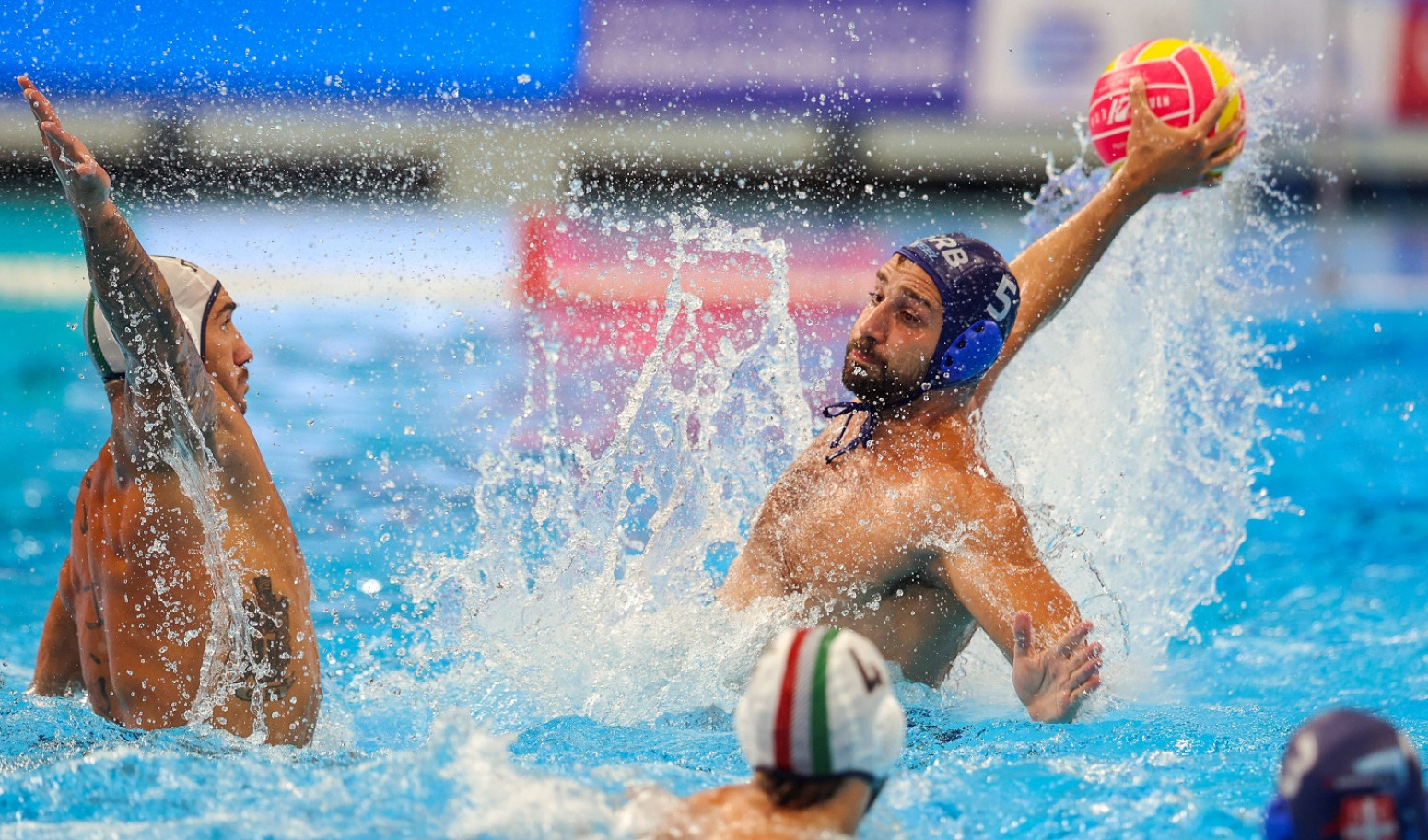
Serbia is a water polo powerhouse, a sport in which our national team has for years demonstrated not only dominance but also the spirit of champions. The golden generation has brought the country its most prestigious honors – from Olympic gold medals (Rio 2016, Tokyo 2020, Paris 2024), to world and European titles, and triumphs in the World League. Few sports allow a nation to boast such consistent success, and it is water polo that gives Serbia this shine.
Belgrade is expected to become the European capital of water polo in January 2026, as thousands of fans from across the continent arrive to support their national teams. Meanwhile, the local audience, traditionally loyal and passionate, will once again prove it knows how to create an atmosphere worthy of champions.
The championship will be an opportunity not only to enjoy the skills of Europe’s best water polo players but also to reaffirm why Serbia is called the “land of water polo.” Our “Dolphins” enter the tournament carrying a legacy of medal-winning tradition, embodying success, discipline, and sporting courage.
From January 10 to 25, Serbia will once again be the center of the water polo world, with Belgrade Arena serving as the stage where new history will be written.
0 Komentari
Možda vas zanima

Zvezda slavi Batlera, Monekea i 4. pobedu u nizu – Pariz pao posle drame!; "Bio sam uznemiren"
Košarkaši Crvene zvezde pobedili su Pariz 90:81 u 6. kolu Evrolige.
23:15
16.10.2026.
1 d

Vatrogasci stigli rekordno brzo: Poznatu beogradsku kafanu zahvatio veliki požar
Po dolasku na teren, ustanovljeno je da vatrena stihija guta krov objekta. Požar je zahvatio površinu od oko 150 kvadratnih metara od ukupno 400 kvadrata krovne konstrukcije, kao i jednu prostoriju u tavanu.
10:05
16.10.2026.
1 d

Dnevni horoskop za 17. oktobar: Škorpijama se smeši nešto novo; Ribe, ovo ste čekali
Saznajte šta svaki horoskopski znak očekuje danas.
8:12
17.10.2026.
1 d

Rat – dan 1.696: Tramp zamrznuo sankcije Moskvi; Rusi žestoko napali Herson FOTO/VIDEO
Rat u Ukrajini – 1.696. dan. Predsednik SAD Donald Tramp zamrznuo je novi paket sankcija protiv ruske ekonomije. Izaslanik ruskog predsednika Kiril Dmitrijev rekao je da je to važan i istorijski trenutak.
23:55
17.10.2026.
9 h

Rat – dan 1.695: Ruski bombarderi iznad Baltičkog mora; Putin: "Napredujemo"; Ukrajina "na nogama" FOTO/VIDEO
Bombarderi dugog dometa Tu-22M3 Vazdušno-kosmičkih snaga Rusije izveli su planirani let u vazdušnom prostoru iznad neutralnih voda Baltičkog mora, saopštilo je Ministarstvo odbrane Rusije.
23:49
16.10.2026.
1 d












Komentari 0
Pogledaj komentare Pošalji komentar