






06.02.2026.
7:05
Gold rush of the 21st century: Governments fall because of them – What are rare elements?
The administration of U.S. President Donald Trump will organize a major meeting with ministers from the European Union and other countries on “rare elements”.



This refers to a broad category that includes dozens of materials such as cobalt, nickel, manganese, graphite, and lithium, as well as the “rare earth elements,” a group of 17 elements crucial for many high-tech devices, in whose production China leads.
We are witnessing a true “21st-century gold rush,” but it is linked to names like neodymium, praseodymium, dysprosium, and terbium.
These minerals, lying deep underground, are key components of the 21st-century technological revolution. They are essential for powering everything—from smartphones and electric vehicles to advanced military systems. Because of this, in the race for supremacy in the second half of the 21st century, there is fierce competition between the world’s two major powers, China and the United States.
Neodymium, Praseodymium, Dysprosium, Terbium
Global production of raw rare elements in the past five years, according to the French research group Cercle CyclOpe, has increased from 220,000 tons in 2019 to 390,000 tons in 2024, an increase of 77 percent.
Most of the economic profit comes from four elements: neodymium, praseodymium, dysprosium, and terbium.
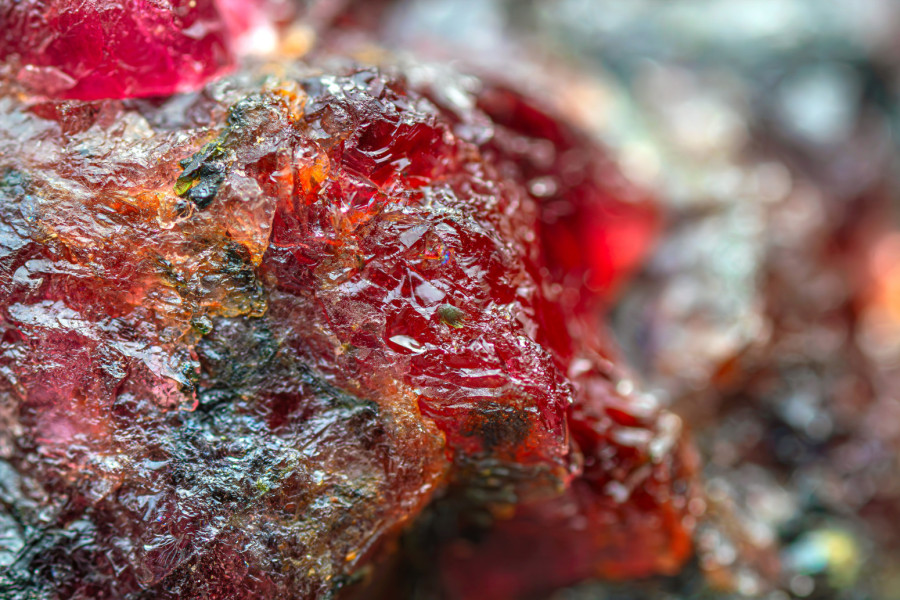
Magnets for wind turbines
These four “magnetic” rare earth elements are mainly used to produce permanent magnets, the most well-known being neodymium, which are about 10 times stronger than conventional magnets.
Using rare earth elements increases the magnet’s strength while reducing its size and weight, said Damien Ambroiz of the French energy consulting firm Bartle.
A single offshore wind turbine can contain up to a ton of these magnetic rare earth elements.
Fighter jets, golf clubs
Aircraft manufacturers are major consumers of rare earth elements, especially for fighter jets.
According to the U.S. bulletin Rare Earth Exchanges, Lockheed Martin is the largest American user of samarium, which allows magnets to withstand extremely high temperatures.
Each F-35 fighter jet requires over 400 kilograms of rare earth elements, according to a report from the U.S. Congressional Research Service.
Scandium is used to make light but strong aluminum alloys, which are used not only in the aviation industry but also for golf and baseball clubs, as well as bicycles.
Smartphones
Rare earth elements are also found in every smartphone, where they improve screen quality and enable vibration.
Each device contains about three grams, meaning that in the 1.24 billion devices sold worldwide in 2024, there were 3,700 tons of rare earth elements.
Motors
Every motor in a hybrid or electric vehicle contains between 1.2 and 3.5 kilograms of rare earth elements, according to estimates from the French Geological and Mining Research Office.
They are also used in small motors, such as those that automatically adjust car side mirrors after parking.
Vehicles with internal combustion engines also contain rare earth elements, particularly in the catalytic converter. Lanthanum and cerium reduce harmful car emissions.
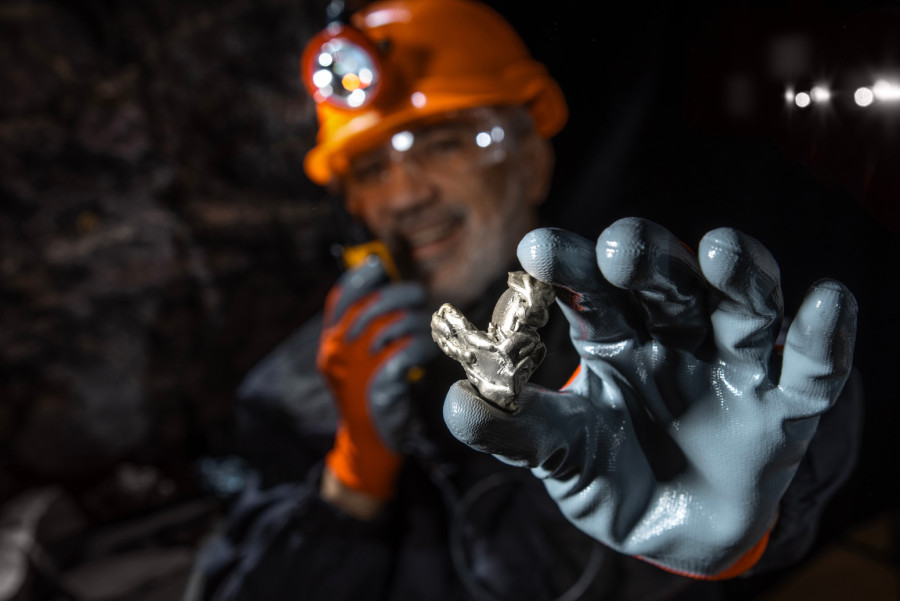
Oil, glass, and lasers
In the chemical industry, cerium is widely used in oil refining and glass polishing.
Erbium finds applications in various medical fields, including dentistry, dermatology, and ophthalmology.
Erbium and neodymium are also important in the production of lasers for industrial engraving and cutting.
Adding different rare earth metals changes the wavelength of the laser, which in turn affects its purpose and color, said Ambroiz. “It ensures beautiful colors for light effects.”
Why rare earth elements are important
Rare Earth Elements (REEs) are a group of 17 elements that, although not rare in terms of their presence in the Earth’s crust, are seldom found in economically viable concentrations. This makes their mining, extraction, and refining complex and costly processes.
These elements are crucial for the global economy because they support a wide range of high-tech applications and green technologies. For example, neodymium and dysprosium are core components of permanent magnets used in wind turbines and electric vehicle motors, significantly contributing to the development of the renewable energy sector.
Europium and terbium, on the other hand, play a vital role in fluorescent and LED lighting, as well as in color displays of smartphones and TVs. Their use contributes to energy efficiency and digital technology advancement.
The economic importance of REEs cannot be ignored, and the global market for these elements is expected to grow significantly.
0 Komentari
Možda vas zanima

Džoooons! Zvezda slavila u trileru; "Košarkaški bogovi su nekad pošteni"
Košarkaši Crvene zvezde savladali su večeras Asvel u Vilerbanu rezultatom 84:82 u utakmici petog kola Evrolige.
23:00
13.10.2026.
21 h

Potop Partizana u Areni – Panata se "prošetala"; Penjaroja: "Teško je takmičiti se sa lošim šutem"
Košarkaši Panatinaikosa savladali su Partizan sa 55:72 u okviru petog kola Evrolige.
23:43
13.10.2026.
20 h

Uzbuna u Crnom moru; Bugarska odmah traži pomoć NATO-a
Bugarska je zatražila tehničku pomoć Evropske unije i NATO-a u nastavku istrage o napadima dronovima na dva trgovačka broda u bugarskoj isključivoj ekonomskoj zoni Crnog mora.
22:05
12.10.2026.
1 d

Rat – dan 1.691: Rusija udarila na energetiku Ukrajine; Putin nudi rešenje?; "Evropi preti haos" FOTO/VIDEO
Rat u Ukrajini – 1.691. dan. Kremlj poručio da je ruski predsednik Vladimir Putin spreman na obustavu napada tokom izbora u Ukrajini. Za to vreme, evropske bezbednosne službe upozoravaju na moguće nove ruske operacije protiv članica NATO-a.
23:44
12.10.2026.
1 d

Stariji su ga pili svakog dana, a mi smo ga zaboravili: Napitak koji leči
Sve što je nekada pripremano bilo je isključivo prirodno, iz bašte, a jedan napitak je i te kako uticao na zdravlje naših baka i deka, pa bi trebalo da ga vratimo na sto.
16:39
12.10.2026.
2 d












Komentari 0
Pogledaj komentare Pošalji komentar