






16.03.2026.
15:55
The Oscars as a political platform: Loud messages from the stage and controversial absences PHOTO/VIDEO
The film ‘One Battle After Another’ is the big winner at the Oscars. Some other awarded works also tackle politically sensitive topics, and the speeches in particular were filled with political messages.



Last year, the film industry appeared noticeably restrained, almost paralyzed, following Donald Trump’s reelection. That shock-induced stiffness has now somewhat eased.
Several speeches, as well as the most awarded films, addressed political themes – from social division and racism to state violence.
Many members of the American Academy of Motion Picture Arts and Sciences clearly viewed their votes not just as aesthetic judgments, but also as an opportunity to send a message about the state of the United States.
Big winner of the night: One Battle After Another
The political thriller One Battle After Another, directed by Paul Thomas Anderson, took home the most Oscars – a total of six, including Best Picture. In the film, Anderson uniquely depicts militant left-wing activists in the U.S., led by confident Black women.
The film is based on a novel by Thomas Pynchon set in the 1980s – yet it feels surprisingly contemporary.
Anderson portrays America on high alert: marked by deportations, armed security forces, and a society in which more and more people believe they must fight for a better country.
The film also won Oscars for Best Director, Best Supporting Actor, Adapted Screenplay, Editing, and, in the new Casting category, recognition for ensemble casting.
Sean Penn didn’t make it
The winner of the Best Supporting Actor award was Sean Penn, marking his third Oscar. This places him among the actors with the most Oscars, alongside Jack Nicholson, Walter Brennan, and Daniel Day-Lewis.
However, Penn did not attend the ceremony, and the reason is not entirely clear. The New York Times reported that the actor had recently planned a trip to Ukraine.
Political engagement is nothing new for Penn: a few years ago, the Oscar winner even discussed in an interview the possibility of melting down his trophies to produce ammunition for the war against Russia.
Honoring black pioneers
The vampire drama Sinners, which won four awards, was the second big winner, even though it had entered the race as the early favorite with sixteen nominations. Ryan Coogler’s film addresses racism, violence, and the historical guilt of white people in the American South. Other themes central to African American culture, such as the power of blues music, were also highlighted.
Autumn Durald Arkapaw became the first woman to win an Oscar for cinematography for this film.
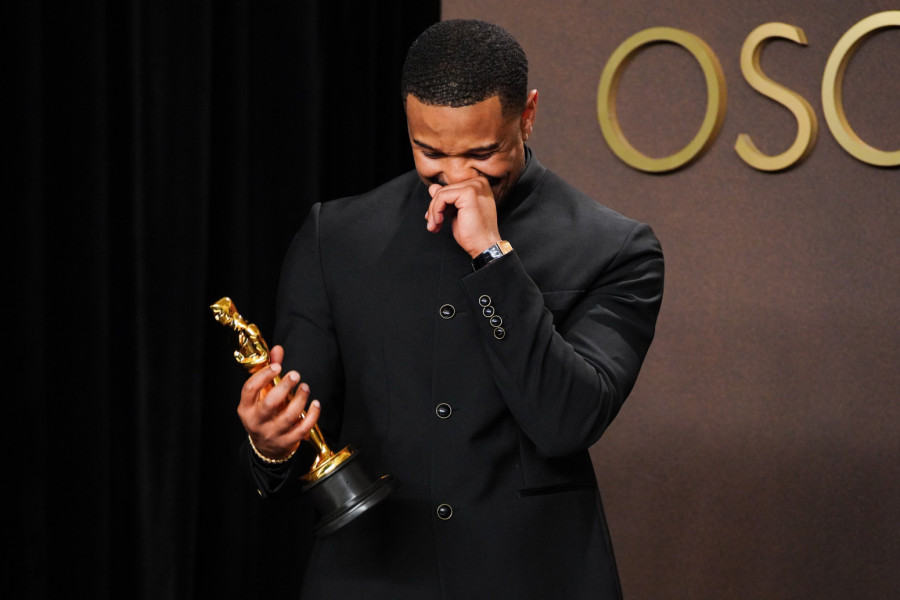
Michael B. Jordan, who won the Oscar for Best Leading Actor for his role as twin brothers in the drama, paid tribute in his speech to other Black award winners, including Denzel Washington, Halle Berry, and Jamie Foxx. “I stand here because of the people who came before me.”
Humor and Comedy
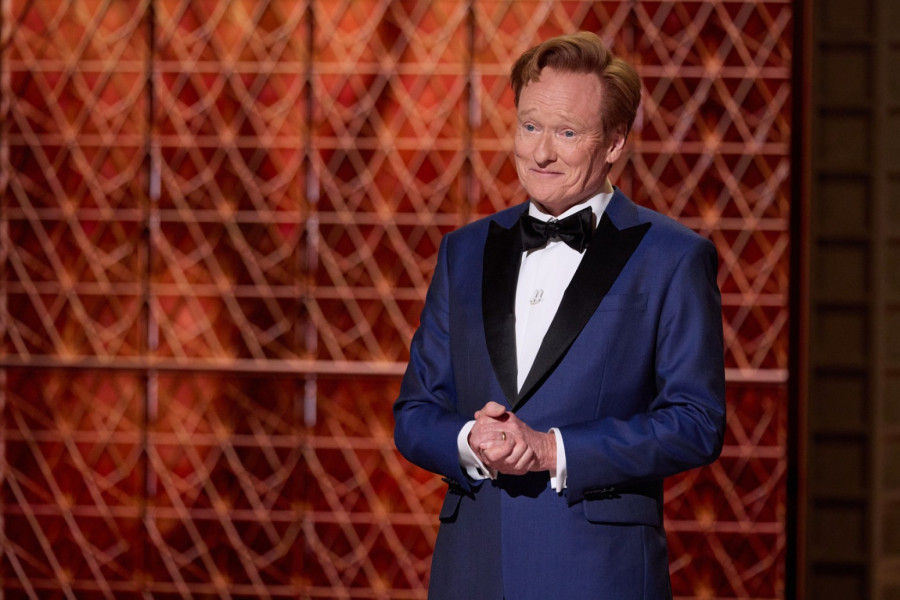
Host Conan O’Brien used the stage to deliver ironic political commentary. He referenced U.S. President Donald Trump and touched on the scandal involving sex offender Jeffrey Epstein.
Talk Show host Jimmy Kimmel takes a political jab
Talk show host Jimmy Kimmel also criticized Trump, although he did not mention the president by name. Introducing the documentary film categories on stage, he said, “Oh man, he’s going to be mad – his wife wasn’t nominated for this.”
He was referring to the Amazon film Melania, which follows the First Lady before the transfer of power in the White House.
Earlier, Kimmel had spoken about filmmakers dedicated to telling the truth, exposing injustice, and inspiring action. He then added: “And there are documentaries where you just walk around the White House and try on shoes.”
Later, he compared the United States to North Korea: “As you know, there are some countries whose leadership does not support freedom of speech. I’m not allowed to say which ones. Let’s just stick with North Korea and CBS.”
The CBS network, owned by Paramount and recently acquired by tech billionaire Larry Ellison – considered a Trump supporter – has, at least partially, adopted a softer tone toward the Trump administration.
Political messages – and touching moments
Other artists also used their appearances to deliver political messages. Actor Javier Bardem said, “No to war – and free Palestine,” earning enthusiastic applause from the audience.
Norwegian director Joachim Trier, in his acceptance speech for Sentimental Value, referenced writer James Baldwin, saying that all adults are responsible for all children – and that voters should not elect politicians who fail to understand this seriously.
Trier, who has two young children, told reporters backstage that the suffering of children in crisis and war zones moves him and many of his friends to tears. “There are many dictatorships. We are once again living in a time of strong leaders,” said the director.
Jessie Buckley won the Oscar for Best Leading Actress for her role as William Shakespeare’s wife in the feature film Hamnet. Visibly moved, she accepted the award with a trembling voice and dedicated it to the “beautiful chaos in the heart of a mother.”
A major surprise at this year’s ceremony was that the table tennis film Winning Time starring Timothée Chalamet did not win any awards.
0 Komentari
Možda vas zanima

Stigla najnovija prognoza meteorologa: Evo kakva nas zima čeka
Najnovija prognoza za zimu 2026/2027. predviđa manje snega nego što su se prethodna očekivala za veći deo Evrope.
17:17
19.10.2026.
1 d

Zdrava namirnica koju treba što češće da jedemo: U sekundi spušta šećer
Za ovu namirnicu kažu da je najbrže prirodno oružje protiv skokova glukoze i da bi trebalo što češće da je konzumiramo.
19:18
19.10.2026.
1 d

Rat – dan 1.698: Rusi žestoko napali – među poginulima i deca; Vašington negira Zelenskog FOTO/VIDEO
Rat u Ukrajini – 1.698. dan. Šest osoba je poginulo, a 15 je ranjeno u ruskom napadu na Harkovsku oblast, na jugoistoku Ukrajine. Među poginulima je i nekoliko dece.
23:51
19.10.2026.
1 d

Važne informacije za sve koji planiraju putovanja u EU: Oglasila se i Juta
Iz Nacionalne asocijacije turističkih agencija (YUTA) saopštili su da se primena ETIAS sistema za putovanja u zemlje Šengena odlaže za 2027. godinu, iako još uvek nije zvanično saopšten tačan datum početka. Ipak mnoge zanima kako će sve funkcionisati.
19:28
19.10.2026.
1 d

Starinski podvarak na nov način: Zaboravite sve druge recepte, ovaj je bez greške
Uz parče domaćeg hleba, složićete se da je dobar podvarak ručak nakon kojeg niko ne pita šta ima za desert...
12:53
20.10.2026.
16 h












Komentari 0
Pogledaj komentare Pošalji komentar