






26.12.2025.
11:00
Vladimir Vladimirovich, you've been betrayed by your closest ally?
US newspaper The Wall Street Journal published a series of reports suggesting that Trump, through his special envoy, found a “backdoor” route to Putin via a close aide of Russian president, who had been “chatting” with the Americans about a weight-loss drug.



The leader in question is Belarusian President Alexander Lukashenko, and the key figure in all this was U.S. President Donald Trump’s special envoy, John Coale, who established a personal relationship with Lukashenko—even to the point of recommending weight-loss products to him.
In return, Lukashenko is now helping Trump facilitate dialogue with Russian President Vladimir Putin, reports The Wall Street Journal, citing information obtained from the White House.
The U.S. newspaper also reminds readers that Lukashenko’s current isolation is a consequence of Trump’s policies during his first presidential term (2017–2021).
At that time, the Belarusian president was sanctioned for brutally suppressing the 2020 protests.
It is also noted that when Russia launched its invasion of Ukraine in 2022, it conducted attacks from Belarus and later began deploying tactical nuclear weapons on Belarusian territory, including Oreshnik missiles.
However, Trump decided to improve relations with Belarus, and unexpectedly, his longtime acquaintance and attorney, John Coale—also his legal representative in Trump’s lawsuit against Facebook—played the key role.
An unexpected call
In early spring, while in London, Coale received an unexpected call from the State Department, asking him to fly to Belarus to pick up Yuri Zenkovich, a lawyer and activist holding both Belarusian and U.S. citizenship.
Zenkovich had been detained in Russia back in 2021, secretly transferred to Belarus, and sentenced to 11 years in prison for allegedly planning a coup.
Alexander Lukashenko released Zenkovich as a gesture of goodwill, effectively attempting to initiate a dialogue with the United States regarding the easing of sanctions.
Coale drove Zenkovich to freedom, marking the beginning of the process. Shortly thereafter, he met with the Belarusian ambassador to the UN, who informed him that Lukashenko’s primary interest was for the company Boeing to continue delivering aircraft parts to Belarus, including for his personal Boeing 767.
John Coale thus became another special envoy for Trump.
Coale managed to build a close rapport with Belarusian President Lukashenko, even recounting occasions where they drank vodka, ate potato pancakes, and swore together.
The negotiations between Coale and Lukashenko, according to the Wall Street Journal and reported by Jutarnji list, focused on aircraft parts and sanctions affecting key Belarusian industrial enterprises.
For the Trump administration, the talks with Lukashenko were primarily a form of practice: testing negotiation methods and gradually reintegrating Belarus from international isolation—techniques that could later be useful in dealing with Russia.
Coale carefully nurtured his personal relationship with Lukashenko, avoiding criticism of the Belarusian leader, while using Trump’s rationale: “It doesn’t matter who you talk to; what matters is whether they can do what you need.”
He flew to Minsk several times, negotiating the release of political prisoners in exchange for easing sanctions, and then returned to the United States to brief Trump in detail.
Trump carefully listened and showed growing interest in Lukashenko, the Wall Street Journal reports, adding that in August, on the way to a summit with Putin in Alaska, the U.S. leader spoke with Lukashenko for about ten minutes.
During one of their lunches, Lukashenko unexpectedly asked Coale: "Have you lost weight?"
Coale confirmed that he had been taking the drug Zepbound, which had helped him lose weight.
Lukashenko became very interested, and when Coale reported this episode to the State Department and the White House, serious consideration began on ways to provide Lukashenko access to Zepbound.
Since Trump’s return to the White House, Belarus has released more than 250 political prisoners. In June, in exchange for freeing 14 dissidents, including opposition leader Sergei Tikhanovsky, the U.S. allowed Boeing to resume selling aircraft parts to the Belarusian state airline Belavia.
Lukashenko’s personal aircraft was also repaired.
But there was one more factor—Russia
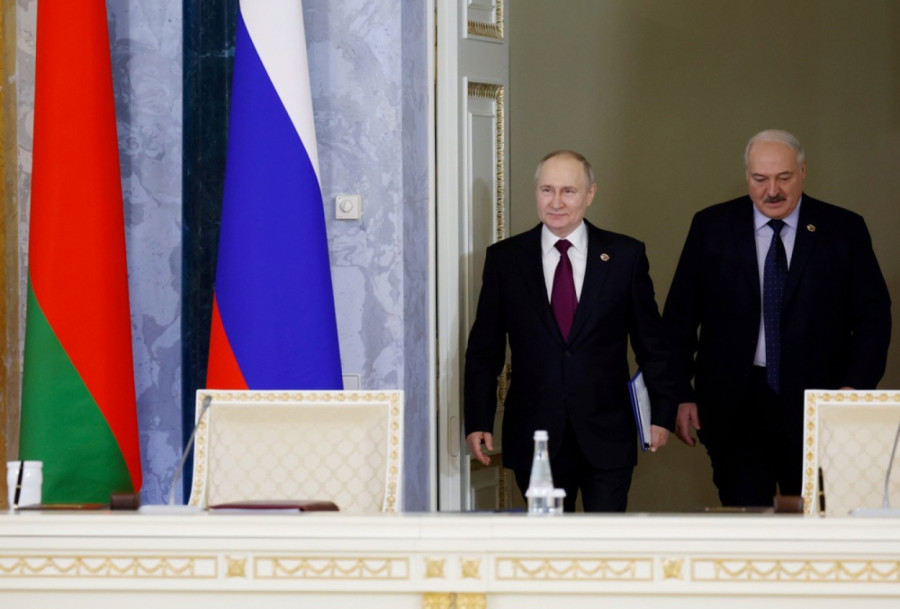
However, there is another factor—Russia.
It appears that Lukashenko, through Coale, advises the U.S. on how to deal with Vladimir Putin, and he recently expressed willingness to grant asylum to Nicolás Maduro, the Venezuelan president whom Trump’s administration seeks to overthrow.
The Trump administration hopes, according to the American newspaper, first, that this will serve as a message to Putin: Lukashenko cooperated with the U.S. and received significant benefits in return.
Second, that Lukashenko will now “tell Putin the right things” and might even become a mediator in ending the Russia–Ukraine war.
0 Komentari
Možda vas zanima

Krah Đokovića na startu Šangaja
Novak Đoković poražen je od Huberta Hurkača sa 2-0 u setovima u 2. kolu Mastersa u Šangaju.
13:54
9.10.2026.
2 d

Poznati lanac zatvara 150 prodavnica: U toku su rasprodaje na više lokacija
Diskontni lanac KiK nastavlja da smanjuje broj svojih prodavnica u Nemačkoj. Tokom 2026. godine planirano je zatvaranje oko 150 objekata, dok bi istovremeno trebalo da bude otvoreno svega petnaestak novih.
16:19
11.10.2026.
20 h

Rat – dan 1.688: Kijev u mraku; Ukrajinski dronovi pogodili Omsk i Uhtu FOTO/VIDEO
Rat u Ukrajini – 1.688. dan. Ruski napadi teško su oštetili energetsku infrastrukturu Ukrajine, dok je gradonačelnik Kijeva Vitalij Kličko pozvao građane da privremeno napuste prestonicu. Ukrajinske snage su potvrdile napade na ruske rafinerije.
23:54
9.10.2026.
2 d

Na granicama više ništa nije isto: Svi su strahovali od EES-a, a čeka nas novi sistem
Prošlo je godinu dana od početka uvođenja sistema ulaska i izlaska (EES) na spoljnim granicama Evropske unije, koji je doneo velike promene u načinu kontrole putnika iz zemalja koje nisu članice EU.
17:13
10.10.2026.
1 d

Rat – dan 1.690: Primirje prekršeno; Rusija udarila na Harkov; Evropi stiglo mračno upozorenje FOTO/VIDEO
Rat u Ukrajini – 1.690. dan. Američki predsednik Donald Tramp objavio energetsko primirje između Rusije i Ukrajine, za koje ukrajinski predsednik kaže da je prekršeno. Na frontu se nastavljaju napadi, a Kijev i Moskva razmenjuju optužbe i upozorenja.
23:50
11.10.2026.
13 h












Komentari 0
Pogledaj komentare Pošalji komentar