






11.07.2025.
10:32
Melting glaciers around the world could trigger volcanic eruptions PHOTO/VIDEO
Melting glaciers around the world could trigger long-dormant volcanoes that may be awakening beneath the ice, scientists said at the Goldschmidt 2025 conference in Prague.


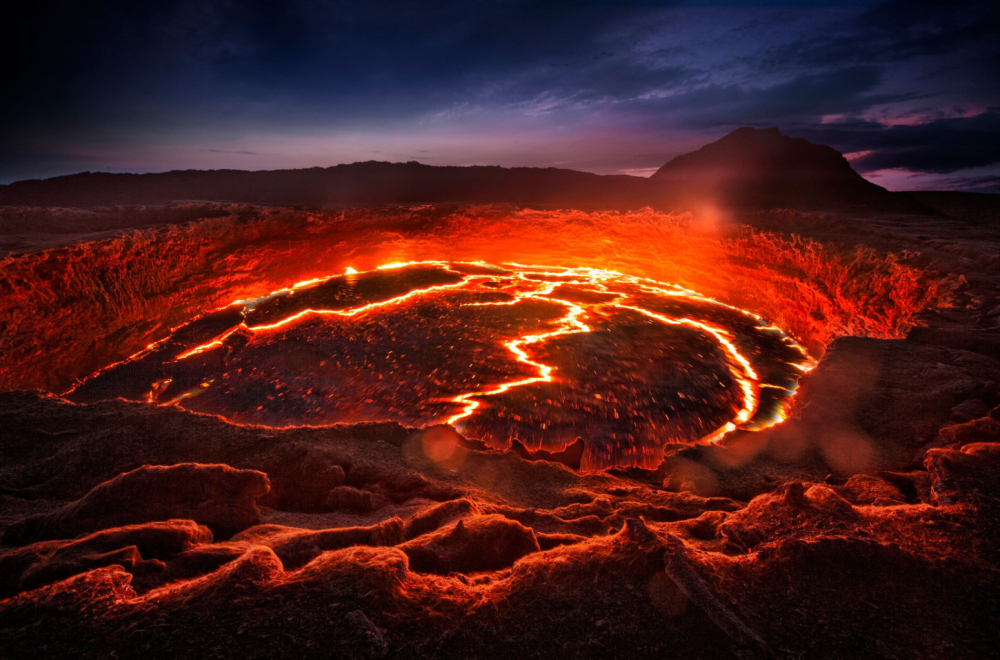
New research reveals that massive ice sheets have suppressed eruptions for thousands of years, creating underground pressure. But as that icy weight disappears, it can set off a wave of explosive eruptions — especially in places like Antarctica, Science Daily reports.
Scientists at the Goldschmidt Conference, which takes place from July 6 to 11 in Prague, pointed out that this unexpected volcanic threat not only represents regional risks, but could also accelerate climate change.
Scientists have suggested that melting glaciers can unleash powerful volcanic eruptions by removing the weight that keeps magma trapped deep underground. Antarctica, they say, may contain hundreds of these explosive time bombs.
Melting glaciers may be quietly laying the groundwork for more explosive and frequent volcanic eruptions in the future, according to a study of six volcanoes in the Chilean Andes.
The study, presented at the Goldschmidt conference in Prague, suggests that hundreds of dormant volcanoes around the world - particularly in Antarctica - could become more active as climate change accelerates glacier retreat.
The link between glacier retreat and increased volcanic activity has been known in Iceland since the 1970s, but this is one of the first studies to investigate the phenomenon in continental volcanic systems.
Researchers from the University of Wisconsin-Madison used argon dating techniques and crystal analysis on six volcanoes in southern Chile to investigate the influence of the advance and retreat of the Patagonian Ice Sheet on the volcano's past behavior. By precisely recording previous eruptions and analyzing crystals in the erupted rocks, the team tracked how the weight and pressure of the glacial ice changed the characteristics of the magma underground.
The researchers found that during the height of the last ice age, a thick ice sheet suppressed the amount of eruptions and allowed a large reservoir of silicon-rich magma to accumulate 10-15 km below the surface. As the ice sheet melted rapidly at the end of the last ice age, the sudden weight loss caused the crust to relax and gases in the magma to expand. This pressure build-up triggered explosive volcanic eruptions from the deep reservoir, leading to the formation of volcanoes.
Pablo Moreno-Jaeger of the University of Wisconsin, who is participating in the Goldschmidt conference, said glaciers tend to suppress the amount of volcanic eruptions below them.
"But as glaciers retreat due to climate change, our findings suggest that these volcanoes continue to erupt more frequently and more explosively. The key condition for increased explosiveness is an initially very thick glacial blanket over the magma chamber, and the trigger point is when these glaciers begin to retreat, releasing pressure - which is currently happening in places like Antarctica," he pointed out.
He added that their study suggests that this phenomenon is not limited to Iceland, where increased volcanic activity has been observed, but could also occur in Antarctica.
"Other continental regions, such as parts of North America, New Zealand and Russia, also now require closer scientific attention," Moreno-Jaeger emphasized.
The process of changes in the magma system is gradual and takes place over centuries, giving time for monitoring and early warning.
The researchers also note that increased volcanic activity could have global climate impacts. In the short term, eruptions release aerosols (tiny particles in gases) that can temporarily cool the planet.
This was seen after the eruption of the Pinatubo volcano in the Philippines in 1991, which reduced global temperatures by approximately 0.5 degrees Celsius. But with multiple eruptions, the effects are reversed.
"Over time, the cumulative effect of multiple eruptions can contribute to long-term global warming due to the build-up of greenhouse gases," Moreno-Jaeger said.
As he explained, this creates a positive feedback loop, where melting glaciers trigger eruptions, and eruptions in turn can contribute to further warming and melting.
The Goldschmidt Conference is the world's leading conference in the field of geochemistry and a joint congress of the European Association for Geochemistry and the Geochemical Society (USA).
The conference is attended by more than 4,000 delegates.
0 Komentari
Možda vas zanima

Rat – dan 1.867: Masakr u Kramatorsku – preko 30 mrtvih; Ukrajinci se osvetili Rusima FOTO/VIDEO
Rat u Ukrajini – 1.687. dan. U ruskom napadu na stajalište javnog prevoza i dva autobusa u Kramatorsku, u Donjeckoj oblasti, poginulo je 33 ljudi, dok je 18 povređeno, saopštilo je regionalno tužilaštvo Ukrajine. Ukrajinci su napali rafineriju nafte u Omsku.
23:55
8.10.2026.
23 h

Rat – dan 1.685: Napadnuta Moskva; Novi udari na Kijev; Rusija: "Pratimo planove NATO-a" FOTO/VIDEO
Rat u Ukrajini – 1.685. dan. Ukrajinske snage izvele udare na Moskvu i oblast oko nje. Moskva je, s druge strane, nastavila da bombarduje Ukrajinu.
23:55
6.10.2026.
2 d

Krah Đokovića na startu Šangaja
Novak Đoković poražen je od Huberta Hurkača sa 2-0 u setovima u 2. kolu Mastersa u Šangaju.
13:54
9.10.2026.
9 h

Kraj jedne ere: Jugoslovenski gigant se prodaje deo po deo
Proces prodaje pojedinačnih delova nekadašnjeg industrijskog giganta Koksare Lukavac počeo je da daje prve konkretne rezultate.
8:16
7.10.2026.
2 d

Talas povećanja primanja stiže u Srbiju: 65.000 dinara za jedne, veće penzije i minimalac od 600 evra za druge
Građane Srbije u narednim mesecima očekuje niz važnih finansijskih novina i državnih mera koje će značajno uticati na kućne budžete.
8:26
7.10.2026.
2 d












Komentari 0
Pogledaj komentare Pošalji komentar