






16.10.2025.
6:06
Scientists observe this process in space for the first time: Something has changed
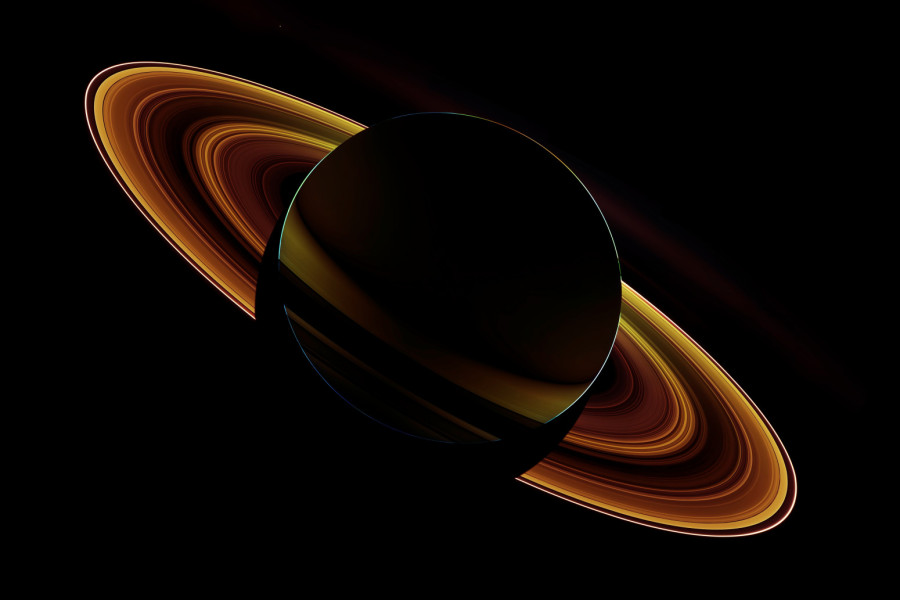
Scientists at Brazil’s Pico dos Dias Observatory have, for the first time, successfully observed the process of formation of Saturn’s ring systems, which surround the planet and span approximately 280,000 kilometers in diameter.



The ring systems consist of four rings and dispersed material surrounding a small icy body named Chiron, which orbits the Sun in the region between Saturn and Uranus, Reuters reports.
Chiron belongs to a class of objects known as centaurs, located in the outer Solar System between Jupiter and Neptune.
Both Chiron and other centaurs exhibit characteristics of both asteroids and comets.
The body, officially designated (2060) Chiron, has a diameter of about 200 kilometers and takes roughly 50 years to orbit the Sun, while centaurs are generally composed of rock, ice, and complex organic compounds.
Since its discovery in 1977, astronomers have observed Chiron periodically, and for years it has been known to be surrounded by some type of material.
Scientists obtained the best data on Chiron in 2023, using the telescope at Pico dos Dias Observatory in Brazil, based on which they concluded that Chiron is surrounded by well-defined rings: three dense rings at distances of approximately 273 kilometers, 325 kilometers, and 438 kilometers from Chiron’s center, and a fourth ring about 1,400 kilometers from the center.
This outer structure, observed for the first time, is unusually far from Chiron, and further observations are needed to confirm its stability as a ring.
The three inner rings are embedded in dust that rotates in a disk-like formation.
Significant changes
Comparing data from different years, researchers have observed significant changes in the ring system, providing clear evidence that the rings are evolving in real time, said Christian Luciano Pereira, a researcher at the National Observatory in Brazil and the author of a study published in Astrophysical Journal Letters.
Pereira stated that Chiron’s rings are likely composed mainly of ice mixed with smaller amounts of rock, similar to Saturn’s rings.
Ice may play a key role in the stability of ring systems, as its physical properties allow particles to remain separate rather than coalescing into a moon.
Chiron occasionally exhibits comet-like behavior, ejecting gas and dust into space.
In 1993, it even displayed a small tail, similar to what is seen in comets.
Scientists believe that Chiron’s rings may be remnants of a collision that destroyed a small moon, the result of an impact with space debris, material ejected by Chiron itself, or a combination of all these factors.
0 Komentari
Možda vas zanima

Rat – dan 1.867: Masakr u Kramatorsku – preko 30 mrtvih; Ukrajinci se osvetili Rusima FOTO/VIDEO
Rat u Ukrajini – 1.687. dan. U ruskom napadu na stajalište javnog prevoza i dva autobusa u Kramatorsku, u Donjeckoj oblasti, poginulo je 33 ljudi, dok je 18 povređeno, saopštilo je regionalno tužilaštvo Ukrajine. Ukrajinci su napali rafineriju nafte u Omsku.
23:55
8.10.2026.
1 d

Krah Đokovića na startu Šangaja
Novak Đoković poražen je od Huberta Hurkača sa 2-0 u setovima u 2. kolu Mastersa u Šangaju.
13:54
9.10.2026.
12 h

Kraj jedne ere: Jugoslovenski gigant se prodaje deo po deo
Proces prodaje pojedinačnih delova nekadašnjeg industrijskog giganta Koksare Lukavac počeo je da daje prve konkretne rezultate.
8:16
7.10.2026.
2 d

Talas povećanja primanja stiže u Srbiju: 65.000 dinara za jedne, veće penzije i minimalac od 600 evra za druge
Građane Srbije u narednim mesecima očekuje niz važnih finansijskih novina i državnih mera koje će značajno uticati na kućne budžete.
8:26
7.10.2026.
2 d

Nemačka odbila Kineze: "Ne damo"
Nemačka savezna vlada zabranila je prodaju 80 odsto udela u hamburškoj logističkoj kompaniji "Cipel" kineskoj državnoj brodarskoj kompaniji "Kosko", navodeći kao razlog rizike po nacionalnu bezbednost.
19:31
7.10.2026.
2 d












Komentari 0
Pogledaj komentare Pošalji komentar