






02.09.2026.
9:45
"Serbia will stand by old friendships and defend peace": Key Vučić messages on Non-Aligned Movement
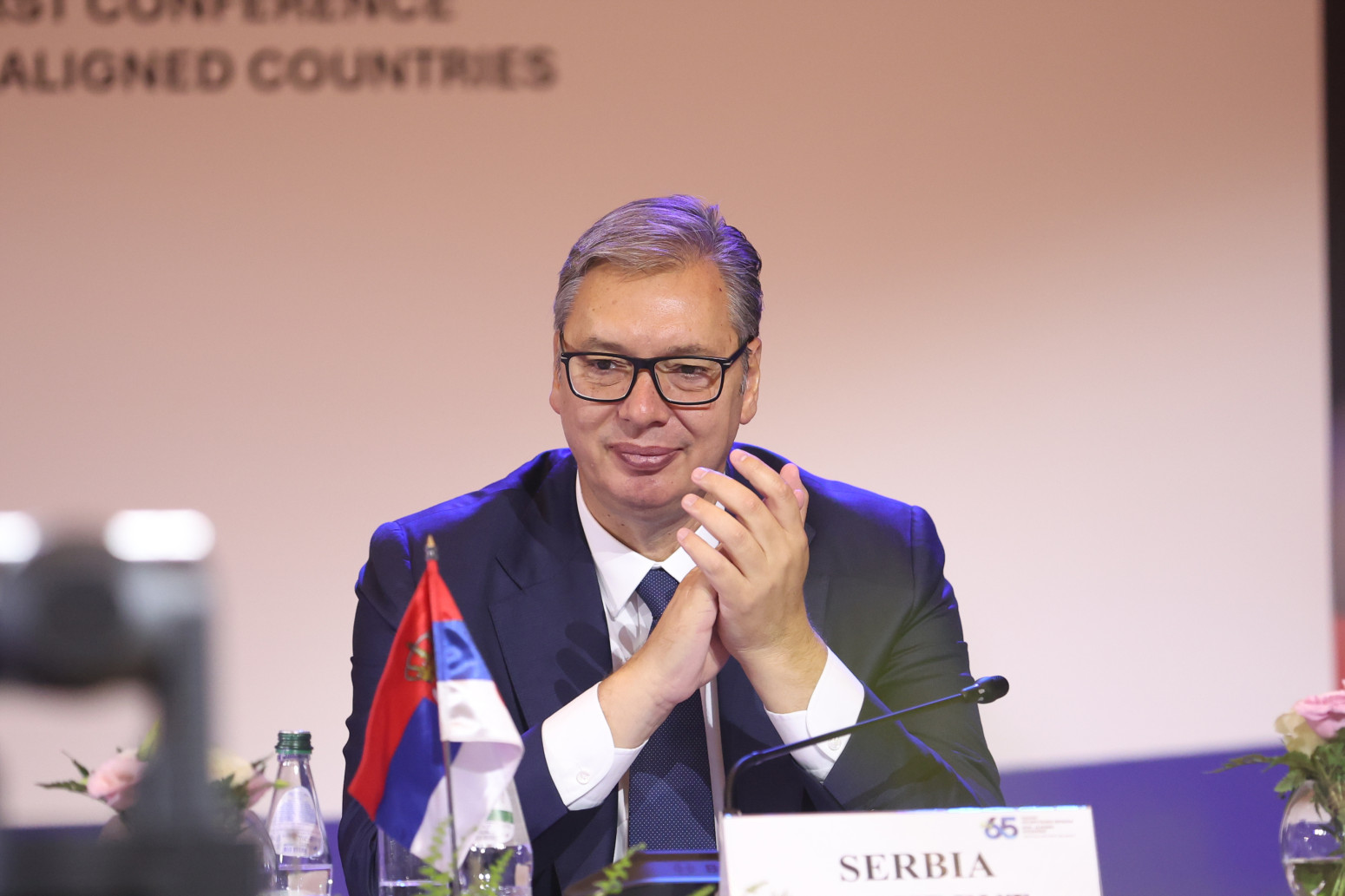
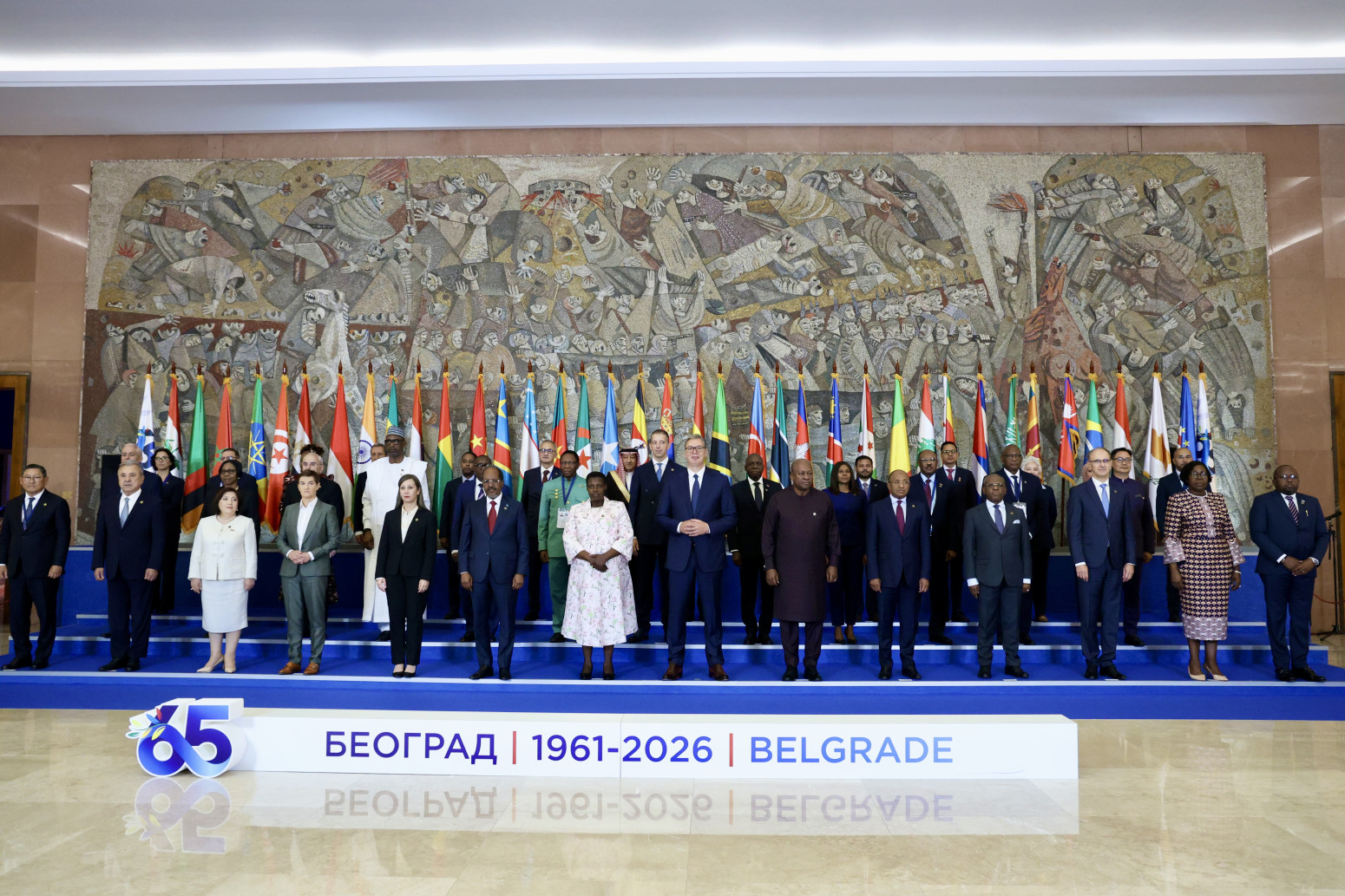
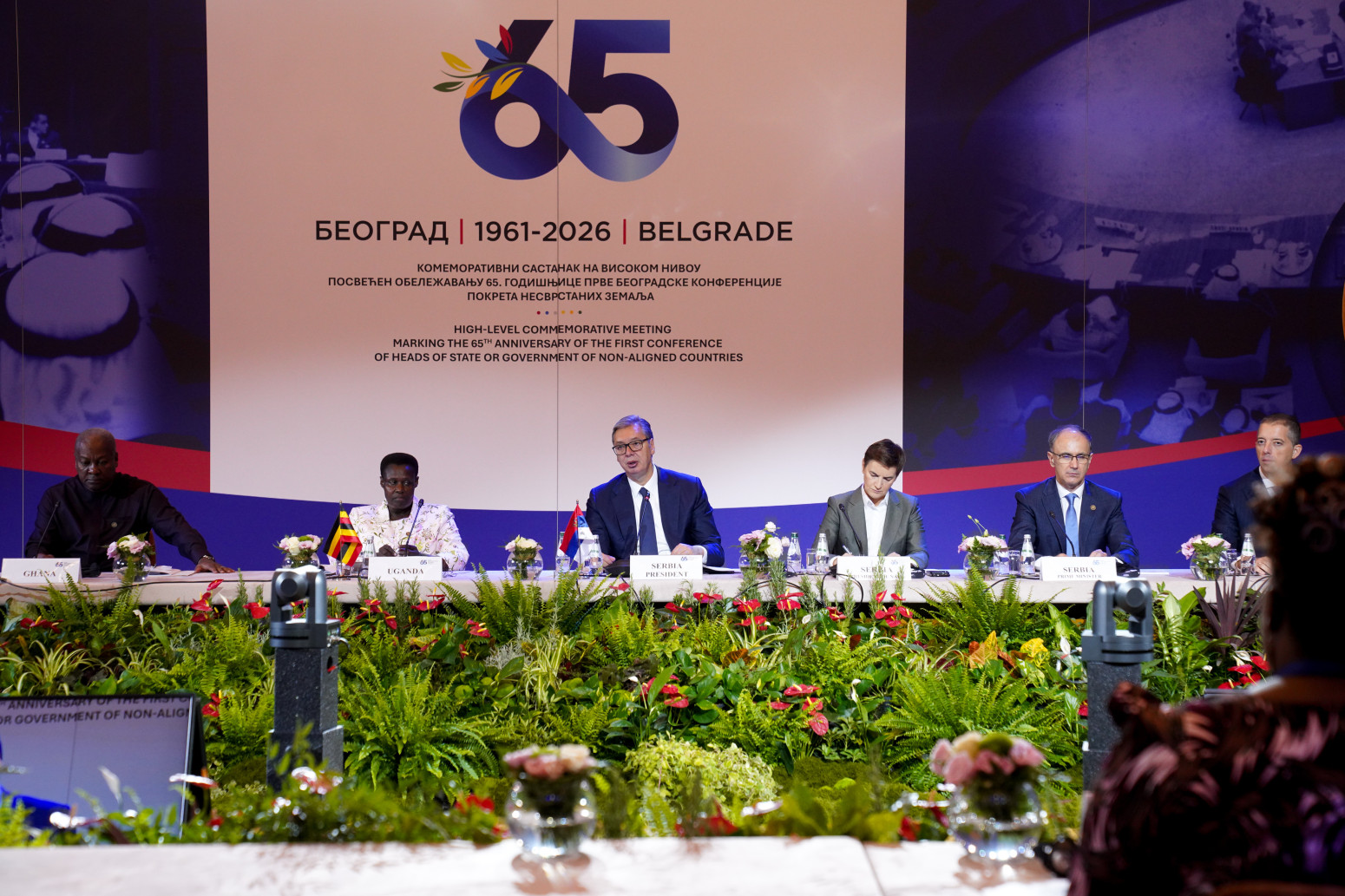
President Aleksandar Vučić said at a meeting marking the 65th anniversary of the first Non-Aligned Movement conference that movement’s leaders had the courage to forge a path toward cooperation at the 1961 conference in Belgrade, at a time of deep divisions.



Vučić said that despite their different political traditions, representatives of free and equal nations had gathered in Belgrade.
“We proudly remember September 1, 1961, when representatives of our countries met in Belgrade, driven by the conviction that the world can and must be organized around the principles of peace, equality, sovereignty and cooperation,” Vučić said.
He recalled the origins of the Non-Aligned Movement and the 15th session of the United Nations General Assembly in 1960, as well as the famous photograph from New York showing the leaders of Egypt, Ghana, India, Indonesia and Yugoslavia.
“Five leaders from different continents and very different countries, united by the belief that the world should not be divided in a way that allows decisions to be made in just a handful of major capitals. The world was deeply divided at the time, with major geopolitical confrontations, an arms race, nuclear ambitions and the danger that the fate of entire nations could be decided without their voices being heard,” Vučić said.
He said we have long since moved beyond the world of 1961, but that today’s reality increasingly resembles a period we believed had been consigned to history.
“Divisions and uncertainty in international relations, often resulting from the selective interpretation and application of international law, as well as the rule of might, are increasingly becoming part of our geopolitical reality,” Vučić said.
“We must come together on our own”
He said the world is witnessing new wars and armed conflicts, growing mistrust among major powers, economic and energy shocks, disruptions to global economic flows, climate change and the rapid development of new technologies which, alongside enormous opportunities, also brings new risks.
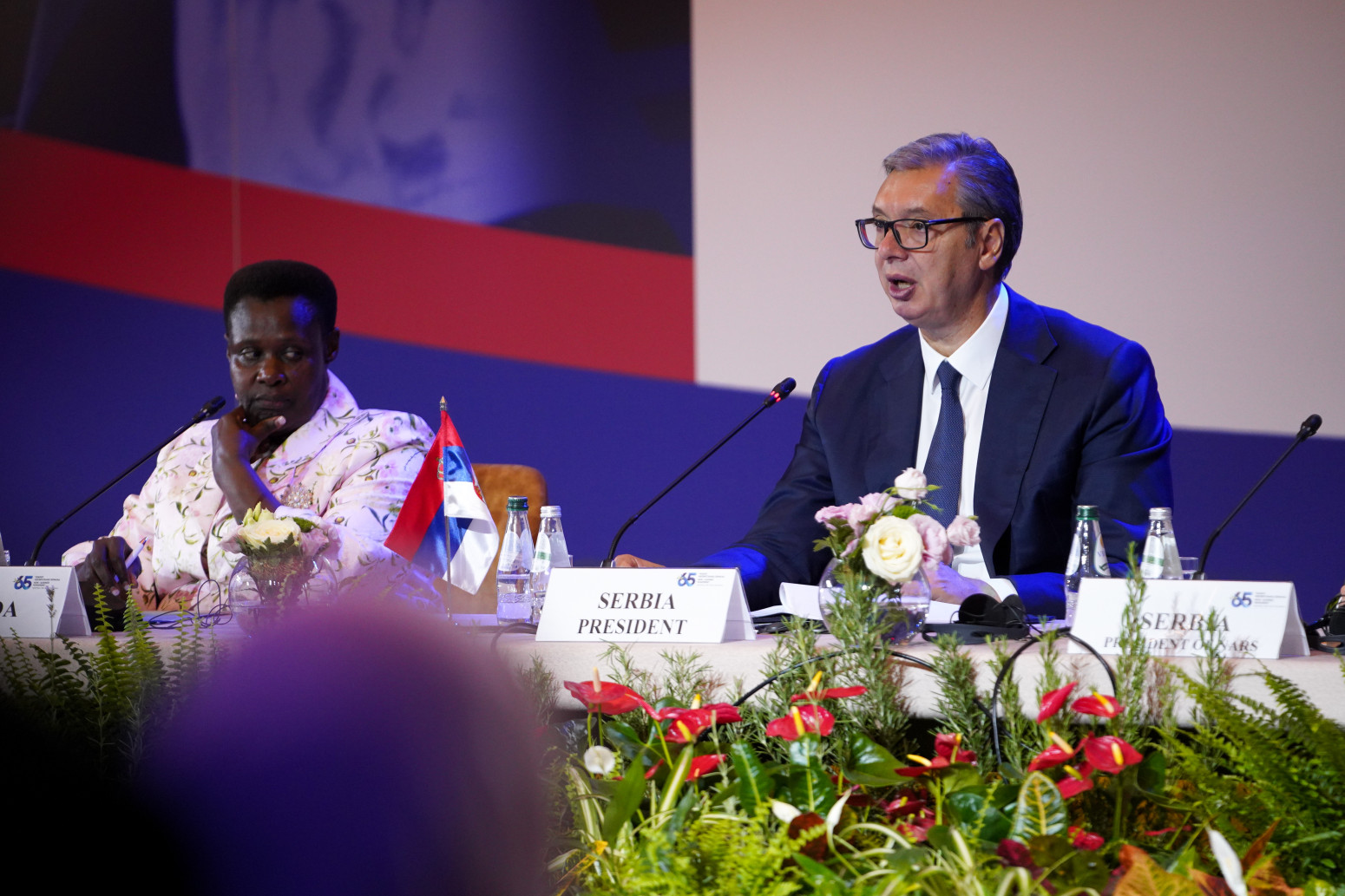
“That is why we must talk, join forces and stand together in defence of an equal, just and free international order. Some would say that the Non-Aligned Movement is an outdated format and that we should be brought together by the major powers. I say that is a major misconception, and that we can and must come together on our own. We are strong enough individually to lead our countries, but we are even stronger together, to lead a movement that, I dare say, is more needed today than ever,” Vučić said.
He added that whenever there is a temptation to reduce international relations to a politics of force, countries should remind one another that the sovereign equality of states, respect for international law, the peaceful resolution of disputes and the United Nations Charter are the foundations on which the international order must rest.
Vučić stressed that the principles on which the Non-Aligned Movement was founded remain relevant today — the need for multilateralism and equality, the need for all voices to be heard, not just those of the most powerful, and above all, the need to resolve differences through dialogue rather than conflict.
Serbia proudly preserves that tradition
He stressed that Serbia, as the successor to the former Yugoslavia, proudly preserves the tradition of one of the founding countries of the Non-Aligned Movement. He recalled that over the decades, Serbia had built close relations and genuine friendships with countries across Africa, Asia, Latin America and the Caribbean, based on mutual respect, solidarity and equality, rather than dominance or the imposition of one side’s will.
“That is why these ties endure today, and why we want to preserve and further develop this valuable capital of trust. We do not want simply to remember old friendships, but to continue building and expanding deep, long-term partnerships. We want our historic ties to gain a new economic dimension, with greater cooperation in agriculture, infrastructure, energy, digitalization and new technologies, while strengthening links between our universities and scientific institutions, and ensuring that culture, sport and education continue to serve as bridges between our peoples,” Vučić said.
He expressed satisfaction that long-standing friends from all parts of the world had come to Belgrade, saying they had left their mark on the city. He recalled that trees planted by conference participants grow in the Friendship Park at Ušće, near the Palace of Serbia.
“This year, we are continuing that tradition by planting a new tree alongside those planted 65 years ago. It is a small gesture, but I think it speaks eloquently to what diplomacy should leave behind — something that endures after the conferences are over and the delegations have departed,” Vučić said.
Standing by each other in difficult times
He stressed that Serbia is a country its friends can count on and that it does not forget those who helped it when times were difficult.
“When others were facing pandemics, natural disasters and other crises, we did our best to help wherever we could. That is how we understand friendship between nations — standing by each other when needed. These are the kinds of relations we have built in the past,” Vučić said.
He recalled that when Zambia was chosen to host the 1970 Non-Aligned Summit, Lusaka did not have a venue capable of hosting such a gathering, and the project was entrusted to the Belgrade-based construction company Energoprojekt.
Vučić said the conference hall and 62 villas to accommodate the delegations were designed and built in just 107 days, in a feat that became known as the “Lusaka miracle.”
He added that Serbian architects, engineers and companies had carried out major projects in many cities and built facilities that are still in use today.
“That is an important part of the story that should not be forgotten. Good political relations at the time created opportunities for our companies and engineers, as well as for education and people-to-people exchanges. We want to build such relations in the future as well — more trade, more investment, more students coming to Serbia and more of our people going to your countries, and more cooperation in agriculture, technology, healthcare and everything that can benefit our citizens,” President Vučić said.
0 Komentari
Možda vas zanima

Džoooons! Zvezda slavila u trileru; "Košarkaški bogovi su nekad pošteni"
Košarkaši Crvene zvezde savladali su večeras Asvel u Vilerbanu rezultatom 84:82 u utakmici petog kola Evrolige.
23:00
13.10.2026.
1 d

Potop Partizana u Areni – Panata se "prošetala"; Penjaroja: "Teško je takmičiti se sa lošim šutem"
Košarkaši Panatinaikosa savladali su Partizan sa 55:72 u okviru petog kola Evrolige.
23:43
13.10.2026.
1 d

Rat – dan 1.693: Rusi izveli masovni napad; Kremlj je pobednik "primirja"; Zelenski: "Osećamo se izdano" FOTO
Ukrajinski predsednik Volodimir Zelenski izjavio je večeras da neće podneti ostavku i da održavanje izbora u Ukrajini trenutno nije moguće zbog stalnih ruskih napada i bezbednosnih rizika.
23:53
14.10.2026.
8 h

Profesor Vladimir Vuletić pronađen mrtav
Profesor Vladimir Vuletić, bivši potpredsednik Fudbalskog kluba Partizan i profesor Pravnog fakulteta u Beogradu, pronađen je mrtav, pišu mediji.
16:50
13.10.2026.
1 d

Nisu pokloni ni slatkiši: Ovih šest stvari unuci pamte ceo život
Bake i deke su često važan oslonac celoj familiji, čak i kada deca još ne razumeju koliko im znače.
9:10
13.10.2026.
1 d












Komentari 0
Pogledaj komentare Pošalji komentar