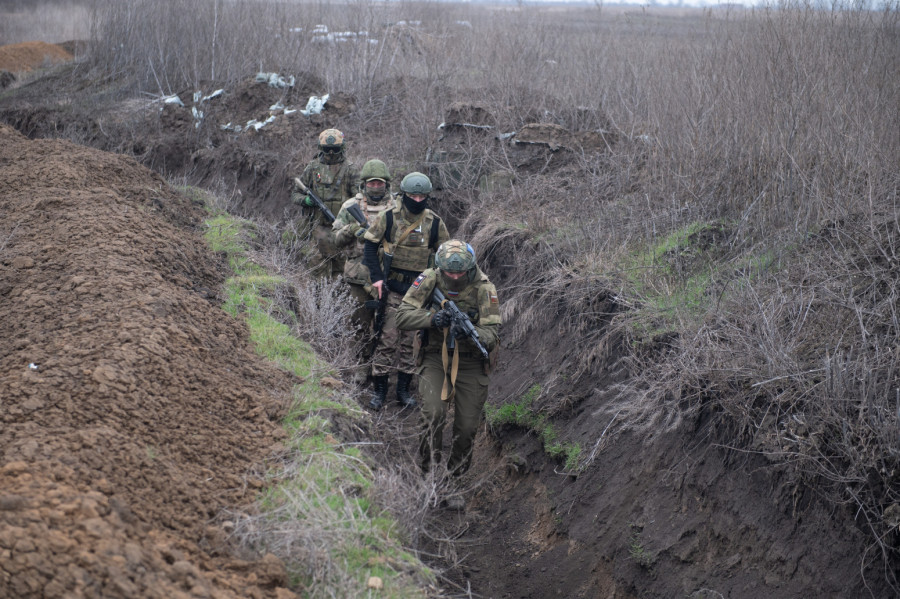



This month, Russia has already carried out surprise nuclear exercises that included the deployment of warheads in Belarus. Moscow also warned that Kyiv faces a wave of “systematic” heavy bombardment, similar to last weekend’s missile and drone strikes, and urged foreign embassies and citizens to leave the capital.
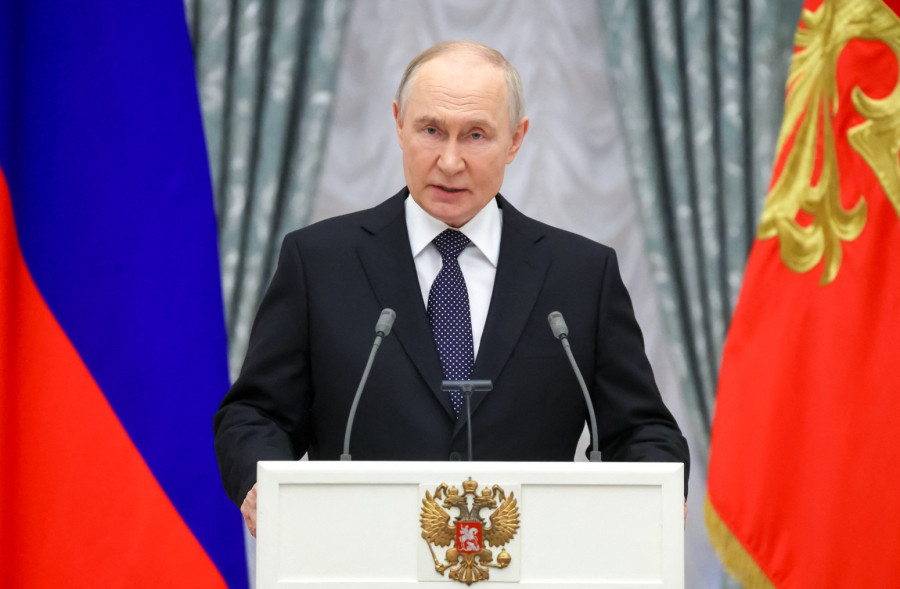
Vladimir Putin, whose military commanders are now routinely exaggerating battlefield gains by claiming control over cities such as Kupiansk and Lyman that remain under Ukrainian control, insists that victory is within reach. “The situation on the battlefield for the Ukrainian armed forces is gradually shifting from difficult and critical to catastrophic,” he said this month, urging Ukrainian troops not to follow the orders of the “illegal, thieving junta” in Kyiv.
Despite the challenges on the battlefield, there is no indication that Putin’s strategic objective — domination over all of Ukraine and reshaping the balance of power in Europe — has diminished. “Russia may be changing tactics, but it has not changed its strategy and goals, and it will not stop on its own,” said Mariana Betsa. “Its imperialist and revanchist ambitions remain.”
“Russia’s ultimate goal is the destruction of the European Union”
In official Russian discourse, which has become relatively conciliatory toward the United States since the election of Donald Trump, the European Union — now providing the largest share of support to Ukraine — is portrayed as an implacable enemy that must be punished or destroyed.
“Russia clearly sees the European Union as a threat to its system of power, which is based on repression and fear,” said Michael McGrath in an interview.
“Their ultimate goal is the destruction of the European Union. And we should have no illusions about that because they do not want a large, powerful, and united democratic bloc on their doorstep.”
Also worrying is that, in recent war simulations, Ukrainian drone teams quickly defeated much larger NATO forces.
The problem is that Russian troops have comparable drone experience and equipment and would likely perform far better against European armies than against Ukraine, especially if the United States did not come quickly to their aid.
“We must assume Putin could act irrationally and escalate”
To engage in such an escalation, Russia would first have to replenish the ranks of its military.
“Mobilization is technically absolutely feasible; their mobilization system has improved. But it would also create serious internal problems and pressure, which could lead to all sorts of interesting outcomes. For Putin, it would be a risky decision,” said Kaupo Rosin.
“Problems inside Russia are beginning to pile up: failure on the battlefield, the financial situation, and Ukrainian deep strikes affecting not only the economy but also ordinary people.”
Swedish Defense Minister Pål Jonson recalled that hundreds of thousands of Russian men fled the country after mobilization began in the fall of 2022, fearing they would be thrown into the Ukrainian “meat grinder.”
“When Putin mobilized last time, there was a significant brain drain, and we also saw Putin’s popularity seriously decline,” he said.
An attack on NATO would be a serious mistake, Jonson added.
“We are very determined to ensure that every inch of Alliance territory remains secure.”
The idea of breaking the deadlock in Ukraine by expanding the war to NATO’s Baltic members may be tempting, but also dangerous for Putin, said Norbert Röttgen.
“It would be a huge additional risk for Putin to simply add another very strong opponent to the military conflict after failing against Ukraine,” Röttgen said. Still, he added, Putin is known for taking major risks: “Despite my doubts, we must reckon with the possibility that Putin behaves irrationally and escalates.”
Komentari 0
Pogledaj komentare Pošalji komentar