






27.01.2026.
10:10
"This is the worst-case scenario"
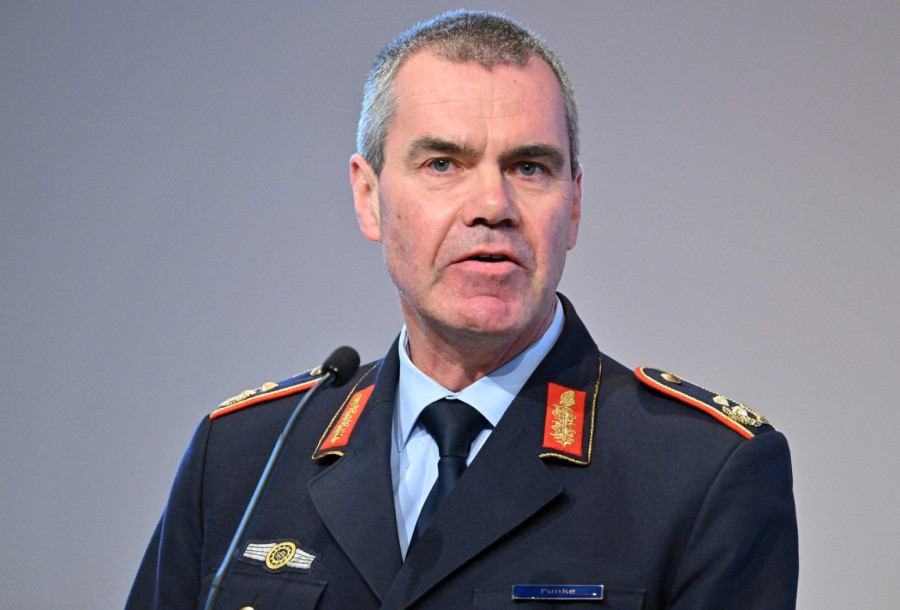
Lieutenant General Gerald Funke, Chief of Staff of the Bundeswehr’s Joint Support Command, warned in an interview with The Times that Russia could attack NATO countries within the next two to three years, with Germany at the center of any conflict.



Funke emphasized that logistics would be one of the main challenges in the worst-case scenario. Tens of thousands of allied troops would need to be moved to the contact lines under conditions in which major road and rail routes could be damaged by Russian sabotage, cyberattacks, or missile strikes.
“It is important for us to maintain Germany as a logistics hub and to manage supply lines as smoothly as possible for as long as possible, which means that if one route fails, we will have the ability to use others instead,” he said.
Another potential problem is the large number of casualties. The Bundeswehr operates five hospitals with a total of 1,800 beds, which could quickly become overwhelmed. To prepare, the Joint Support Command and the Federal Ministry of Health have divided the network of civilian hospitals into four sectors that can be reserved for the wounded in a crisis.
“While in Afghanistan I unfortunately dealt with a high but manageable number of casualties, I now have to plan for the possibility of a thousand injured per day. The more closely you look at it, the more complex it becomes and the harder it is to imagine,” he said.
Funke’s command, created after last year’s major reorganization of the German armed forces, is developing a modern version of the Cold War–era system for requisitioning trucks, railcars, supplies, and personnel on a mass scale.
The general has also initiated “standby agreements” with Germany’s Deutsche Bahn, the national rail operator, ensuring that trains for military transport can be deployed within three days of notification.
Another challenge, according to Funke, is Germany’s legal framework. Certain military measures can be activated only if two-thirds of parliament approve a declaration of a “state of tension” or a “state of national defense.” Funke warned that this could be complicated given that more than one-third of parliamentary seats are held by radical left-wing parties and pro-Russian parties aligned with the far right.
Analysts have noted that Germany could take too long to transition from peacetime to a crisis footing. Funke added that the strict separation between peace and war is an outdated legacy of the 20th century, now being called into question by the scale of modern hybrid warfare.
In December 2025, the upper house of the German parliament, the Bundesrat, followed the Bundestag in adopting legislation to modernize military service.
Earlier, Defense Minister Boris Pistorius said he expects the Bundeswehr to recruit 20,000 volunteers this year as part of the reform.
In January, the Bundeswehr began sending questionnaires to 18-year-olds as part of the selection process for military service.
0 Komentari
Možda vas zanima

Đoković u suzama, katastrofa na US openu: "Nisam preživeo"
Prvi put posle 20 godina ispao je u uvodnoj rundi Grend slem turnira. Tokom meča je povraćao, plakao i na kraju kazao "da mu se telo urušilo".
8:35
31.8.2026.
1 d

Srbija skinula prokletstvo: Gudurić i Avramović uništili Italiju!; Jokić i Alimpijević pohvalii sve
Košarkaše Srbije pobedili su Italiju 76:64 u meč kvalifikacija za Mundobasket 2027. godine.
22:55
31.8.2026.
14 h

Moćna Srbija eliminisala Hrvatsku; Bošković: "Nijedan poen nije bio lagan"
Ženska odbojkaška reprezentacija Srbije plasirala se u četvrtfinale Evropskog prvenstva posle pobede nad reprezentacijom Hrvatske rezultatom 3:1 u setovima.
21:40
30.8.2026.
1 d

Rat – dan 1.649: Putin najavljuje kraj; Jak udar na ukrajinsku infrastrukturu; Pregovori na pomolu? FOTO/VIDEO
Rat u Ukrajini – 1.649. dan. Rusija je danas napala energetsku i logističku infrastrukturu Ukrajine. Ruski predsednik Vladimir Putin najavio je da se bliži kraj rata, a Volodimir Zelenski sa Vitkofom i Kušnerom razgovarao o mirovnim pregovorima.
23:40
31.8.2026.
13 h

Rat – dan 1.647: Skoro 40 mrtvih u ruskom napadu; SAD obavestile Kijev o sastancima u Moskvi FOTO/VIDEO
Rat u Ukrajini – 1.647. dan. Najmanje 37 ljudi je poginulo, a još 42 su povređene u ruskom napadu na okrug Buča u Kijevskoj oblasti. Zelenski je priznao da se skladište municije, koje je pogođeno u napadu, nalazilo u blizini stambenih objekata.
23:55
29.8.2026.
2 d












Komentari 0
Pogledaj komentare Pošalji komentar