












08.12.2025.
11:00
Ultimatum: Europeans, you have until 2027 or…
The Pentagon has informed diplomats in the U.S. capital that Europe must take responsibility for the majority of the Alliance’s conventional defense capabilities by 2027, reports Kyiv Post.



This includes everything except nuclear weapons: from intelligence systems and satellite reconnaissance, to missile defense, aviation, ground forces, and logistics.
If Europe does not meet this deadline, the United States could withdraw from some key defense coordination mechanisms within NATO.
The message was conveyed at a closed-door meeting this week, and several sources familiar with the discussion, including one U.S. official, confirmed it to Reuters.
The Pentagon reportedly expressed dissatisfaction with the pace at which Europe has been strengthening its forces following Russia’s 2022 invasion of Ukraine.
U.S. officials note that Washington wants to free up resources for the Indo-Pacific, where it views China as the main threat.
The 2027 deadline appears extremely ambitious, especially since the European Union’s own plan envisions the continent being capable of independent defense by 2030.
The burden of defense is gradually shifting to Europe
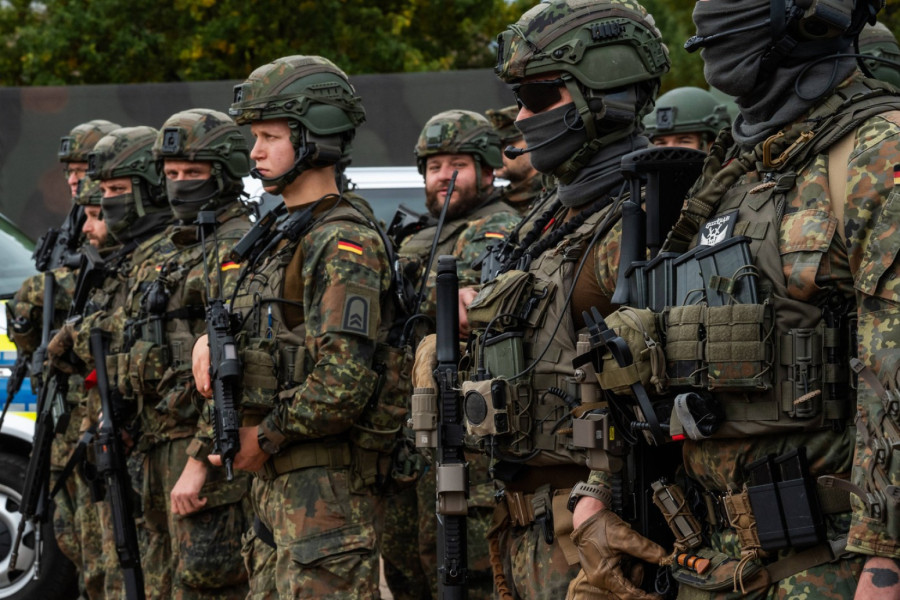
Many European diplomats consider this U.S. demand unrealistic. It is not enough to simply increase defense budgets; time is also needed to build infrastructure, train personnel, and overcome production delays that affect the entire industry.
For example, orders for tanks, artillery, and missiles often take years to fulfill, even when placed with American or European manufacturers.
The Pentagon did not specify how it will measure Europe’s progress or which parts of the capabilities should be under European control.
It is even less clear whether this ultimatum represents the official position of President Donald Trump’s entire administration or only that of part of the military leadership, as there are deep divisions in Washington over the U.S.’s future role in Europe.
A NATO official confirmed that European allies are already assuming greater responsibility for the continent’s security and acknowledged the need for increased investment.
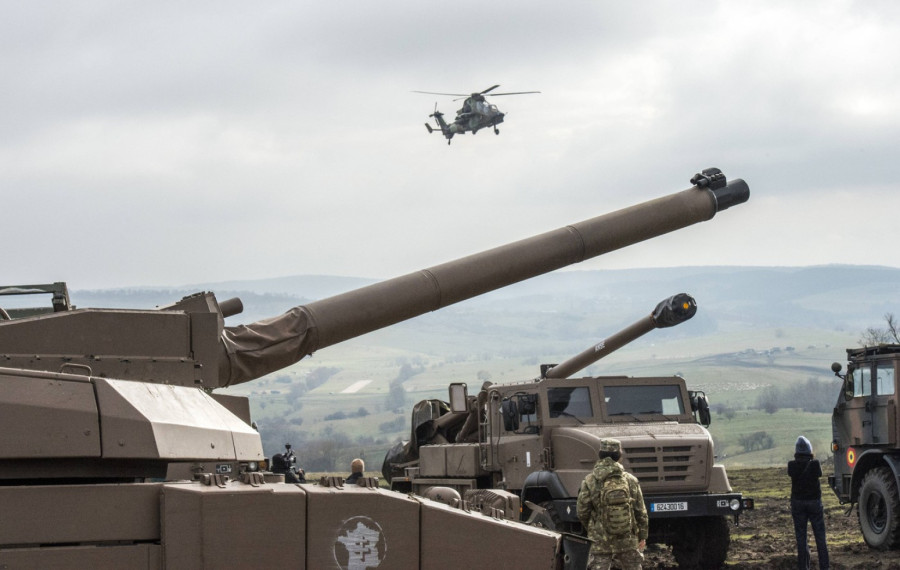
However, he avoided directly commenting on the 2027 deadline, emphasizing only that the burden of conventional defense is gradually shifting from the U.S. to Europe.
Most media outlets view this as yet another example of Trump’s unilateralism, which weakens NATO and pleases Moscow. However, the reality is more complex and less dramatic than it first appears.
First, the United States has no plans to leave the Alliance or withdraw all troops from Europe.
The nuclear umbrella remains American, as do most strategic capabilities that Europe simply cannot replicate quickly.
Second, Washington is not asking Europe to become fully independent; it only wants Europe to assume most of the responsibility for conventional forces.
This is a logical step, considering that the U.S. has been funding roughly seventy percent of NATO’s total capabilities for decades.
Why 2027?
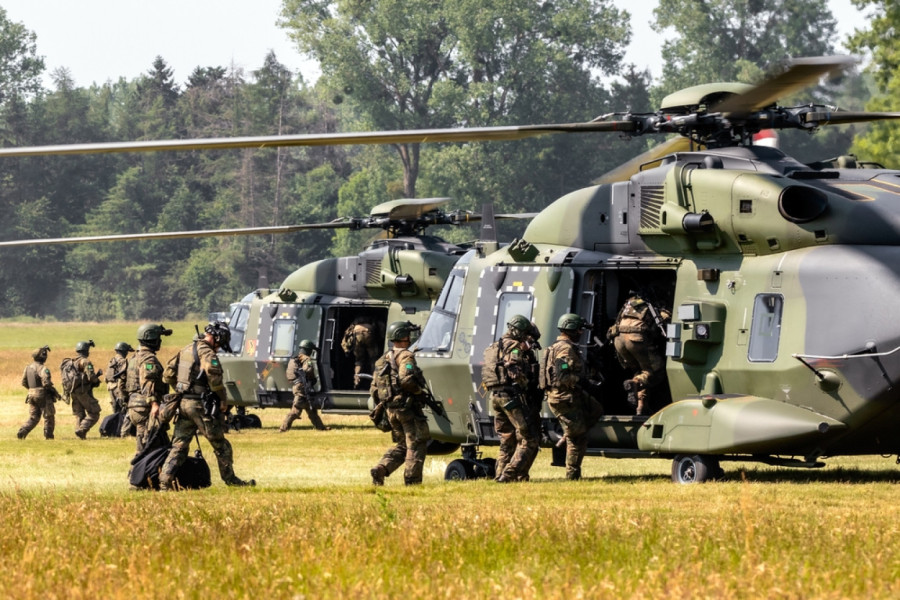
The key question is not whether Europe should do more, but why the deadline is specifically set for 2027.
That date is no coincidence. China has publicly declared that it plans to have a military capable of a potential invasion of Taiwan by 2027.
U.S. strategists want to free up as many resources as possible for the Indo-Pacific, which means Europe must bear the burden of dealing with Russia on its own.
If Moscow sees that NATO remains strong without full U.S. conventional engagement, deterrence is actually strengthened.
Paradoxically, this kind of pressure could make the Alliance more resilient than it has been in recent decades, when Europe relied too comfortably on the American shield.
Europe has already responded by increasing its defense budgets. After 2022, many countries exceeded the 2% GDP target, and at this year’s NATO summit, a gradual increase to 5% by 2035 was agreed.
The European Union has launched an ambitious rearmament plan worth around €800 billion.
But money alone does not build capabilities overnight. It takes years to build factories, train troops, and establish joint commands that are not dependent on American satellites or logistics centers.
If Europe does not meet expectations by 2027, the result will not be the collapse of NATO, as some fear.
It is more likely that the United States will simply reduce its presence in certain areas, such as intelligence sharing or joint defense planning in the Baltic states and Eastern Europe.
This would force Europeans to accelerate their own initiatives, such as developing a European air defense system or establishing a joint rapid-response command.
In the long term, the continent could emerge stronger and more cohesive, less dependent on the decisions of a single administration across the Atlantic.
A wake-up call—or an excuse for further delay?
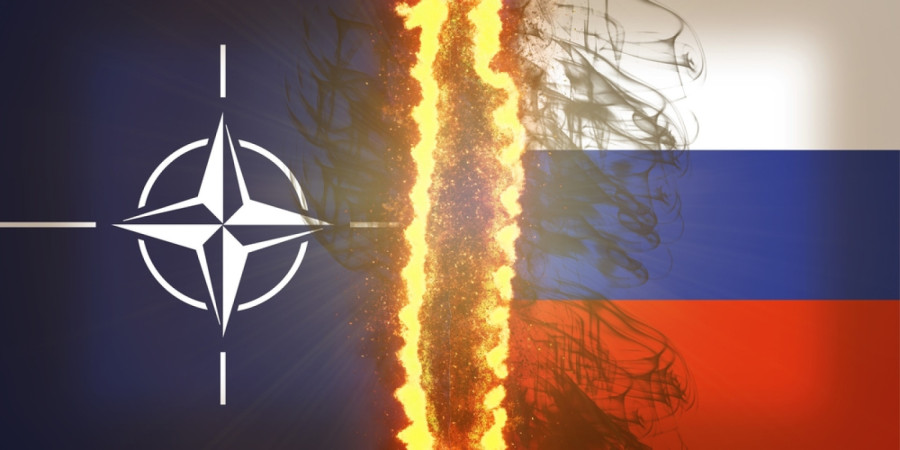
However, there is a significant risk. If the pressure is too intense or too fast, it could trigger internal divisions within Europe.
Countries like Poland and the Baltic states are already spending more than 3% of their GDP on defense and are prepared for faster progress.
France and Germany, however, hesitate due to economic costs and domestic politics.
Without clear consensus, Washington’s ultimatum could have the opposite effect: instead of accelerating efforts, it could cause paralysis.
Essentially, this message from the Pentagon is not just about money or weapons. It represents a fundamental shift in transatlantic relations that have lasted for seven decades.
0 Komentari
Možda vas zanima

Bivši fudbaler Partizana izvršio samoubistvo
Bivši srpski fudbaler Ajazdin Nuhi izvršio je samoubistvo u 46. godini.
12:25
10.9.2026.
2 d

Zvezda "prosula" pobedu protiv Olimpijakosa!
Košarkaši Crvene zvezde poraženi su i drugi put u samo nekoliko dana od Olimpijakosa.
21:55
11.9.2026.
20 h

Rat – dan 1.659: Rusi izveli napad na Pavlograd; "Mir je moguć samo pod uslovima Moskve"; Gađan Kursk FOTO
Ukrajinski predsednik Volodimir Zelenski izjavio je da neće biti trilateralnog sastanka o okončanju rata pre izbora u Rusiji, koji će biti održani 20. septembra.
23:50
10.9.2026.
1 d

Srbija se neočekivano namučila na otvaranju EP!
Odbojkaši Srbije pobedili su Estoniju u Tampereu sa 3-1 u setovima (25:23, 26:24, 26:28, 25:22), u prvom kolu grupe C Evropskog prvenstva.
21:28
11.9.2026.
20 h

Ovo su nove cene goriva – evo koliko će koštati dizel, a koliko benzin
Litar evrodizela danas od 15 sati do petka, 18. septembra u isto vreme koštaće maksimalno 234 dinara za litar, a cena benzina evropremijum BMB biće 205 dinara za litar, kao i prošle nedelje.
12:06
11.9.2026.
1 d





Komentari 0
Pogledaj komentare Pošalji komentar