






03.11.2025.
10:36
Dangerous: U.S. conducts serious preparations for an attack – aircraft carriers, bombers and nuclear submarine
The U.S. military is modernizing a long-abandoned former Cold War-era naval base in the Caribbean, Reuters’ visual investigation revealed, indicating preparations for sustained operations that could support potential actions within Venezuela.



Construction work is underway at the former Roosevelt Roads naval base in Puerto Rico—which the U.S. Navy closed over 20 years ago—as of September 17, when crews began clearing and repairing taxiways leading to the runway, according to photographs taken by Reuters.
Before the Navy withdrew from the facility in 2004, Roosevelt Roads was one of the largest U.S. naval stations in the world. The base occupies a strategically important location and provides ample space for staging equipment, a U.S. official said.
In addition to upgrading landing and takeoff capacities at Roosevelt Roads, the U.S. is constructing facilities at civilian airports in Puerto Rico and St. Croix in the U.S. Virgin Islands.
These two U.S. territories are located roughly 800 kilometers from Venezuela.
Reuters spoke with three U.S. military officials and three naval experts, who stated that the new construction in Puerto Rico and the Virgin Islands indicates preparations that could enable the U.S. military to conduct operations inside Venezuela. Venezuelan President Nicolás Maduro has repeatedly claimed that the U.S. seeks to overthrow him.
“All of these actions are, I think, designed to intimidate the Maduro regime and the generals around him, with the hope of creating cracks,” Christopher Hernandez-Roy, a senior fellow at the Center for Strategic and International Studies (CSIS) in Washington, told Reuters.
To monitor U.S. military activity in the region over the past two months, Reuters photographed U.S. military bases and reviewed satellite imagery, ship and flight tracking data, and social media posts. The news agency also tracked the movement of U.S. naval vessels through field reporting, as well as photos and videos from open sources.
The military buildup in the region is the largest unrelated to disaster relief since 1994, when the United States sent two aircraft carriers and more than 20,000 troops to Haiti to participate in “Operation Uphold Democracy.”
Since the beginning of September, the United States has carried out at least 14 strikes against alleged drug trafficking vessels in the Caribbean and the Pacific, killing 61 people. These strikes on alleged drug ships have heightened tensions with Venezuela and Colombia and drawn attention to a part of the world that has received limited U.S. military resources in recent years.
When asked about the military expansion in the region, the White House stated that President Donald Trump, during his election campaign, promised to crack down on drug cartels in the region.
“He has taken unprecedented measures to stop the scourge of narcoterrorism, which has resulted in the unnecessary deaths of innocent Americans,” White House spokeswoman Ana Kelly said in a statement to Reuters.
The U.S. military buildup in the Caribbean began in August, with the arrival of warships, a nuclear-powered submarine, combat aircraft, and spy planes.
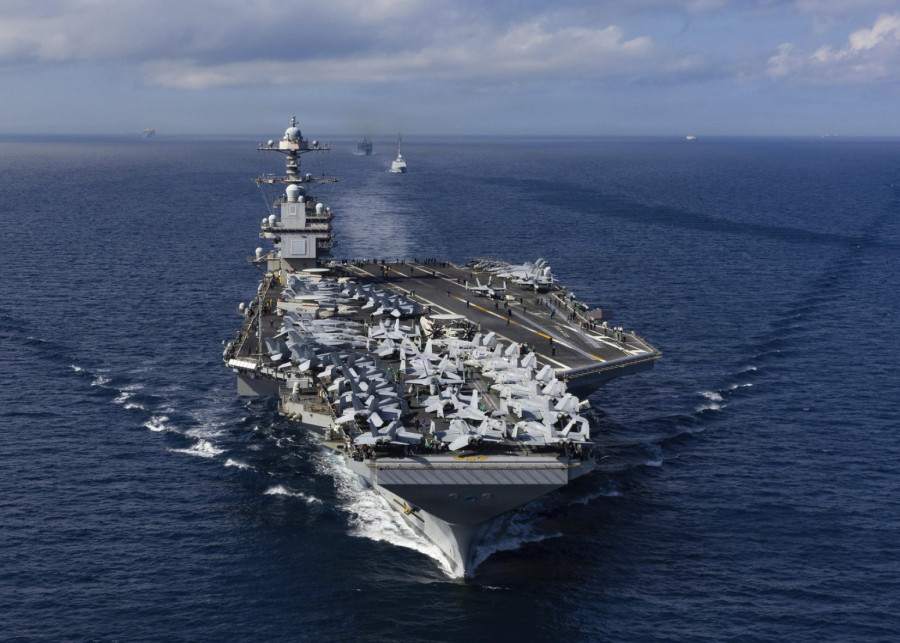
The Ford aircraft carrier strike group, with around 10,000 personnel and dozens of aircraft and weapon systems, is moving from the Adriatic Sea. One of Ford’s destroyers left Gibraltar on October 29, according to satellite imagery and ship-tracking data.
After being presented with Reuters’ findings, the Pentagon did not respond to requests for comment. The Governor of Puerto Rico also did not respond to requests for comment.
Construction of Caribbean bases
Some of the most significant infrastructure upgrades are taking place at the former Roosevelt Roads base, where crews are improving runways with enhancements that analysts say would allow the use of both combat and cargo aircraft.
Mark Cancian, a retired U.S. Marine Corps colonel and senior advisor at CSIS, stated that these changes align with preparations to increase the capacity for military aircraft takeoffs and landings.
In addition to renovating the runways, Reuters tracked the installation of portable air traffic support equipment and other mobile security systems.
Hernandez-Roy, a CSIS fellow, noted that it is possible the U.S. military is simply repairing infrastructure gaps. However, he added: “If your focus is now on the Western Hemisphere, it makes perfect sense to reopen what was once a massive naval base and ensure it can accommodate the range of aircraft the U.S. military uses.”
Reuters also identified significant changes at Rafael Hernández Airport, the second-busiest civilian airport in Puerto Rico.
By mid-October, the U.S. military had relocated communications equipment and a mobile air traffic control tower—typically used to coordinate a sudden influx of aircraft in combat zones or following disasters.
According to military experts, mobile air traffic control towers are used to manage a larger number of aircraft moving in and out of the region.
Satellite images show the construction of a munitions storage facility at the airport—although experts interviewed by Reuters said it is not immediately clear what type of weapons might be stored there.
“This is very significant,” said Kansijan. “It could be used in the near future for an operation against Venezuela.” He acknowledged, however, that the facility could also signal long-term planning for operations against cartels.
On the nearby island of Saint Croix, satellite images from September and October also show construction activity at the civilian airport.
Images of the Henry E. Rohlsen Airport show active work near the apron where aircraft are parked and serviced. Improving the apron could allow a greater number of U.S. military aircraft to park and refuel, U.S. officials told Reuters.
A video recorded by a local resident for Reuters shows a new radar system at the airport.
Albert Bryan Jr., Governor of the U.S. Virgin Islands, said in a statement through his office that while there had been some coordination with the U.S. military regarding troop deployments on the territory, his office was not aware of operational details or future planning of these operations.
“He believes that the regional presence of the U.S. military strengthens security and prevents drug and weapons trafficking through the territory,” the statement said.
Hernandez-Roj from CSIS stated that the changes could be aimed at supporting a large number of U.S. military aircraft arriving in the region. The upgrades could also help fill gaps in radar coverage if drug traffickers shift from using ships to aircraft.
“The only radar gap that is a persistent problem for intercepting drug flights is actually over Haiti, and it’s like a big black hole,” Hernandez-Roj added.
According to State Department data, Haiti is used as a transit point for transporting cocaine and marijuana from South America to the United States.
The Haitian Embassy did not immediately respond to a request for comment.
Maritime power projection of the U.S. Navy
According to Reuters reports and U.S. officials, the Trump administration has deployed since August at least 13 warships, five support vessels and one nuclear submarine to the region from various naval bases and global deployments — including the aircraft carrier Gerald Ford, the largest ship of its kind.
Eight warships have remained in the region, along with accompanying vessels.
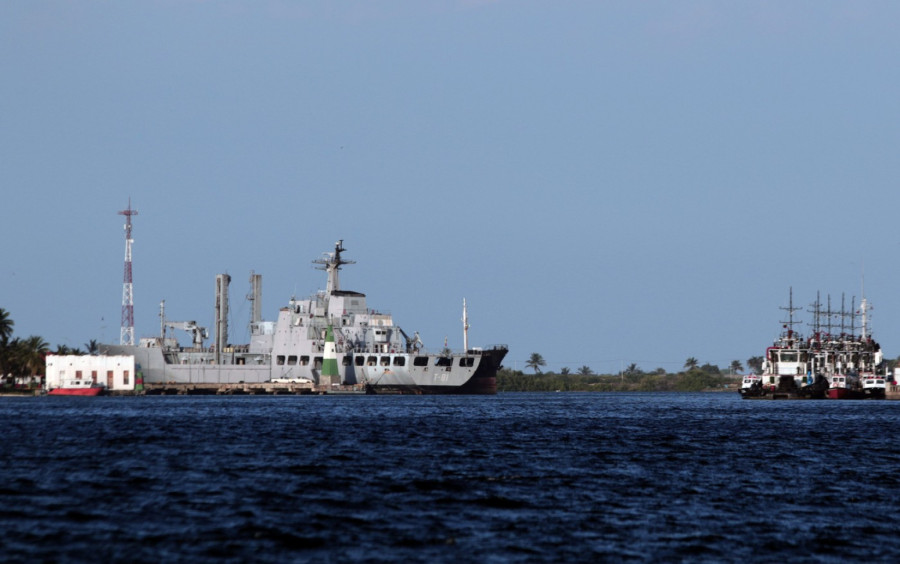
In addition, the former commercial vessel MV Ocean Trader has been spotted docking in Puerto Rico and St. Croix, as well as off the coast of Venezuela. Although little information about MV Ocean Trader is publicly available, experts believe it is linked to U.S. special forces.
Brent Sadler, a maritime security expert at the Heritage Foundation, said the vessel is capable of deploying helicopters used by special forces and could also be used for landing forces.
Reuters identified the ship on satellite images 53 miles off Saint Kitts at the end of September, but could not determine when the vessel was deployed to the region. It was last seen docking in Ponce, Puerto Rico, at the end of October.
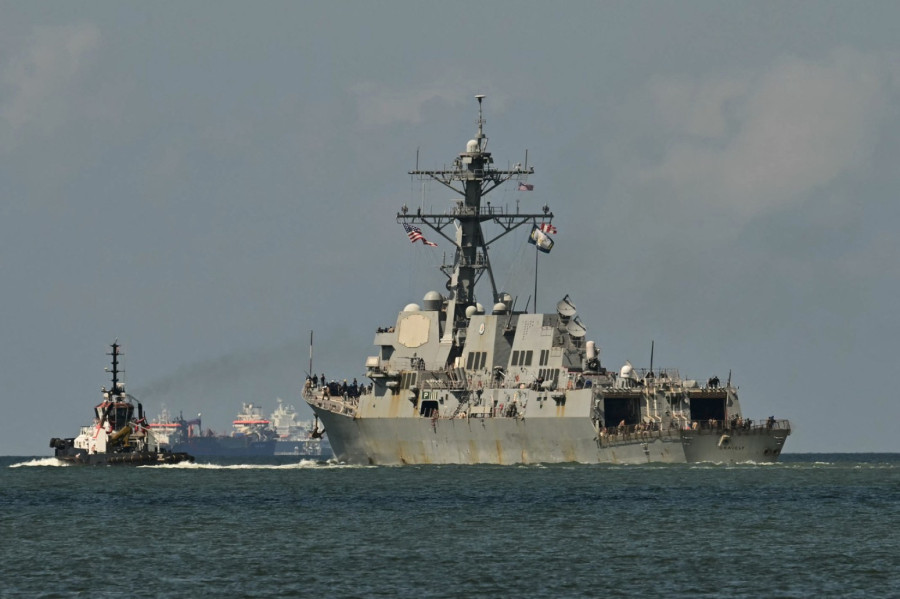
Three guided-missile destroyers — USS Jason Dunham, USS Gravely, and USS Stockdale — have also been deployed to the Caribbean.
ZUMA Press Wire / Shutterstock Editorial / Profimedia
Američki ratni brodovi
Mcs Alyssa Joy/U.S. Navy / Zuma Press / Profimedia
Američki ratni brodovi
MARTIN BERNETTI / AFP / Profimedia
Američki ratni brodovi
The Reuters agency observed the arrival of support vessels, including two refueling tankers, USNS Kanawha and USNS Joshua Humphreys, the hospital ship USNS Comfort, and the submarine navigation testing ship USNS Waters.
Air Power off the Coast of Venezuela
There is also an ongoing increase in the number of U.S. military aircraft. Alongside the aircraft carrier Ford, which can accommodate more than 75 military aircraft, the Pentagon has deployed 10 advanced F-35 fighter jets and reconnaissance aircraft, according to earlier Reuters reports.
At the end of October, the U.S. Air Force flew supersonic Lancer bombers from Dyess Air Force Base in Abilene, Texas, and Grand Forks Air Force Base in North Dakota off the coast of Venezuela, according to flight tracking data.
On 15 October, three B-52 bombers took off from Barksdale Air Force Base in Shreveport, Louisiana, and circled over the Venezuelan coast before returning to base, according to flight tracking data.
The military is also delivering supplies. Reuters tracked dozens of C-17 cargo flights into the region. Experts interviewed by Reuters said the aircraft could be used to supply ships or transport weapon systems or drones to the base in Puerto Rico.
At least a dozen reconnaissance aircraft from the U.S. Naval Air Station in Jacksonville, Florida, flew over the Bahamas and further south across the Caribbean in October, according to flight tracking data from FlightRadar24. Experts say these Poseidon P-8A flights indicate that the U.S. military is attempting to gather significant intelligence in the region.
Although the ultimate goal of the large-scale troop buildup remains unclear, elements for potential operations within Venezuela are in place, as President Donald Trump suggested last Thursday.
“The territory will be next,” he said.
0 Komentari
Možda vas zanima

Zvezda slavi Batlera, Monekea i 4. pobedu u nizu – Pariz pao posle drame!; "Bio sam uznemiren"
Košarkaši Crvene zvezde pobedili su Pariz 90:81 u 6. kolu Evrolige.
23:15
16.10.2026.
1 d

Dnevni horoskop za 17. oktobar: Škorpijama se smeši nešto novo; Ribe, ovo ste čekali
Saznajte šta svaki horoskopski znak očekuje danas.
8:12
17.10.2026.
1 d

Rat – dan 1.696: Tramp zamrznuo sankcije Moskvi; Rusi žestoko napali Herson FOTO/VIDEO
Rat u Ukrajini – 1.696. dan. Predsednik SAD Donald Tramp zamrznuo je novi paket sankcija protiv ruske ekonomije. Izaslanik ruskog predsednika Kiril Dmitrijev rekao je da je to važan i istorijski trenutak.
23:55
17.10.2026.
19 h

Rat – dan 1.695: Ruski bombarderi iznad Baltičkog mora; Putin: "Napredujemo"; Ukrajina "na nogama" FOTO/VIDEO
Bombarderi dugog dometa Tu-22M3 Vazdušno-kosmičkih snaga Rusije izveli su planirani let u vazdušnom prostoru iznad neutralnih voda Baltičkog mora, saopštilo je Ministarstvo odbrane Rusije.
23:49
16.10.2026.
1 d

Veličanstvene scene u Novom Sadu; Vučića dočekao ogroman broj ljudi: "Samo što mi suze nisu krenule" VIDEO
U Novom Sadu se danas održao veliki skup liste "Aleksandar Vučić – Ujedinjena Srbija" na kojem se nosilac te liste Aleksandar Vučić obratio hiljadama okupljenih građana.
22:57
16.10.2026.
1 d












Komentari 0
Pogledaj komentare Pošalji komentar