






09.10.2026.
11:11
Will they crush them? Three aircraft carriers are ready PHOTO/VIDEO
The U.S. military is preparing options for launching major combat operations against Iran, including a three-day campaign targeting Iranian missiles, drones, energy facilities and military sites, U.S. officials said, according to The New York Times.



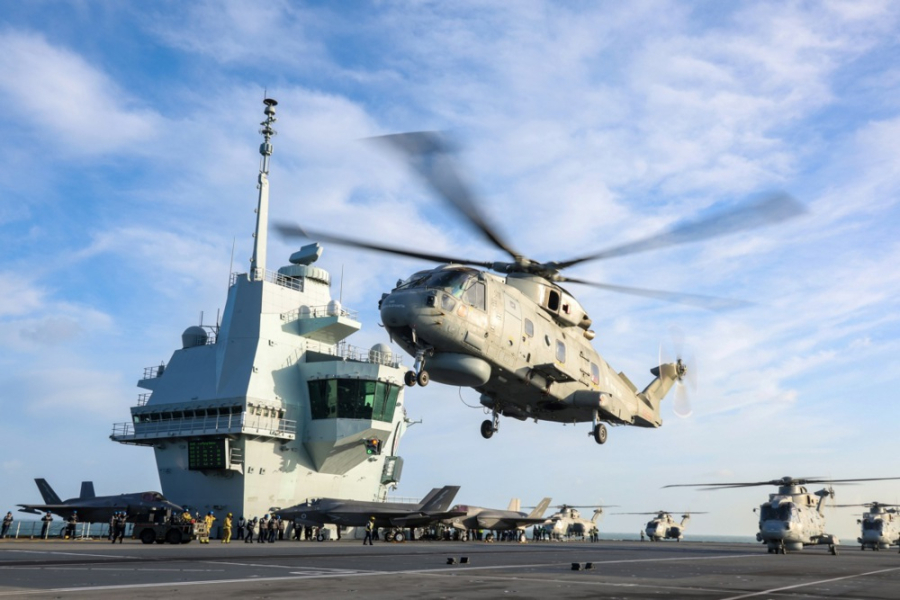
Three aircraft carriers are expected to arrive in the Middle East by the end of October, which would mark the largest concentration of U.S. naval forces in the region since 2003.
The Pentagon, acting on orders from President Donald Trump, has drawn up plans for strikes, although the president has repeatedly rejected proposals for major operations against Iran or the Yemeni Houthis, a militia backed by Tehran, the newspaper reports.
Senior national security officials, led by U.S. Vice President JD Vance, discussed the plans at a meeting at Camp David, according to The New York Times.
According to people familiar with the proposals, the operation would last around three days, with targets including Iran’s missile and drone arsenal, energy facilities and command centers belonging to the Islamic Revolutionary Guard Corps.
Trump said on social media yesterday that he would not attack Iran before the midterm elections and that the two countries were engaged in “productive talks.”
The mediated negotiations continue to face obstacles over Iran’s nuclear program.
Washington wants the issue to be addressed first on the agenda, while Iranian negotiators insist that it should be dealt with at the end.
U.S. officials say Iran has improved its military tactics in recent months, making it necessary to use more interceptor missiles than before to shoot down its projectiles.
According to data from a monitoring group run by the British Navy, Iran has attacked at least 13 vessels since September, while intelligence reports point to nearly 20 attacks.
None of the incidents has prompted a strong response from the United States. Washington continues to shoot down Iranian drones and cruise missiles, but it has not targeted Iran’s “shadow fleet”—tankers transporting oil in violation of sanctions—nor has it launched retaliatory strikes on Iranian territory.
Iranian attacks have raised concerns among shipping companies about future energy deliveries, despite an increase in oil exports from the Middle East.
Trump claimed yesterday that none of the oil passing through the Strait of Hormuz originates in Iran, but people familiar with intelligence reports dispute that claim.
According to their accounts, Iran allows certain vessels to pass through the strait in exchange for fee payments or potentially because they carry some Iranian oil. The country also operates its own fleet of tankers that conducts business covertly.
On Thursday, the U.S. Department of the Treasury imposed sanctions on 17 vessels alleged to belong to Iran’s shadow fleet.
Some U.S. officials believe that economic pressure on Iran is producing results and that more time is needed to compel the country to make significant concessions.
Others argue that a short, powerful strike could further weaken Iran’s economy and undermine Tehran’s ability to control the Strait of Hormuz.
The USS Theodore Roosevelt carrier strike group left San Diego last week and is expected to join the USS George H. W. Bush and USS George Washington carrier strike groups toward the end of October.
Each carrier strike group also includes other warships, attack helicopters and Marine Corps units.
By the end of the month, more than 20,000 sailors and Marines could be deployed at sea, along with hundreds of aircraft.
However, the USS George Washington is expected to return to its base in Japan soon after the USS Theodore Roosevelt arrives next month to replace it.
U.S. military commanders are prepared to launch broader operations in the coming days if Trump changes his mind again, although officials believe it is unlikely that the president will authorize new strikes even after the elections, The New York Times reports.

0 Komentari
Možda vas zanima

Rat – dan 1.867: Masakr u Kramatorsku – preko 30 mrtvih; Ukrajinci se osvetili Rusima FOTO/VIDEO
Rat u Ukrajini – 1.687. dan. U ruskom napadu na stajalište javnog prevoza i dva autobusa u Kramatorsku, u Donjeckoj oblasti, poginulo je 33 ljudi, dok je 18 povređeno, saopštilo je regionalno tužilaštvo Ukrajine. Ukrajinci su napali rafineriju nafte u Omsku.
23:55
8.10.2026.
12 h

Rat – dan 1.686: Žestok ruski napad; Veliki broj mrtvih – među njima i deca; Vanredne mere u Kijevu FOTO/VIDEO
Rat u Ukrajini – 1.686. dan. U kombinovanim ruskim napadima na Ukrajinu danas je ubijeno 25 ljudi, a njih stotinu je ranjeno, izjavio je ukrajinski predsednik Volodimir Zelenski. 19 ljudi, od čega petoro dece, ubijeno je u raketnom napadu u Prilucima.
23:54
7.10.2026.
1 d

Nemačka odbila Kineze: "Ne damo"
Nemačka savezna vlada zabranila je prodaju 80 odsto udela u hamburškoj logističkoj kompaniji "Cipel" kineskoj državnoj brodarskoj kompaniji "Kosko", navodeći kao razlog rizike po nacionalnu bezbednost.
19:31
7.10.2026.
1 d

Fenomenalna Zvezda – Dubai nemoćan!; Navaro: "Dobra odbrana"; Paskval ljut
Košarkaši Crvene zvezde savladali su Dubai sa 77:58 u četvrtom kolu Evrolige.
21:07
8.10.2026.
15 h

Real prekinuo Partizanov niz – Madrid i dalje neosvojiva tvrđava; Penjaroja srećan zbog jedne stvari
Košarkaši Partizana izgubili su od Reala u Madridu 86:76 u 4. kolu Evrolige.
23:25
8.10.2026.
13 h












Komentari 0
Pogledaj komentare Pošalji komentar