






04.07.2025.
13:45
This is a massacre: 100,000 dead?
Until now, the only source of data on the number of casualties in Gaza was the local Ministry of Health. Israel has consistently dismissed those numbers as too high. Now, an independent study shows that the real number could be even higher.



Studies usually deal with numbers and data, scientific methods and projections.
This is also the case with a recent study on deaths in the Gaza war, led by Michael Spagat of King's Holloway University in London.
The study estimates that more than 80,000 Palestinians were killed in the Israeli war in Gaza by the beginning of January this year.
One thing is important for Spagat, a war and conflict researcher: "In the end, it's about remembering each individual victim."
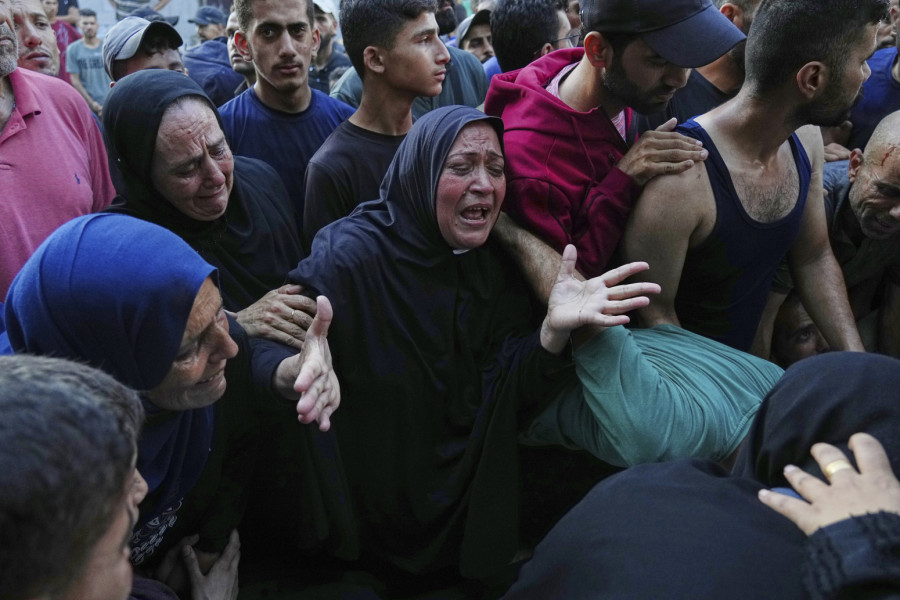
The names of the dead should be written down on the lists, which currently only the Ministry of Health in Gaza can do, he says. Spagat believes that these lists are "mostly correct" - although the Ministry controls Hamas, which is classified as a terrorist organization by the European Union, the USA, and others.
"The Ministry of Health in Gaza lists the names of the dead with their social security number, age and gender. This can be easily verified," he says.
And this has already been done: in February of this year, scientists published a study in the journal "Lancet" in which they compared, for example, obituaries on social networks with lists of the Palestinian Ministry of Health. And it came to the conclusion that not a single name was added to the list of the ministry in Gaza. Actually the names were missing. That study had already concluded that the numbers from Gaza were probably significantly underestimated.
The research was conducted by field researchers in Gaza
Now, for the first time, a study has been conducted completely independently of the lists maintained by the Ministry of Health in Gaza.
The researchers, led by Michael Spagat, interviewed people about deceased members of their households. European researchers collaborated with Palestinian colleagues from the Palestinian Center for Policy Survey Research (PCPSR).
That independent research organization, led by political scientist Halil Shikaki, is financed, among other things, by private foundations, but also by the European Union. It is headquartered in Ramallah in the West Bank, but has experienced staff in the Gaza Strip as well.
"We didn't need permission to enter Gaza - we were already there," explains Spagat, describing the data collection in the acute war zone, where - with the exception of a few humanitarian organizations - the competent Israeli authority (COGAT) allows almost no one to enter. In addition, Israel has denied entry to foreign journalists since the beginning of the war.
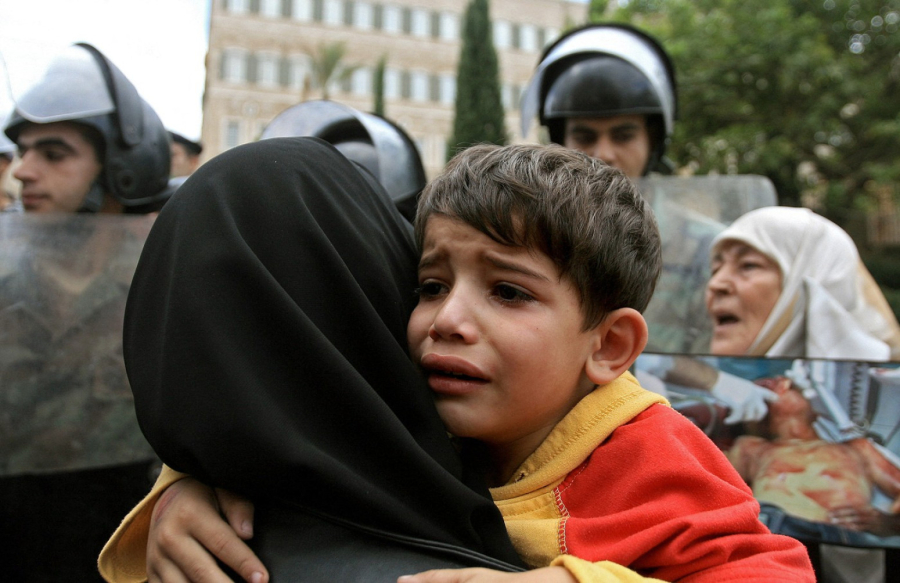
"Fortunately, none of our field researchers have been killed so far. They are all alive," says Spagat.
Field researchers interviewed representatives of 2,000 households, which is representative of the population of Gaza before the October 7, 2023, terrorist attack by Hamas on Israel.
They were not allowed to enter areas that the Israeli army had closed as conflict zones. However, since much of Gaza's population has been displaced, the researchers were able to speak to people originally from the northern part of the Gaza Strip or Rafah, in places such as the Al Mawasi tent camp.
Death from malnutrition and disease
Their conclusion is this: between October 7, 2023 and January 5, 2025, the number of direct war deaths is approximately 75,200. Comparing that figure to the number reported by the Ministry of Health – 45,805 deaths in the same period – it becomes clear that research by Spagat and Shikaki's team shows that the actual number of deaths is about 60 percent higher than that reported by the Ministry of Health in Gaza. That would mean that since the start of the war, roughly every 25th person in the Gaza Strip, home to 2.3 million people, has been a victim.
Added to that is the number of so-called "indirect war deaths", i.e. of all those who died due to malnutrition or disease in wartime conditions - and minus the number of people who would have died of old age or disease without the wartime situation. Researchers estimate that there were 8,540 "indirect war deaths" during that period.
This is a significantly lower number than previously estimated. A study in the July 2024 Lancet magazine already assumed that for every registered death, four additional indirect war deaths should be added.
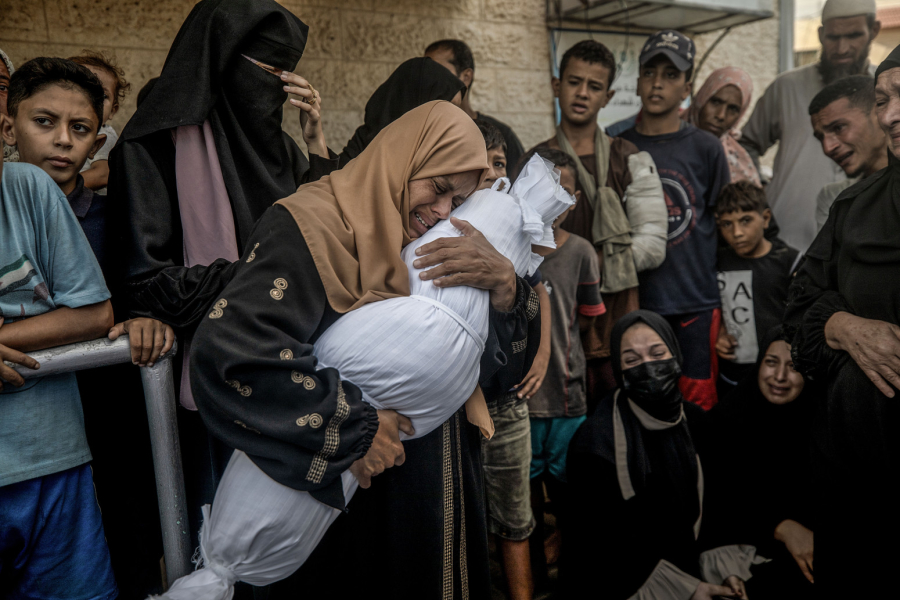
Humanitarian organizations have warned for months that civilians in Gaza could die of malnutrition and disease - many estimated that there were tens of thousands of indirect war deaths.
Spagat attributes the lower number to the fact that the population of Gaza before the war was young and mostly healthy. The health system there was also good, and the vaccination rate was high "thanks to the UN and many humanitarian organizations".
The number, he says, is by no means low compared to other war zones. "Our data shows that humanitarian organizations have so far done a very good job of keeping the population alive," he says.
According to UNICEF data, only in May this year, 5,119 children between six months and five years old were treated for acute malnutrition.
Spagat emphasizes that the study was conducted before Israel's eleven-week total blockade of aid deliveries to Gaza. "People in Gaza are malnourished. When diseases break out, everything can happen very quickly. Even if a truce was declared next week and held, the number of indirect deaths would rise sharply again. Our data is not final," he says.
However, that study has not yet been independently peer-reviewed, i.e. were not checked by scientists who did not participate in that research. It is a so-called preprint, and therefore the numbers cannot be considered final. However, it is in line with a study published in the journal "Lancet", which reviewed the list of names of the Gaza Ministry of Health.
Can Hamas data be used?
Using different methods, but with a similar goal, researchers led by Spagat and Shikaki also worked. They wanted to examine whether the Hamas-controlled Ministry of Health in Gaza, which counts new deaths in the Gaza Strip every day, could be used as a reliable source.
"We clearly show that they are not exaggerating the number of deaths. The study also shows that they provide a realistic picture of the demographics of the deaths. The percentage of women, children and the elderly that we calculated pretty much matches the data of the Ministry of Health in Gaza," says Spagat.
According to the study, more than 30 percent of the direct deaths were children under the age of 18. An additional 22 percent were women, and about four percent were people over 65 years old. Most of the dead were men between the ages of 15 and 49. Does this mean that the fighters were targeted for murder?
An almost unbelievable number: 100,000 dead
"No," replies Spagat.
"In wars, young men are always the most killed." The study – like the Gaza Ministry of Health – does not distinguish between combatants and civilians. We would have put our field researchers in danger if they had asked if members of Hamas lived in that household," says Spagat.
"They could be suspected of being Israeli intelligence agents."
Therefore, these data were not collected.
Spagat emphasizes: "We have a very high number of young children killed, which is a special thing." He hesitates to make comparisons, but says that "four percent of the population was killed in Gaza – we haven't seen that in any other war in the 21st century."
If the numbers from Spagat and Shikaki's study are projected to the present day, 100,000 is quickly reached. That's an almost unimaginable number of deaths - behind which people's names and stories are hidden. We know some of them.
Like the Al-Najjar family. Children Yahya, Rakan, Ruslan, Jubran, Eve, Rivan, Sayden, Lukman and Sidra were killed in an Israeli airstrike on Khan Yunis on May 23, 2025.
The mother survived, because she was on duty as a doctor in the hospital. The only survivor of the attack was her eleven-year-old son Adam.
The children's father, doctor Hamdi al-Najjar, died a few days later from injuries sustained in the attack. Their names - unlike the names of most of the dead - went around the world.
1 Komentari
Možda vas zanima

Džoooons! Zvezda slavila u trileru; "Košarkaški bogovi su nekad pošteni"
Košarkaši Crvene zvezde savladali su večeras Asvel u Vilerbanu rezultatom 84:82 u utakmici petog kola Evrolige.
23:00
13.10.2026.
1 d

Potop Partizana u Areni – Panata se "prošetala"; Penjaroja: "Teško je takmičiti se sa lošim šutem"
Košarkaši Panatinaikosa savladali su Partizan sa 55:72 u okviru petog kola Evrolige.
23:43
13.10.2026.
1 d

Rat – dan 1.693: Rusi izveli masovni napad; Kremlj je pobednik "primirja"; Zelenski: "Osećamo se izdano" FOTO
Ukrajinski predsednik Volodimir Zelenski izjavio je večeras da neće podneti ostavku i da održavanje izbora u Ukrajini trenutno nije moguće zbog stalnih ruskih napada i bezbednosnih rizika.
23:53
14.10.2026.
29 min

Profesor Vladimir Vuletić pronađen mrtav
Profesor Vladimir Vuletić, bivši potpredsednik Fudbalskog kluba Partizan i profesor Pravnog fakulteta u Beogradu, pronađen je mrtav, pišu mediji.
16:50
13.10.2026.
1 d

Nisu pokloni ni slatkiši: Ovih šest stvari unuci pamte ceo život
Bake i deke su često važan oslonac celoj familiji, čak i kada deca još ne razumeju koliko im znače.
9:10
13.10.2026.
1 d












Komentari 1
Pogledaj komentare Pošalji komentar