




27.10.2025.
11:54
"The world on the verge of discovering a cancer vaccine"
Biochemist and 2023 Nobel Prize in Medicine laureate Katalin Karikó stated that the world is on the verge of developing a vaccine against cancer, autoimmune diseases, and possibly many other illnesses.

Katalin Karikó emphasized that if this threshold is crossed, it could mark the beginning of a new era for humanity, since the mentioned diseases have been incurable since the dawn of mankind and claim millions of lives each year worldwide.
Biochemists Katalin Karikó and Drew Weissman were awarded the Nobel Prize for their long-term scientific research that contributed to the development of mRNA technology, which was initially used to rapidly create COVID vaccines.
Commenting on the controversy around COVID vaccines—such as doubts about their effectiveness and reports of myocarditis or thrombosis—Karikó clarified that these issues are not inherent to mRNA technology.
“Even 100 years ago, some vaccines were reported to have side effects. For example, when the diphtheria vaccine was first introduced, it was reported to cause menstrual changes in girls, and there were also reports of psychological effects. So these adverse reactions are not specific to COVID vaccines; they are a result of individual immune responses,” she told Novosti.
She noted that prior to COVID vaccines, the general public was not widely focused on vaccine side effects, since vaccines had never been applied on such a massive global scale in such a short period.
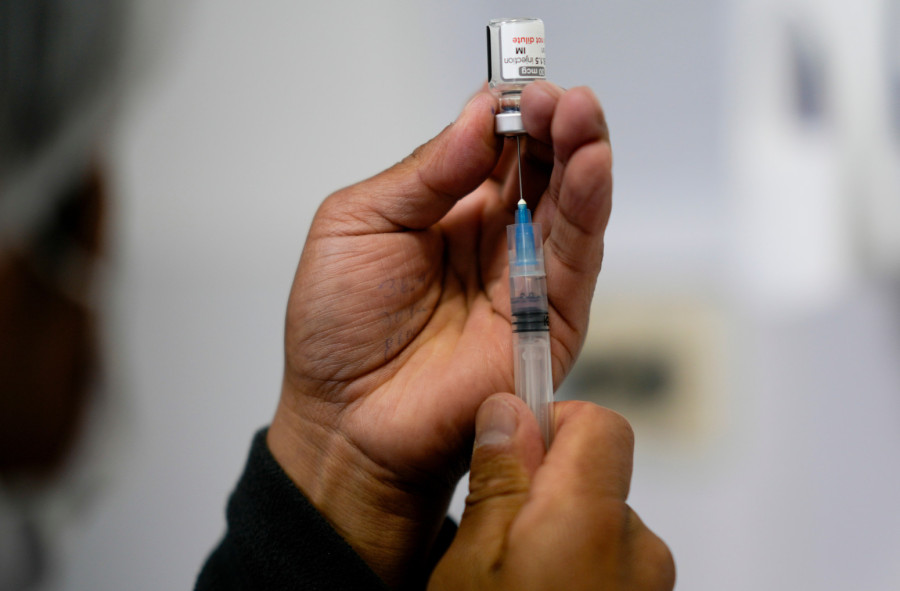
“That is why it is important to stress that vaccines offer far greater benefits to humanity than the harm they may cause. mRNA merely ‘delivers the message’ for the body to produce a specific viral molecule or other target, allowing the immune system to recognize, learn, and defend against or eliminate it,” Karikó explained.
Speaking about why she, as a biochemist, became interested in studying RNA—specifically mRNA—Katalin Karikó said it happened spontaneously. She explained that as a postgraduate living in Hungary, she accepted an offer from a professor at the University of Szeged, who led the department for ribonucleic acid, to defend her doctoral thesis in that field, even though her background had been in lipids (fats).
“I agreed and took the opportunity to work. It was spontaneous; I couldn’t say that I chose it or had a vision. When I moved to the U.S. in 1985 and started working at the University of Pennsylvania, I began focusing exclusively on mRNA,” the biochemist said.
According to her, what ultimately led her to biochemistry was being born in a small town in central Hungary and her fascination with nature from an early age. She also noted that she excelled in biology even in elementary school, which shaped her future path.
“In my time, the education system in Hungary was good. Anyone who wanted to learn could, and I took advantage of that. I am still grateful to all my teachers, professors, and mentors who helped me mature and introduced me to the world of science,” Karikó said.
She emphasized that her parents taught her not only how to make sausages but also that hard work is an essential part of life.
“I read books, and from them I learned how to handle stress and the importance of focusing on what I want while ignoring noise, opposition, and disregard. When you learn what you should be doing yourself, rather than expecting it from others, you can achieve your goals. I also learned from the experiments themselves,” she added.
Karikó said she never allowed others to dictate the rules or tell her what was useful and what was not.
She also highlighted a personal connection to Serbia: her guiding motif was the song Diamonds and Gold by the band Metro, whose members, Zoran and Dušan Stevanović, are ethnic Serbs from Hungary. The song was popular when she was in elementary school, and she mentioned it in her book Critical Breakthrough.
“So I can say that I have a special connection with Serbia. The song talks about believing in your dreams and not being afraid. Many times, when troubles overwhelmed me, I would sit in the dark and listen to it. I played it for my daughter when she complained she had no energy to train. I spoke with the authors to translate it into Serbian and create a Serbian version, and they gladly agreed,” Karikó said.
0 Komentari
Možda vas zanima

Turci krenuli – više od 500 vozila ide ka Iranu
Stotine turskih državljana, u konvoju od više od 500 vozila, krenule je ka graničnom prelazu Gurbulak sa Iranom kao izraz solidarnosti sa iranskim narodom, prenela je iranska agencija IRNA.
9:15
15.4.2026.
1 d

Stiže nam nemački lanac: Evo gde će graditi megaprodavnicu
Nemački maloprodajni lanac za opremanje doma i bašte Hornbach nastavlja pripreme za ulazak na srpsko tržište, a prvi konkretni koraci već su vidljivi kroz urbanistički projekat koji je nedavno bio na javnoj prezentaciji na sajtu Grada Subotice.
13:37
14.4.2026.
1 d

Medvedev potvrdio Vučiće reči: Treći svetski rat je pred vratima – Rusija najavila udare
Rusko Ministarstvo odbrane objavilo je spisak industrijskih lokacija širom Evrope koje proizvode dronove za Ukrajinu, piše RT.
10:43
16.4.2026.
35 min

EU kaže – ovo nije slanina
Stroži propisi Evropske unije o proizvodnji i označavanju hrane uticaće na cene u Srbiji. Novi troškovi su izvesni, kaže za RTS Nenad Budimović iz Privredne komore Srbije.
14:23
14.4.2026.
1 d

171 tanker naglo promenio pravac: Armada kreće ka SAD
171 tanker u Ormuskom moreuzu naglo je promenio pravac, a sateliti su otkrili da idu za Sjedinjene Američke Države.
14:57
15.4.2026.
20 h












Komentari 0
Pogledaj komentare Pošalji komentar