






28.09.2026.
21:38
What if the world is hit by another pandemic?
Officials from World Health Organization, along with leaders gathered at the United Nations General Assembly, reviewed the agreements reached so far on a new accord concerning the response to a potential new pandemic, similar to the one that occurred in 2020.



Political leaders meeting at the United Nations General Assembly (UNGA) renewed their commitment to making the world safer from future pandemics, emphasizing the need for sustained and more equitable investment and action in pandemic prevention, preparedness and response (PPPR).
The UN General Assembly also held its second high-level meeting on pandemic prevention, preparedness and response, following the first such meeting in 2023, in response to the challenges posed by the COVID-19 pandemic and identified gaps in global health security. Countries stressed that strengthening PPPR is not solely a health issue — it requires a whole-of-government and whole-of-society approach, with the involvement of communities and all relevant sectors.
Leaders recognized the progress made over the past three years in strengthening global systems for detecting, preparing for and responding to pandemic threats, including the adoption of the WHO Pandemic Agreement and amendments to the International Health Regulations (2005), the WHO said in a statement.
PPPR capacities and infrastructure have also been expanded through the establishment of global hubs dedicated to epidemiological and pandemic surveillance, pathogen sharing, and local production of vaccines, medicines and diagnostic tools.
Addressing participants at today’s meeting, WHO Director-General Dr. Tedros Adhanom Ghebreyesus, however, said that continued action and investment are needed to maintain the progress made so far and better prepare the world to respond to threats such as COVID-19.
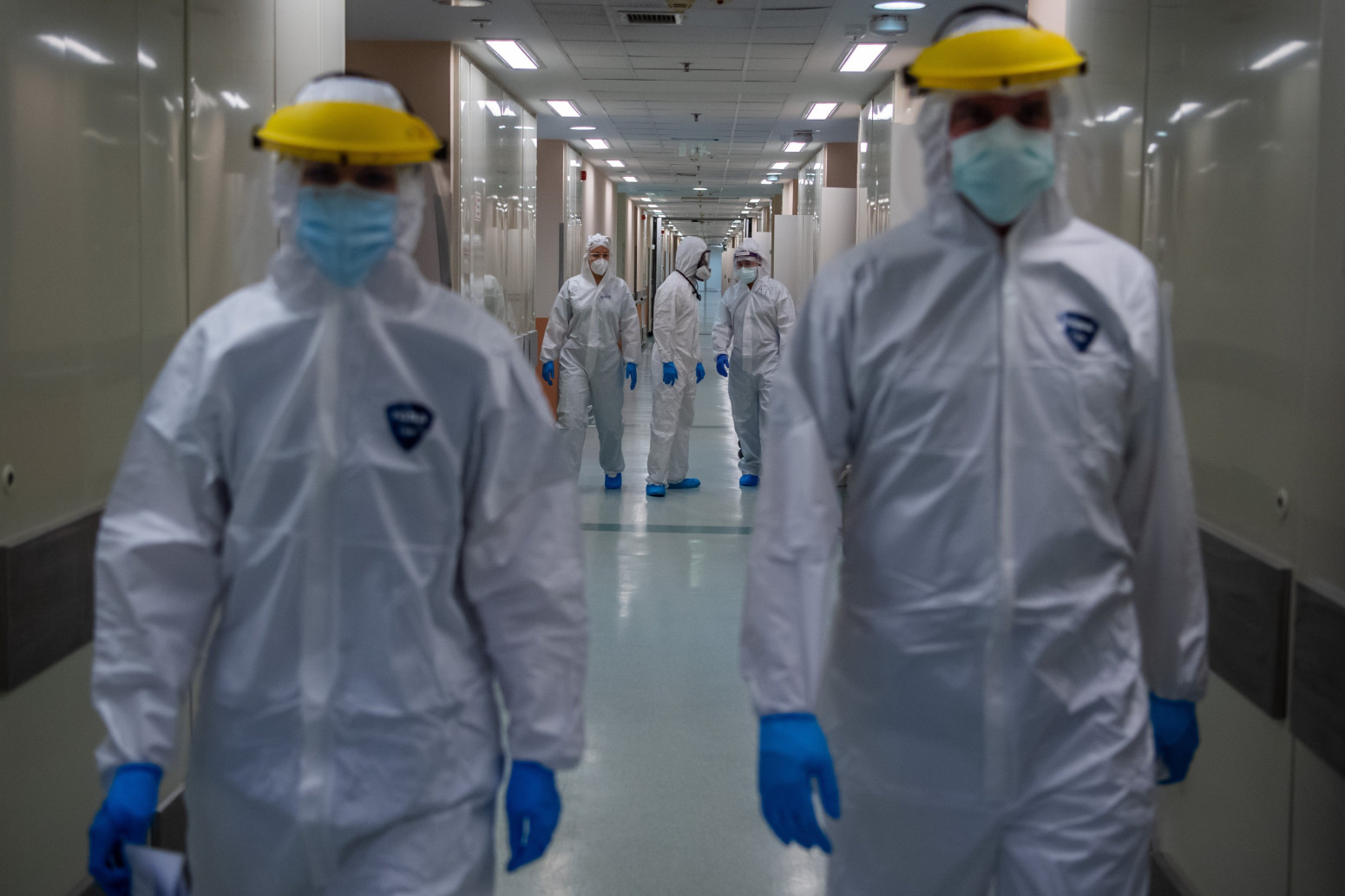
According to the WHO, the pandemic was associated with more than 20 million excess deaths between 2020 and 2023 and resulted in losses of more than $10 trillion to the global economy.
“The COVID-19 pandemic exposed and further deepened weaknesses in global health security and taught the world many painful lessons,” said Dr. Ghebreyesus.
“The political commitment expressed today reflects those lessons and includes important commitments to implementing concrete, measurable and urgent actions to build and strengthen local and national capacities, invest in resilient health systems, and expand equitable access to products, tools and resources.”
Countries also emphasized the urgent need to successfully conclude negotiations on the annex to the WHO Pandemic Agreement, which would establish a Pathogen Access and Benefit-Sharing (PABS) system, currently being negotiated by WHO Member States.
The purpose of the PABS annex is to operationalize a system for the timely sharing of pathogens with pandemic potential, as well as the benefits arising from their use.
This would facilitate research and development, as well as the timely and equitable distribution of vaccines, medicines, diagnostics and other health products developed using those pathogens.
Adoption of the Annex at the upcoming World Health Assembly in May 2027 is necessary for WHO Member States to begin their national procedures for ratifying the WHO Pandemic Agreement.
“The Pathogen Access and Benefit-Sharing system currently under negotiation is critical to realizing the full potential of the WHO Pandemic Agreement. There is no time to lose,” said Ms. Amina Mohammed, Deputy Secretary-General of the United Nations, speaking on behalf of UN Secretary-General António Guterres.
“I urge Member States to accelerate this work. Let’s get it done. Let’s deliver the Pandemic Agreement the world is waiting for.”
The Declaration emphasizes that national health security can only be achieved through global solidarity and that international cooperation is essential to protecting communities and countries from cross-border threats.
Recognizing that pandemic prevention begins long before an outbreak occurs, the Declaration highlights the importance of the “One Health” approach, which addresses the interconnectedness of human, animal and environmental health.
At the opening of the meeting, Dr. Kalilur Rahman, President of the 81st UN General Assembly, said that international cooperation is essential to protecting the world from inevitable future pandemics through equitable and timely access to vaccines, diagnostics, therapeutics and other essential medical supplies, stronger health systems, and closing existing financing gaps in order to empower people and communities.
“We have the knowledge, we have the tools, we have the science and expertise, as well as the painful lessons learned from the COVID pandemic,” Dr. Rahman told participants at the meeting. “Let us use them for ourselves, our families and our loved ones. But also in memory of those we lost and in recognition of all those who suffered unnecessarily.”
Ambassador Amar Bendjama, President of the United Nations Economic and Social Council (ECOSOC), said that pandemic prevention, preparedness and response are critical to achieving the 2030 Agenda and advancing all the Sustainable Development Goals.
“This requires integrated and adequately funded action, with equity and sustained investment in resilient health systems, access to technology, prevention and early-warning systems,” Ambassador Bendjama said, according to a WHO statement.
“ECOSOC has a crucial role to play in bringing together Member States, the United Nations system and other stakeholders to strengthen policy coherence and coordinated action in this area.”
As discussions continued throughout the day, leaders participating in the high-level meeting emphasized that pandemic prevention, preparedness and response must remain a sustained political priority — not only during crises but also in the years between them. They stressed that protecting the world from future pandemics will require continued political leadership, international cooperation and long-term investment.
0 Komentari
Možda vas zanima

Partizan srušio Zvezdu; Pajola heroj! Karlik: "Nemam reči"; Italijan objasnio pobedu crno-belih
Košarkaši Partizana pobedili su Crvenu zvezdu rezultatom 85:82 u 7. kolu Evrolige.
23:57
22.10.2026.
1 d

Neverovatni prizori u 150 mesta u Srbiji: Okupljanja i podrška listi "Ujedinjena Srbija"; Orio se "Ruzmarin"
Građani Srbije u 150 gradova i sela organizovali su skupove poslednjeg dana izborne kampanje kako bi iskazali podršku listi "Aleksandar Vučić – Ujedinjena Srbija".
22:19
22.10.2026.
1 d

Cure šokantni detalji hapšenja; SAJ objavio snimke; Planiran haos na dan izbora VIDEO
U Novom Sadu i Vrnjačkoj Banji uhapšene vođe kriminalnih grupa zbog sumnje da su organizovali i planirali nerede na dan izbora 25. oktobra. Prema najnovijim informacijama, obojica imaju pasoše Hrvatske. Uhapšen i ultradesničar iz Zemuna, navode mediji.
12:42
21.10.2026.
2 d

Zvezda umalo opet sve prosula; Rijera nije zabrinut; Elšnik neće da "baca saigrače pod autobus"
Fudbaleri Crvene zvezde remizirali su sa Kopenhagenom 2:2 na stadionu "Rajko Mitić" u drugom kolu Lige konferencije.
22:14
22.10.2026.
1 d

Rat – dan 1.671: Rusi ponovo napali Kijev; Putin: "Možemo da postignemo dogovor" FOTO/VIDEO
Rat u Ukrajini – 1.671. dan. Rusi su u toku noći pokrenuli novi udar na Kijev. Ruski predsednik Vladimir Putin izrazio je danas uverenje da Rusija i Ukrajina mogu da postignu dogovor.
23:58
22.10.2026.
1 d












Komentari 0
Pogledaj komentare Pošalji komentar