






05.08.2026.
14:38
Montenegrins head toward Ostrog; Is the monastery at risk?
The President of the Municipality of Danilovgrad, Aleksandar Grgurović, expressed serious concern over the issuing of a construction permit for a 67-megawatt solar power plant near Ostrog Monastery.



According to him, the solar power plant, together with its accompanying infrastructure, would occupy an area of more than one million square meters.
As he stated, this is a project whose scale, location and potential impact on the area go beyond the scope of a single investment and require the full attention of experts and the wider public. He particularly expressed concern that the project is being carried out in the immediate vicinity of Ostrog Monastery, one of Montenegro's most important cultural, historical and spiritual symbols.
"If the state was prepared to approve such a project without first eliminating all reasonable doubts regarding the protection of cultural heritage, then it is legitimate to ask whether the institutions involved in this process protected the public interest or placed it in the background. Cultural heritage is not an administrative obstacle to development — it is a constitutional, legal and civilizational obligation of the state," the President of the Municipality of Danilovgrad said.
He emphasized that Danilovgrad is not against investment in renewable energy sources or the energy transition, which represents a strategic interest of Montenegro, but believes that no development goal can justify neglecting the state's obligation to protect cultural heritage.
"When there is even the slightest doubt that a project could disrupt an area of national historical, cultural and spiritual significance, the state's duty is not to speed up procedures, but to demonstrate the highest level of caution, expertise and responsibility. A state that easily allows interventions in an area belonging to the cultural identity of all its citizens does not show strength, but institutional weakness and a lack of understanding of the values it is obliged to protect," he said.
According to him, this is not a question of the investor or daily politics, but of the state's fundamental responsibility toward its own heritage.
Although the planned solar power plant is not located within the territory of the Municipality of Danilovgrad, its potential impact cannot be considered solely through administrative boundaries.
He recalled that Ostrog Monastery represents one of the key places of Montenegro's cultural, historical and spiritual identity, whose significance has long extended beyond the framework of a single religious complex and site. Any intervention in its wider surroundings, he emphasized, requires the highest level of professional and institutional responsibility.
According to him, publicly available documentation also examined the visual impact of the planned power plant, including the possibility that the complex could be visible from the road leading to Ostrog Monastery.
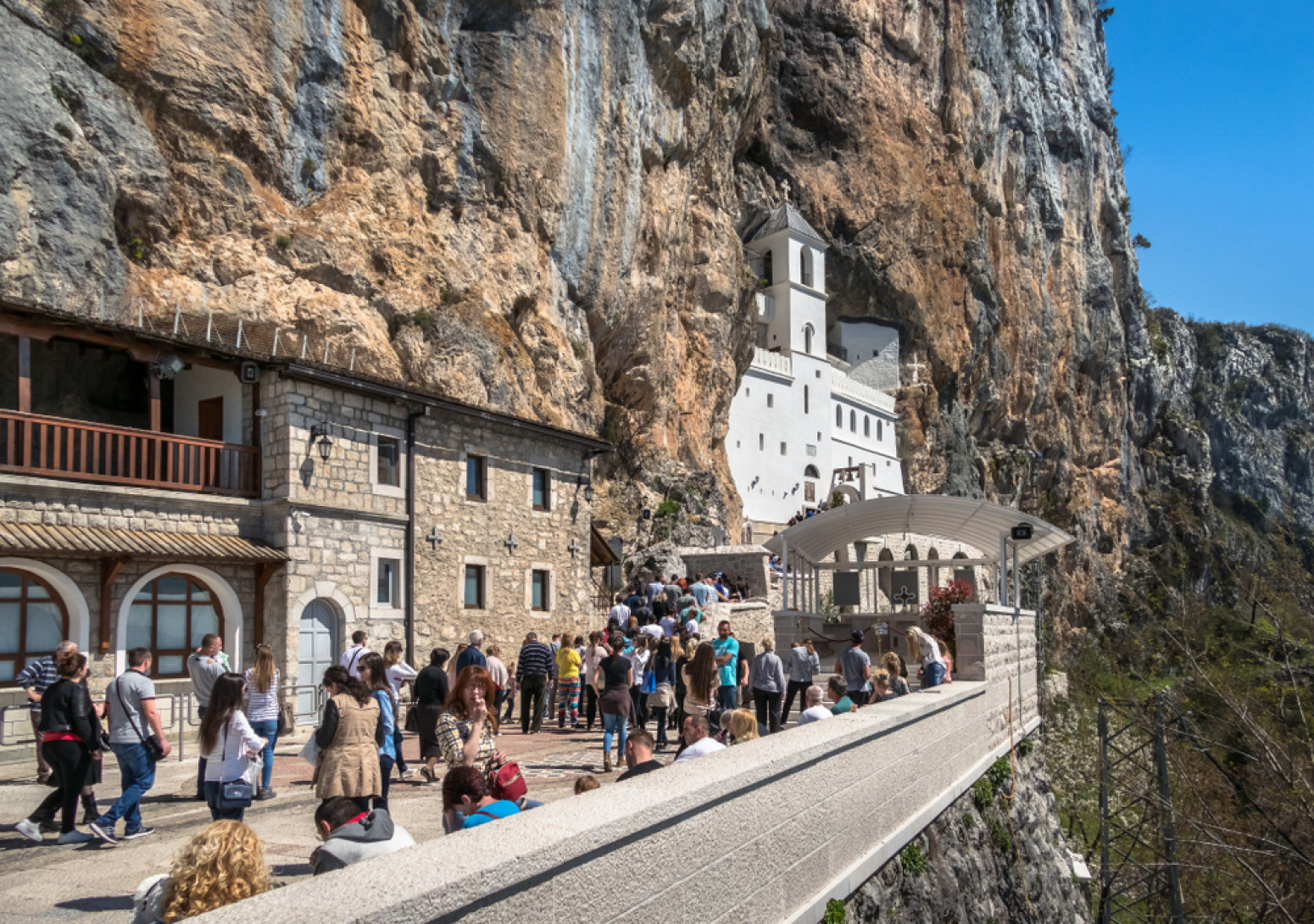
"That circumstance alone raises the question of how the overall impact of the project on the cultural landscape was assessed and whether the relevant institutions thoroughly considered the consequences that such an intervention could cause," Grgurović said.
He stressed that he was not making conclusions in advance nor challenging the investor's right to develop projects in accordance with the law, but that the public must receive complete information when it comes to an area that forms part of the identity of the entire country.
He called on the Ministry of Spatial Planning, Urbanism and State Property, as well as all institutions involved in the process, to clarify whether a special assessment of the possible impact of the project on a nationally significant cultural asset and its wider spatial context was carried out before the construction permit was issued, and whether the Administration for the Protection of Cultural Property participated in the procedure and provided an appropriate opinion or approval within its legal responsibilities.
"This is not a political issue"
He also requested answers as to whether the possible effects of the project on the cultural landscape, views and environmental values of the area surrounding Ostrog Monastery were analyzed, whether publicly available three-dimensional visualizations exist that would allow citizens to see how the complex would look from the main approaches to the monastery, and whether alternative project solutions or other locations were considered where the same energy goal could be achieved with less impact on the area.
"These are not political questions. They are questions arising from the obligation of institutions to make every decision of public importance fully transparent and properly explained," he said.
0 Komentari
Možda vas zanima

Rat – dan 1.867: Masakr u Kramatorsku – preko 30 mrtvih; Ukrajinci se osvetili Rusima FOTO/VIDEO
Rat u Ukrajini – 1.687. dan. U ruskom napadu na stajalište javnog prevoza i dva autobusa u Kramatorsku, u Donjeckoj oblasti, poginulo je 33 ljudi, dok je 18 povređeno, saopštilo je regionalno tužilaštvo Ukrajine. Ukrajinci su napali rafineriju nafte u Omsku.
23:55
8.10.2026.
1 d

Krah Đokovića na startu Šangaja
Novak Đoković poražen je od Huberta Hurkača sa 2-0 u setovima u 2. kolu Mastersa u Šangaju.
13:54
9.10.2026.
1 d

Fenomenalna Zvezda – Dubai nemoćan!; Navaro: "Dobra odbrana"; Paskval ljut
Košarkaši Crvene zvezde savladali su Dubai sa 77:58 u četvrtom kolu Evrolige.
21:07
8.10.2026.
1 d

Real prekinuo Partizanov niz – Madrid i dalje neosvojiva tvrđava; Penjaroja srećan zbog jedne stvari
Košarkaši Partizana izgubili su od Reala u Madridu 86:76 u 4. kolu Evrolige.
23:25
8.10.2026.
1 d

Rat – dan 1.688: Kijev u mraku; Ukrajinski dronovi pogodili Omsk i Uhtu FOTO/VIDEO
Rat u Ukrajini – 1.688. dan. Ruski napadi teško su oštetili energetsku infrastrukturu Ukrajine, dok je gradonačelnik Kijeva Vitalij Kličko pozvao građane da privremeno napuste prestonicu. Ukrajinske snage su potvrdile napade na ruske rafinerije.
23:54
9.10.2026.
16 h












Komentari 0
Pogledaj komentare Pošalji komentar