






14.09.2026.
22:29
If a global catastrophe occurs, this country has the best chance of surviving: "It is the most resilient"
According to scientists, there is one country that would survive a nuclear catastrophe. They claim that country is Australia.



Nuclear apocalypse, pandemics, climate change, artificial intelligence, an asteroid impact or a supervolcano — all of these are threats that could completely disrupt life on Earth.
However, if a major global catastrophe were to occur, there is one country that, according to scientists, would have the best chances of survival.
In the first study of its kind, published in the journal Global Challenges, researchers identified what is considered one of the safest places in the world in the event of a major global catastrophe.
The conclusion is interesting — Australia is most often singled out as the most resilient country in the world in the event of a global catastrophe.
“Australia is probably the most resilient place on Earth when it comes to global catastrophic risks,” said the researchers, led by Florian Ulrich Jehn of the University of Hagen in Germany.
However, the scientists stress that this does not mean Australia is completely safe. No country is protected from every possible scenario.
Rather, according to the researchers’ assessment, Australia is the country least exposed overall to the broad range of potential threats we face.
Why Australia?
One of Australia’s biggest advantages is its geographical location. As a large and remote island nation, it would be better positioned to restrict the entry of people and goods in the event of a pandemic or other threats that spread across borders.
In addition, Australia has extensive agricultural capacity, significant fossil fuel reserves, a developed industrial sector and a strong mining industry. It is also a wealthy and relatively politically stable democracy — all factors that could help society continue functioning during major crises.
“Although Australia obviously faces problems due to the effects of climate change, it performs well in our assessment,” Jen said.
“It is an island, so it can more easily isolate itself and shut itself off from the rest of the world. Australia produces enormous quantities of food, has a large domestic industrial base and a strong mining sector. It is also a wealthy and relatively stable democracy — all of these factors make the country more resilient.”
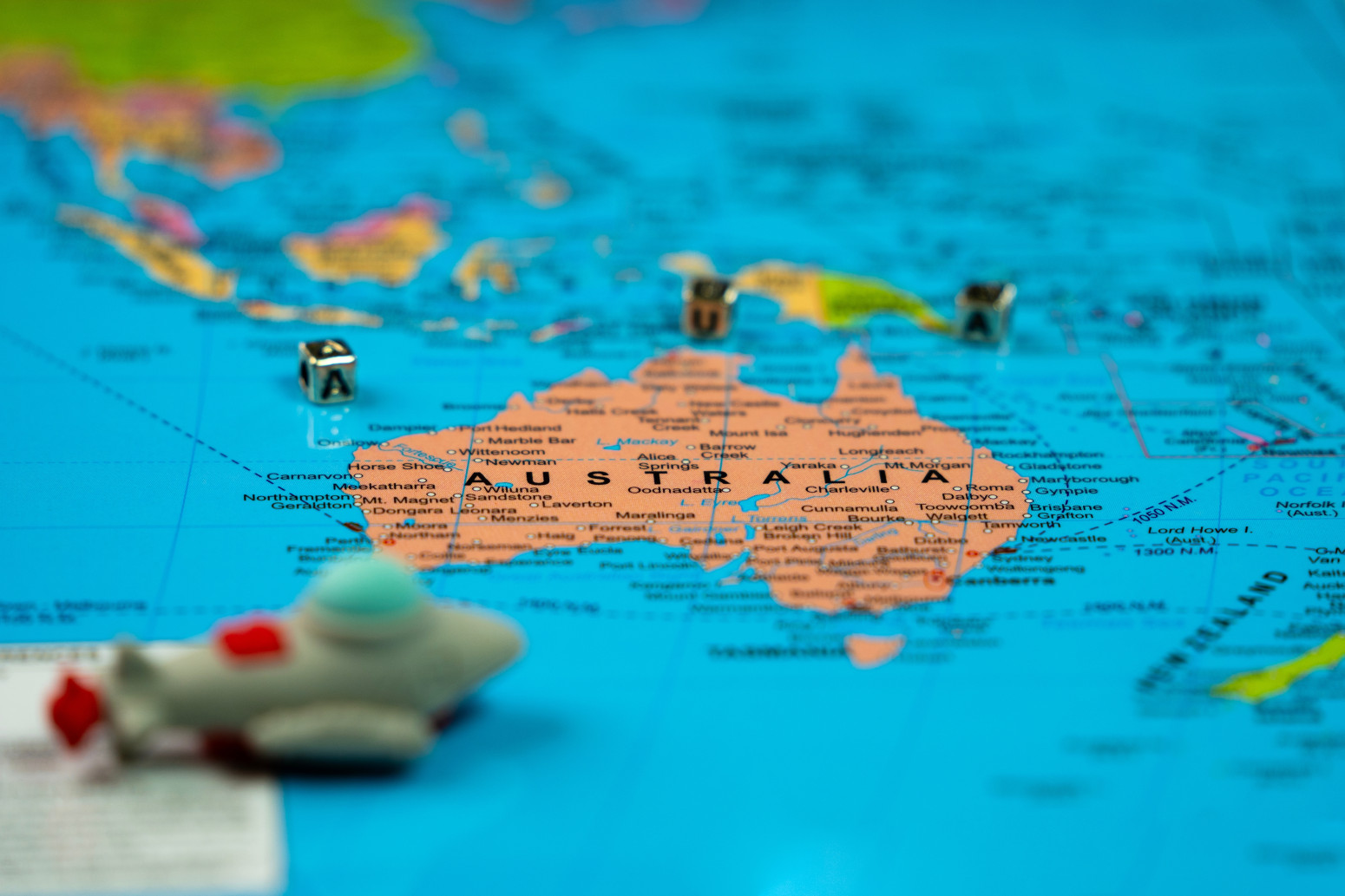
Researchers focused specifically on three groups of threats: events that could block out sunlight, such as a nuclear winter or a major volcanic eruption; catastrophes that could destroy critical infrastructure; and major biological threats, such as pandemics.
Australia was the only country that the researchers found directly identified in the literature they analyzed as being resilient to all three categories.
Switzerland is also mentioned
However, Australia’s greatest advantage could also be its weakness. Because of its distance from the rest of the world, Australia relies on international trade for some fuel, medicines and fertilizers.
In the event of a prolonged global collapse, the disruption of these supply chains could become a serious problem.
“No place on Earth is resilient to all global catastrophic risks, but Australia is the country most frequently identified as resilient,” the study’s authors point out.
Other countries frequently cited as relatively resilient include New Zealand, Japan, Switzerland and Argentina. However, each of them has certain weaknesses.
For example, most of these countries have long coastlines and depend on international trade, while some could be affected by major volcanic eruptions or tsunamis.
“All of the most frequently mentioned countries except Switzerland have long coastlines that could be affected by a tsunami caused by a close passage or impact of an object from space,” the study’s authors write.
They add that all except Switzerland could be affected by an eruption of one of the numerous volcanoes in Southeast Asia and South America, similar to the eruption of Mount Tambora in 1815.
“They all depend on trade. There is no place on Earth that represents a completely safe refuge from global catastrophic risks.”
Australia as a potential survival base
Looking to the future, researchers believe that countries with high structural resilience, such as Australia and New Zealand, could serve as key hubs for strengthening global resilience.
For example, they could maintain food reserves or seed banks, while their industrial capacity could allow essential systems to continue operating in the event of a global catastrophe. As a result, they could also serve as bases for coordinating an international disaster response.
However, the researchers’ message is not that there is a perfectly safe place. The best protection remains prevention and preparedness.
“Prevention is always better than resilience,” the authors conclude.
“Some global catastrophes, such as volcanic eruptions, cannot currently be prevented. When they occur, the difference between societies that have invested in the factors we have identified and those that have not will be measured in human lives,” the study’s authors conclude, as reported by ScienceAlert.
0 Komentari
Možda vas zanima

Objavljeni rezultati izbora: Evo kako je Srbija glasala FOTO/VIDEO
Vanredni parlamentarni izbori održani su 25 oktobra u Srbiji. Lista "Aleksandar Vučić – Ujedinjena Srbija" izgubila je na izborima, dok je pobedu odnela "Studentska lista".
22:55
25.10.2026.
1 d

Vučić: "Pobedila je politika Nataše Kandić"; "Imaćemo oko 105 mandata, 'Studentska lista' 135 do 140" VIDEO
Nosilac liste "Aleksandar Vučić - Ujedinjena Srbija" Aleksandar Vučić izjavio je večeras da je ta lista izgubila na današnjim vanrednim parlamentarnim izborima i da je pobedila "Studentska lista", a da će u parlament ući još i Savez vojvođanskih Mađara.
21:40
25.10.2026.
1 d

Bez 35 evra nema ulaska u Crnu Goru: Od 1. novembra na snagu stupa nova uredba u komšiluku
Od 1. novembra ruskim građanima će biti potrebna viza za ulazak u Crnu Goru.
19:10
26.10.2026.
21 h

Najnoviji podaci o rezultatima izbora u Srbiji
Prema projekcijama IPSOS-a i Centra za slobodne izbore i demokratiju (Cesid), na osnovu 75 odsto obrađenog uzorka, na parlamentarnim izborima "Studentska lista" osvojila je 52,4 odsto glasova, a lista "Aleksandar Vučić - Ujedinjena Srbija" 39,2 odsto glasova.
23:34
25.10.2026.
1 d

Opet se oglasio RIK – najnoviji podaci o tome kako je Srbija glasala
Republička izborna komisija (RIK) objavila je rezultate parlamentarnih izbora na osnovu 8.077 obrađenih biračkih mesta po kojima je Studentska lista dobila 2.211.400 glasova, odnosno 52,54 odsto.
8:16
26.10.2026.
1 d












Komentari 0
Pogledaj komentare Pošalji komentar