






03.08.2026.
17:40
City under a state of emergency – Sirens, police whistles and the smell of human waste PHOTO
In the Spanish city of Ceuta, the situation is slowly returning to normal after the mass influx of migrants, but the scene is completely different in the neighboring Moroccan city of Fnideq. Exhausted people are returning to the place where it all began.



The sound of ambulance sirens, police whistles, the shouts of numerous young men, the smell of human waste and burned cars — all of this defines the atmosphere in Fnideq, a city neighboring Ceuta on the North African coast.
Fnideq is normally a quiet seaside resort overlooking Ceuta, the Spanish city that last week became the destination for tens of thousands of migrants. Today, however, the city is under a state of emergency: beaches are fenced off with barriers, while members of Morocco's national police force (Sûreté Nationale), armed with long-barrelled weapons, are stationed almost at every corner and on the cliffs.
The dream of a life in Europe
A police officer signals 25-year-old Hamza to leave the beach. The young man from Tangier, however, does not want to leave Fnideq. For him, the city remains a gateway to a better life. He says he tried again on Saturday to swim across to Ceuta.
"I tried again, but when I arrived, the Spanish soldiers beat me, and then the Moroccan police did the same," Hamza said.
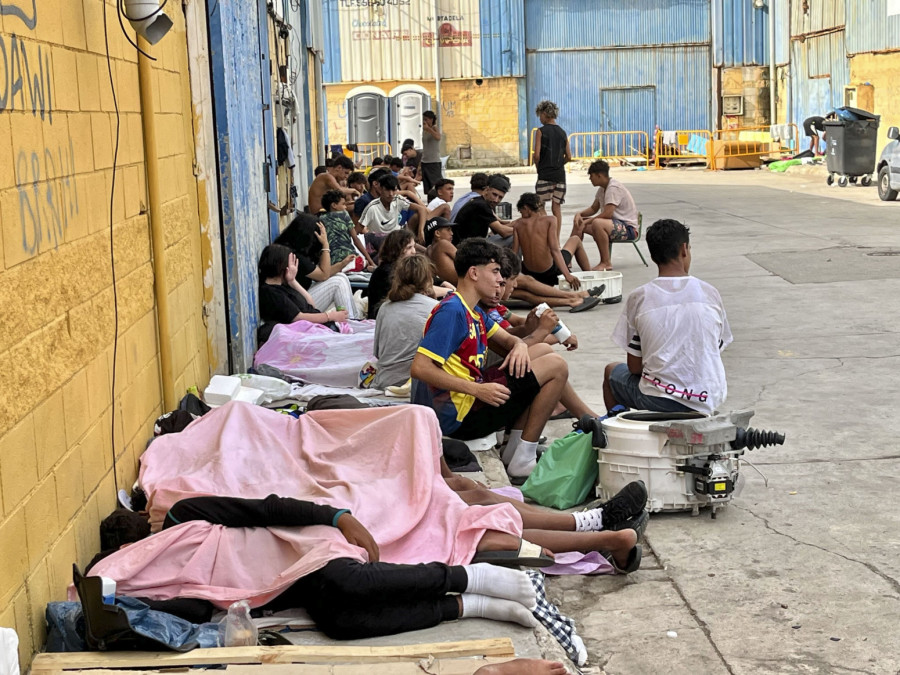
He says he was forced to swim back. His torn trousers are still wet, he lost his mobile phone in the sea, and his knees and elbows are covered with scratches. Nevertheless, he says he will keep trying, despite the sea barriers, fences and increased security checks.
The salary he earns working in the textile industry, he says, is not enough to live on, and Europe remains his dream.
"Everything is becoming more difficult, both for those who have already reached Ceuta and for us who are still here. The police want us to leave Fnideq; they want to empty the city so that no one will try to head toward Ceuta anymore," Hamza said.
"They treated us like dogs"
Young men returning from Ceuta say that police chased them, threatened them with swords, that no one wanted to sell them food, and that they went hungry. Hundreds, perhaps even thousands of them, climb the cliffs behind the border fence reinforced with NATO wire and return to the place where they began their journey.
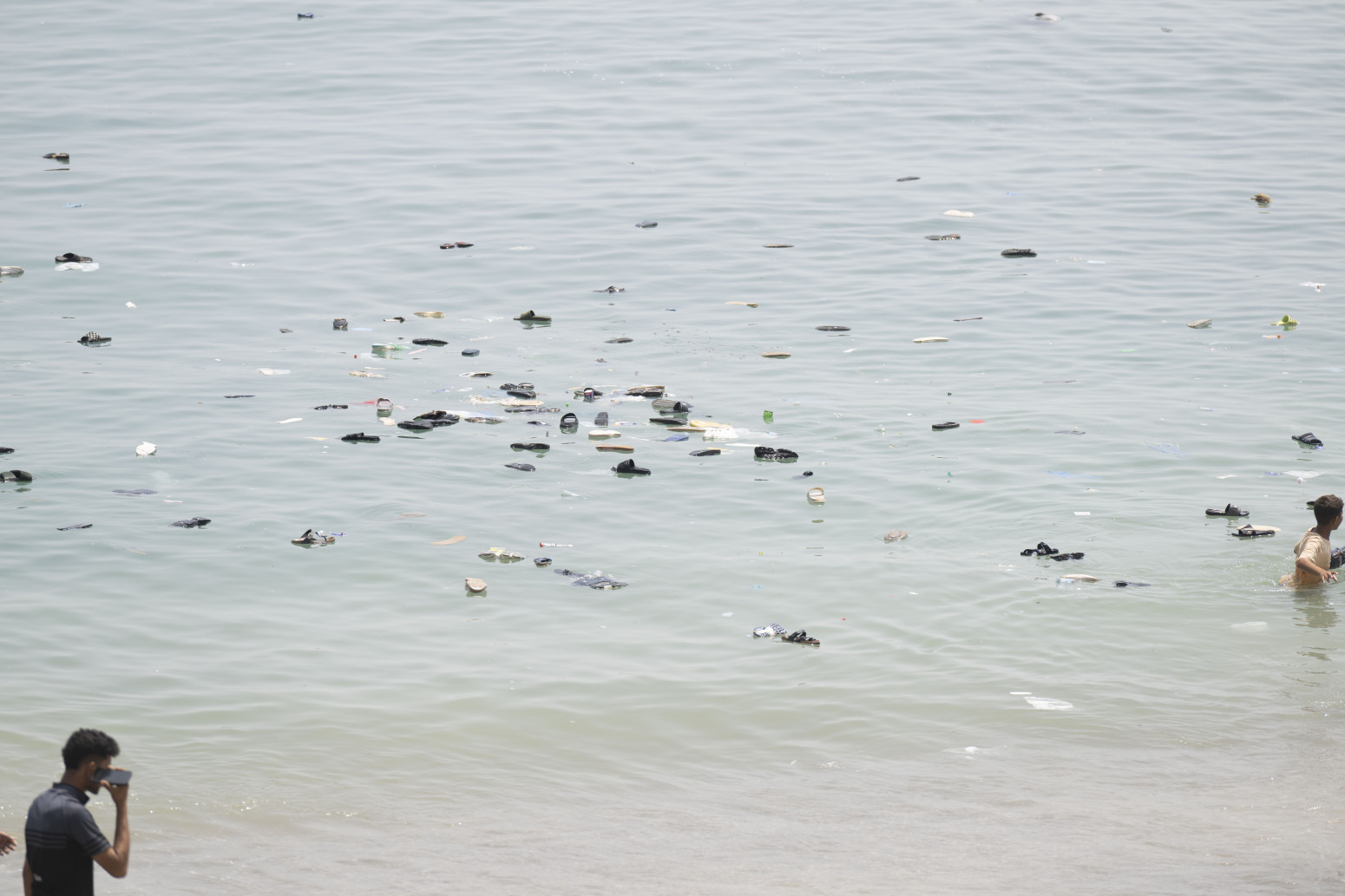
The beach is still scattered with belongings left behind by people who tried to swim to Spanish territory. Many lost their lives in the attempt, and there are fears that the death toll could rise further as the sea brings in the bodies of those who remain missing.
Twenty-one-year-old Hayine from Fez says she will never attempt the same thing again. The student traveled by moped from Fez to Fnideq and then began swimming toward Ceuta. There, she found her uncle and sister, who had crossed the border on foot together with a large crowd of people. They had all believed rumors spreading on social media that Ceuta was open to everyone.
As she speaks, Hayine cries. Like many others who were there that day, she appears traumatized.
"I returned because they treated us like dogs. There was no food, all the shops were closed," she said.
Today, Fnideq is mostly filled with groups of exhausted and desperate young men looking for shade. Food is also difficult to find here, even for those who have money. Numerous cafés and restaurants have closed due to fears of looting, while those that remain open strictly control entry and turn young men away.
In addition, many establishments can offer little more than espresso, as some of their staff also left for Ceuta and have not yet returned to work.

Humanitarian consequences are only beginning to emerge
Many tourists have canceled their holidays in Fnideq, while those who did come say they no longer recognize the once-peaceful resort and prefer to remain inside their hotels. Traders at the city's market, located not far from the beach, are already feeling the impact.
The economic and humanitarian consequences of the crisis are far from being resolved, while the political response is still to come. During this week, EU interior ministers are set to hold an emergency meeting aimed at trying to coordinate a common position toward Morocco as an important partner in migration management, in order to prevent scenes like those seen this year from being repeated in Ceuta and Fnideq.
0 Komentari
Možda vas zanima

Objavljeni rezultati izbora: Evo kako je Srbija glasala FOTO/VIDEO
Vanredni parlamentarni izbori održani su 25 oktobra u Srbiji. Lista "Aleksandar Vučić – Ujedinjena Srbija" izgubila je na izborima, dok je pobedu odnela "Studentska lista".
22:55
25.10.2026.
1 d

Vučić: "Pobedila je politika Nataše Kandić"; "Imaćemo oko 105 mandata, 'Studentska lista' 135 do 140" VIDEO
Nosilac liste "Aleksandar Vučić - Ujedinjena Srbija" Aleksandar Vučić izjavio je večeras da je ta lista izgubila na današnjim vanrednim parlamentarnim izborima i da je pobedila "Studentska lista", a da će u parlament ući još i Savez vojvođanskih Mađara.
21:40
25.10.2026.
1 d

Bez 35 evra nema ulaska u Crnu Goru: Od 1. novembra na snagu stupa nova uredba u komšiluku
Od 1. novembra ruskim građanima će biti potrebna viza za ulazak u Crnu Goru.
19:10
26.10.2026.
18 h

Najnoviji podaci o rezultatima izbora u Srbiji
Prema projekcijama IPSOS-a i Centra za slobodne izbore i demokratiju (Cesid), na osnovu 75 odsto obrađenog uzorka, na parlamentarnim izborima "Studentska lista" osvojila je 52,4 odsto glasova, a lista "Aleksandar Vučić - Ujedinjena Srbija" 39,2 odsto glasova.
23:34
25.10.2026.
1 d

Opet se oglasio RIK – najnoviji podaci o tome kako je Srbija glasala
Republička izborna komisija (RIK) objavila je rezultate parlamentarnih izbora na osnovu 8.077 obrađenih biračkih mesta po kojima je Studentska lista dobila 2.211.400 glasova, odnosno 52,54 odsto.
8:16
26.10.2026.
1 d












Komentari 0
Pogledaj komentare Pošalji komentar