












Russia's victory in Bosnia-Herzegovina; "Giving an ultimatum"
The EUFOR mission in Bosnia-Herzegovina will be extended, the OHR resolution will not mention the OHR, nor will the High Representative address that institution
Wednesday, 03.11.2021.
17:40
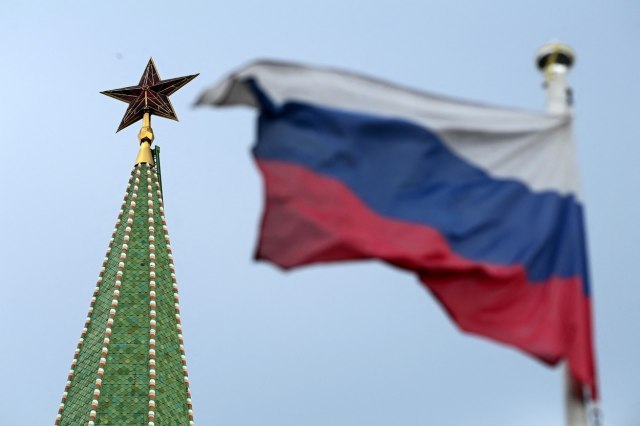
Russia's victory in Bosnia-Herzegovina; "Giving an ultimatum"
Analysts with whom DW spoke assess that this is a victory for Russia."This is indeed the infamous and not entirely credible beginning of Christian Schmidt. He is the first High Representative to be banned from speaking at the United Nations. This is unfortunately also a new rhetorical ammunition for Mr. Milorad Dodik, which he will no doubt use to spread fear and psychosis in Bosnia and Herzegovina. In the meantime, foreigners are silent, and there are no words yet about sanctions. That's how it is when Mr. Schmidt says 'I'm not Paddy Ashdown'. He sure isn't", Erol Avdovic, a journalist who is following a session of the United Nations Security Council in New York, told DW.
The mandate of EUFOR (European Military Forces) in Bosnia-Herzegovina should be extended at the session on Wednesday (November 3rd), but the head of the OHR, Christian Schmidt, will not address the members of the Council to present his regular report on the situation in Bosnia-Herzegovina. It is the result of several days of negotiations behind closed doors in the UN, by which Russia actually "got what it wanted".
"Moscow practically demanded in an ultimatum that the High Representative not address the UN, in exchange for the adoption of a resolution on extending EUFOR's mandate in Bosnia-Herzegovina without their veto. Thus, we will have a new text of the resolution in which the OHR and High Representative will not be mentioned. It seems that the Americans agreed to that, even though it seemed that their red line was exactly the request for Schmidt to address SC session", says Erol Avdović.
Bodo Weber: Russia's veto could have been avoided
Both German political scientist and expert on the Western Balkans, Bodo Weber, says that it is clear that the permanent members of the UN Security Council, the United States, Great Britain and France, gave in to the "blackmail of Russia"."For Moscow to accept to give up on vetoing the continuation of the EUFOR military mission, they agreed to remove any reference to the OHR and the High Representative in the standard text of the resolution. This did not damage the mandate of the High Representative and the OHR in legal terms. Western members are sending a devastating and dangerous political message, given the upcoming challenges announced by Republika Srpska. All this could have been easily avoided by dissuading Moscow from vetoing by planning a NATO mission as a replacement for EUFOR, but there was no political will for that in key western capitals," says Weber.
Journalist Avdovic also believes that the Russians are more suited to the small European forces in Bosnia-Herzegovina (about 700 soldiers) than the robust NATO forces that could be sent to that country in the event of the end of EUFOR's mandate.
"It seems that the majority of the 15 members of the UN Security Council are also satisfied, because at least they received Schmidt's report in writing, which they have the right to discuss today. The fact that the new High Representative will not take part live in New York, or via a video link from Sarajevo, does not seem to excite anyone in particular," Avdovic reports.
The credibility of the OHR is threatened
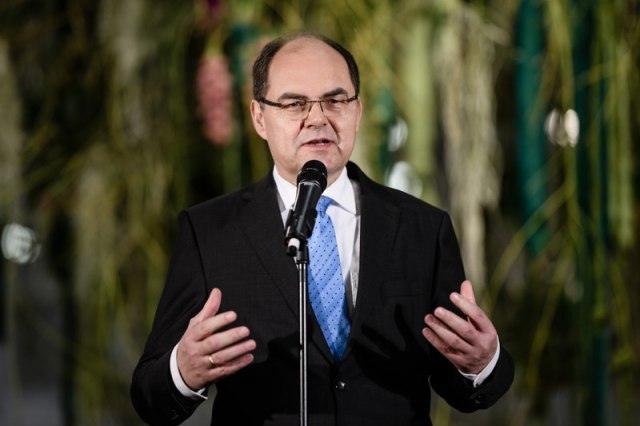
"It is a completely different question whether at a certain moment there is the political will to strengthen the international military mission in BiH with additional troops or weaken it, as has been done several times so far. The problem is that such actions, not only blackmail on the part of Russia, but also by accepting the ultimatum from the West, it jeopardizes the credibility of the OHR, which should assess the situation in BiH and recommend the possible strengthening of international military forces in the country. It strengthens the separatist forces in Bosnia-Herzegovina, the Russian position, in the future, and Moscow's military presence in this part of the world, and then not only BiH will be endangered, but also the entire southern wing of NATO," Ahatovic believes.
Schwarz-Schilling: Russia must not be allowed to destroy Europe through Serbia and RS
Ahead of the UN Security Council session, a German diplomat, former High Representative for Bosnia-Herzegovina, Christian Schwarz-Schilling, is in Sarajevo. Together with representatives of several non-governmental organizations, he called for more decisive action in order to "save peace" in Bosnia-Herzegovina and the region."This is a matter of saving peace," Schwarz-Schilling said, warning of Russia's threatening role. "What you have to understand is that Russia must not be allowed to destroy Europe through Serbia and RS, and that is now in fact. This fight in BiH is also a fight for Europe," Schwartz-Schilling said. He warned that "voices like Dodik's should not be allowed to become too loud."
If the High Representative does not address the UN Security Council, then he must address the Peace Implementation Council, and there is no veto there, Schwarz-Schilling said.
"Democratic principles must apply there, not a veto that will silence the High Representative. It must be clear to the European Union that such a situation is not in line with human rights, nor in accordance with the Charter that deals with it. The Peace Implementation Council should vote on report to the Security Council and request that the High Representative be invited to expostulate on his report," Schwarz-Schilling advised.
Schmidt: Danger of annulment of the peace agreement
In his report to the Security Council, High Representative to Bosnia and Herzegovina Christian Schmidt warns that "BiH faces the greatest existential threat in the post-war period"."Persistent, serious challenges under the RS General Framework Agreement for Peace, led by RS's largest party, the Alliance of Independent Social Democrats (SNSD), headed by BiH Presidency member Milorad Dodik, threaten not only peace and stability in the country and region, but that, if the international community does not respond, could lead to the annulment of the peace agreement itself", Schmidt warned.
He also warned that returning to "the original Dayton", directed by Milorad Dodik, would mean "going backwards", which would nullify key reform processes in the areas of defense, indirect taxation and justice.
"Mr. Dodik calls this endeavor 'return to the original Dayton', which is a politically incorrect term based on misinterpretations of the BiH Constitution (...) In short, Mr. Dodik seeks to pull RS out of the constitutional order established by Annex 4 of the Peace Agreement and abandon civilian implementation of the Agreement determined by Annex 10. That is equal to secession (RS) without proclamation", assessed Schmidt.
"If they indisputably succeed in this endeavor, the RS authorities would establish a new constitutional and legal framework that would exclude RS from the Dayton architecture, especially from the BiH constitutional order, which is synonymous with secession. Ignoring or belittling such a situation could have dangerous implications for region and beyond", Schmidt warned in the report.
Dodik: If we are separatists, he is an occupier
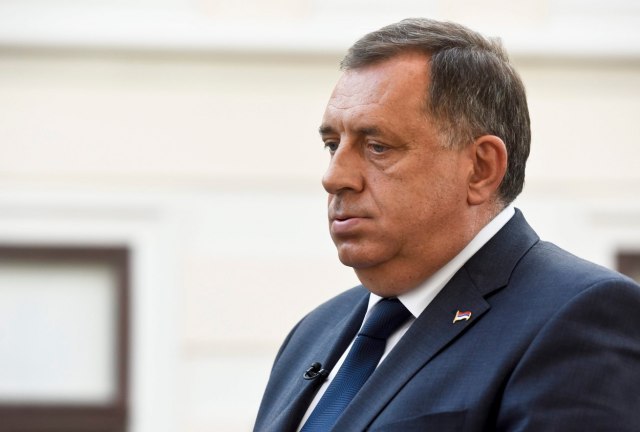
Members of the UN Security Council received Schmidt's report in writing and will discuss it on Wednesday (November 3). Journalist Erol Avdović says that the report has become an official document of the United Nations since Friday (October 29).
3 Komentari
Možda vas zanima

Rat – dan 1.867: Masakr u Kramatorsku – preko 30 mrtvih; Ukrajinci se osvetili Rusima FOTO/VIDEO
Rat u Ukrajini – 1.687. dan. U ruskom napadu na stajalište javnog prevoza i dva autobusa u Kramatorsku, u Donjeckoj oblasti, poginulo je 33 ljudi, dok je 18 povređeno, saopštilo je regionalno tužilaštvo Ukrajine. Ukrajinci su napali rafineriju nafte u Omsku.
23:55
8.10.2026.
1 d

Krah Đokovića na startu Šangaja
Novak Đoković poražen je od Huberta Hurkača sa 2-0 u setovima u 2. kolu Mastersa u Šangaju.
13:54
9.10.2026.
23 h

Fenomenalna Zvezda – Dubai nemoćan!; Navaro: "Dobra odbrana"; Paskval ljut
Košarkaši Crvene zvezde savladali su Dubai sa 77:58 u četvrtom kolu Evrolige.
21:07
8.10.2026.
1 d

Real prekinuo Partizanov niz – Madrid i dalje neosvojiva tvrđava; Penjaroja srećan zbog jedne stvari
Košarkaši Partizana izgubili su od Reala u Madridu 86:76 u 4. kolu Evrolige.
23:25
8.10.2026.
1 d

Rat – dan 1.688: Kijev u mraku; Ukrajinski dronovi pogodili Omsk i Uhtu FOTO/VIDEO
Rat u Ukrajini – 1.688. dan. Ruski napadi teško su oštetili energetsku infrastrukturu Ukrajine, dok je gradonačelnik Kijeva Vitalij Kličko pozvao građane da privremeno napuste prestonicu. Ukrajinske snage su potvrdile napade na ruske rafinerije.
23:54
9.10.2026.
13 h





Komentari 3
Pogledaj komentare